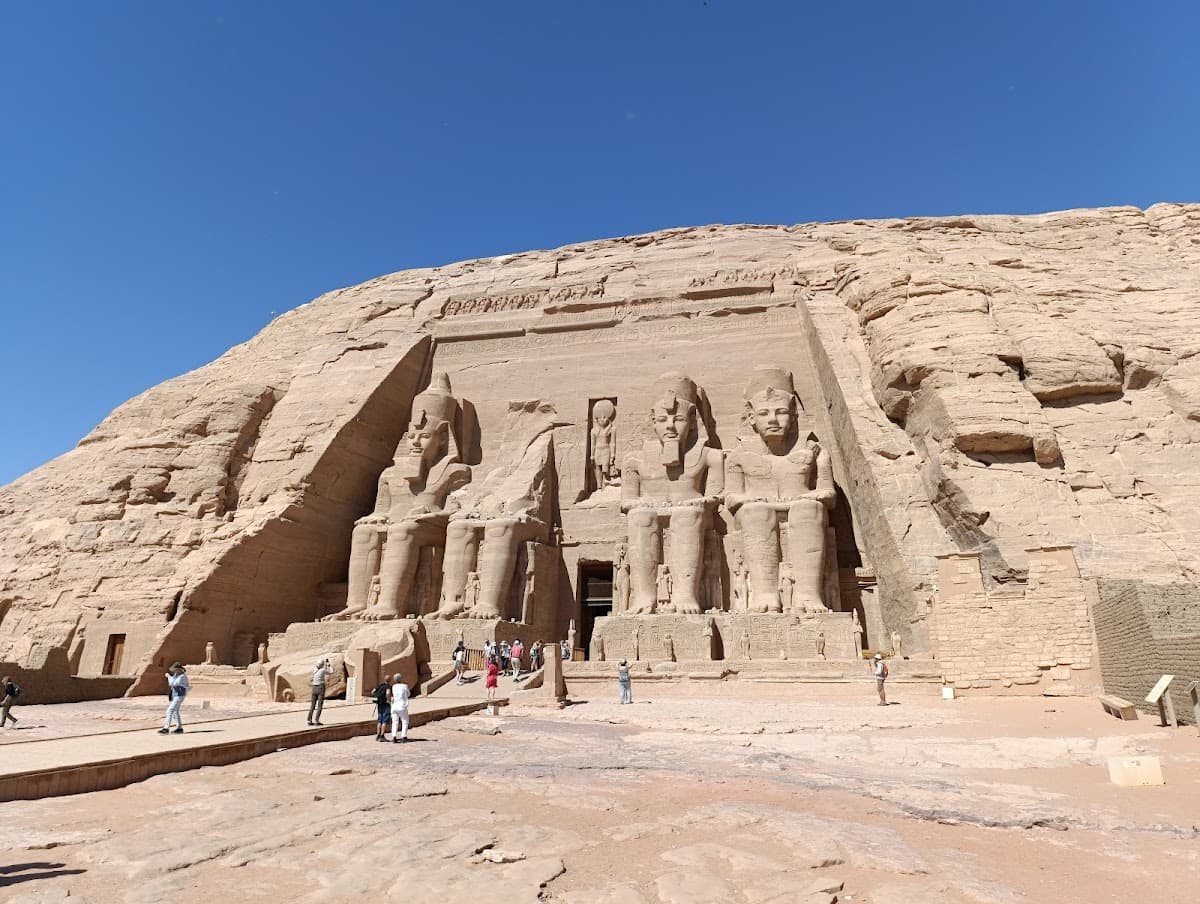
Abu Simbel
Ramses II's Monument Rises from Desert Sands
Two massive temples carved straight into a cliff face stare out across Lake Nasser. Abu Simbel isn't just another Egyptian monument – it's Ramses II's ultimate flex, a 3,300-year-old statement piece that screams "I am pharaoh, hear me roar."
The Great Temple's four 65-foot colossal statues of Ramses dominate the landscape like ancient skyscrapers. But here's what makes this place extraordinary: the entire complex was sliced apart and moved 200 feet higher in the 1960s to save it from rising waters. UNESCO pulled off one of history's greatest rescue operations, and now you can witness both ancient ambition and modern engineering marvel in one jaw-dropping location.
This is deep southern Egypt, just 165 miles north of Sudan's border. The journey here takes commitment, but that's exactly why Abu Simbel feels so special.
Money-Saving Tips
- 1.Fly to Abu Simbel instead of driving – the time saved is worth the extra cost, especially on short Egypt trips
- 2.Book Aswan hotels away from the Corniche tourist strip for better rates and authentic local restaurants
- 3.Negotiate felucca boat rides in Aswan – starting prices are inflated 3-4x for tourists
- 4.Buy water and snacks in Aswan before heading to Abu Simbel – prices at the site are astronomical
- 5.Skip the expensive sound and light show if you're on a tight budget – the temples are impressive enough in daylight
- 6.Consider Lake Nasser cruises during shoulder season (March-April, October-November) for significant discounts
- 7.Hire guides at the official booth inside Abu Simbel rather than unofficial ones outside for fixed, fair prices
Travel Tips
- •Visit during the solar alignment dates (February 22 and October 22) when sunlight illuminates the inner sanctuary
- •Bring a powerful flashlight or phone light for exploring darker temple corners – built-in lighting is minimal
- •Wear closed-toe shoes – sand gets everywhere and ancient stone floors can be rough on feet
- •Download offline maps before leaving Aswan – cell coverage is spotty in the desert between cities
- •Pack layers even in winter – desert temperatures swing 40°F between day and night
- •Respect photography restrictions inside temples – guards will delete photos and confiscate cameras if caught
- •Allow a full day for Abu Simbel if flying from Aswan – flights can be delayed by sandstorms
- •Learn basic Arabic greetings – locals appreciate the effort and it opens doors for better interactions