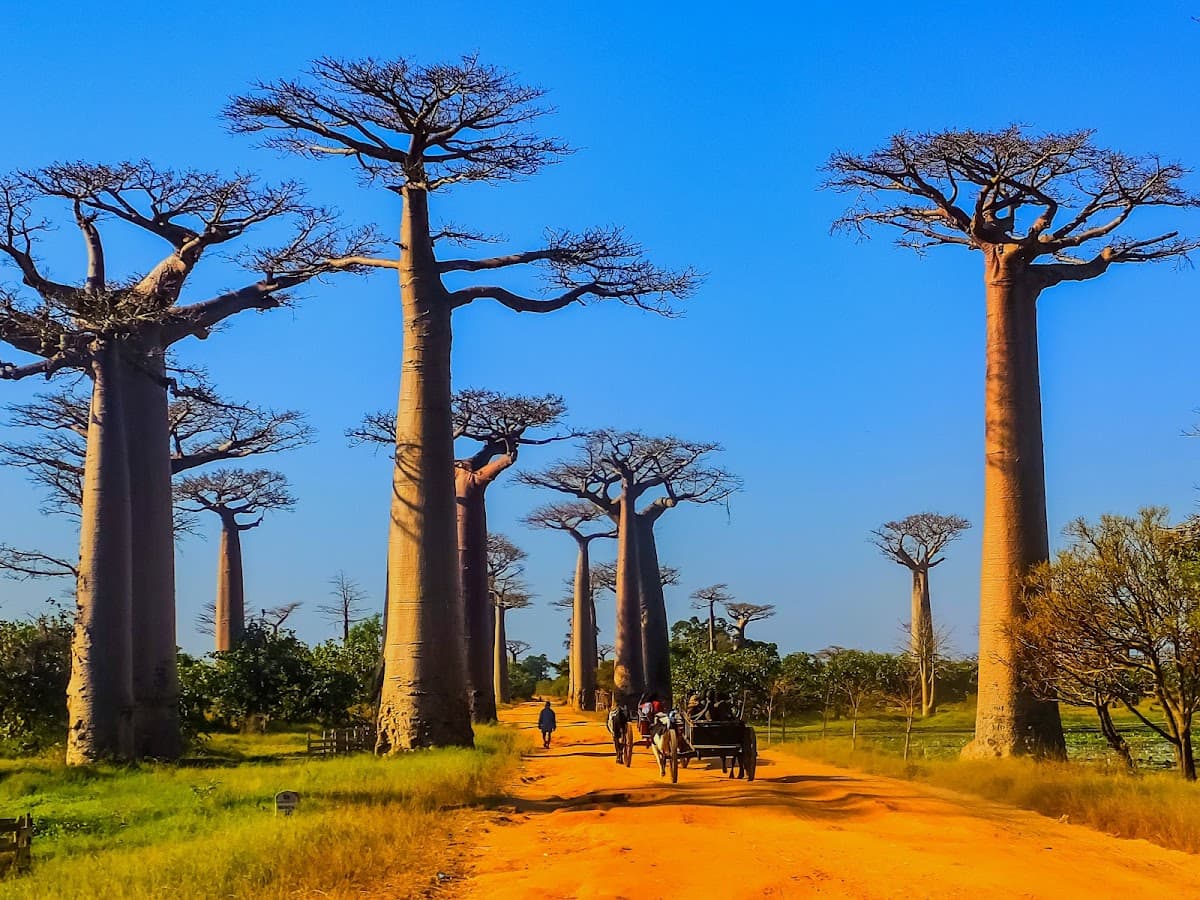
Avenue of the Baobabs
Madagascar's Iconic Sunset Boulevard of Ancient Giants
Look, there's a reason every Madagascar travel photo features these trees. The Avenue of the Baobabs isn't just Instagram famous – it's genuinely one of those places that stops you in your tracks. Picture this: a dirt road lined with 800-year-old giants, their massive trunks reaching toward the sky like nature's own skyscrapers. Come sunset, the entire scene transforms into something that feels almost otherworldly.
But here's what the photos don't tell you. This isn't some manicured park – it's a working landscape where locals still use the road daily, zebu carts sharing space with the occasional tour van. The baobabs themselves are survivors, the last remnants of a dense forest that once covered this entire region. And while the sunset views are spectacular, the harsh reality is that climate change and development pressure threaten these ancient sentinels.
The best part? You're not just looking at trees. You're witnessing Madagascar's living history, where each baobab has weathered centuries of cyclones, droughts, and human change. Just don't expect luxury amenities – this is raw Madagascar at its most authentic.
Money-Saving Tips
- 1.Negotiate taxi rides to the avenue in advance – expect to pay 40,000-60,000 Ariary ($8-12 USD) for a round trip from Morondava with waiting time
- 2.Bring small bills (1,000 and 2,000 Ariary notes) for tips to local kids who help with directions or car watching
- 3.Stock up on water and snacks in Morondava – there's nowhere to buy anything at the avenue itself, and hotel markups are steep
- 4.Consider sharing transport costs with other travelers – most guesthouses can help organize group trips to split taxi fees
- 5.Avoid unofficial 'parking fees' by parking near other vehicles and politely declining payment requests
- 6.Budget extra for camera equipment protection – dust covers and cleaning supplies cost more in Madagascar than bringing them from home
Travel Tips
- •Arrive 90 minutes before sunset for the best light – the golden hour starts earlier than you think and the road gets crowded
- •Bring a headlamp or flashlight for the drive back to Morondava after dark – street lighting is nonexistent
- •Download offline maps before leaving Morondava – cell service is spotty to nonexistent at the avenue
- •Pack wet wipes and hand sanitizer – the red dust gets everywhere and there are no washing facilities
- •Consider visiting early morning for sunrise shots with fewer crowds, though sunset lighting is more dramatic
- •Respect the trees – don't climb on the baobabs or carve initials. These 800-year-old giants are fragile despite their massive size
- •Learn a few basic Malagasy phrases – 'Misaotra' (thank you) goes a long way with locals
- •Bring a portable phone charger – taking photos in the dust drains batteries faster than normal
Frequently Asked Questions
BUILD YOUR
AVENUE OF THE BAOBABS PLAN
Insider picks, smart timing, and a plan ready when you are.
Start Planning