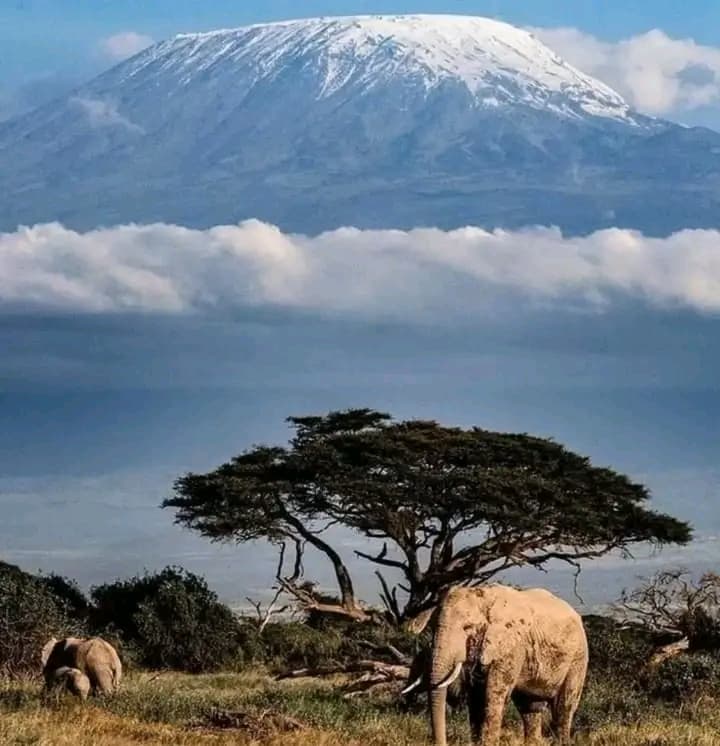
Amboseli National Park
Elephant kingdom beneath Kilimanjaro's majestic shadow
Amboseli delivers what every safari dreams are made of: massive elephant herds wandering across golden grasslands with Mount Kilimanjaro's snow-capped peak rising behind them. This is Kenya's elephant kingdom, where you'll get closer to these gentle giants than almost anywhere else in Africa.
The park sits in the shadow of Africa's tallest mountain, creating one of the continent's most iconic backdrops. But here's what makes Amboseli special - it's not just about the postcard views. The elephants here are remarkably relaxed around vehicles, giving you front-row seats to family dynamics you won't see elsewhere. Mothers teaching calves to use their trunks. Teenagers play-fighting in the dust. Ancient matriarchs leading their families to the swamps.
Look, Amboseli isn't huge - you can cover the main areas in a couple of days. And yes, it gets crowded during peak season. But when a bull elephant walks within arm's reach of your safari vehicle while Kilimanjaro glows pink in the morning light, you'll understand why this place has captured imaginations for decades.
Money-Saving Tips
- 1.Book accommodation packages that include game drives - individual drive costs add up quickly at $50-80 per person per drive
- 2.Fly into Amboseli airstrip instead of driving from Nairobi to save a full day and avoid rough roads - flights start around $200
- 3.Pack plenty of snacks and water - lodge restaurants charge premium prices and options are limited
- 4.Consider staying outside the park at budget camps if you're doing day trips - you'll save $100+ per night on accommodation
- 5.Bring a good camera with zoom lens rather than renting gear locally - rental quality is often poor and expensive
- 6.Time your visit during shoulder seasons (January-February) for lower accommodation rates while still getting good weather
Travel Tips
- •Arrive at the swamps by 7 AM for the best elephant viewing before other vehicles show up
- •Bring a dust mask or bandana - the roads kick up serious dust clouds that irritate throats and noses
- •Download offline maps before entering - cell service is spotty and GPS can fail when you need directions most
- •Pack extra camera batteries and memory cards - the combination of dust, heat, and constant photo opportunities drains equipment fast
- •Book flights to Amboseli airstrip in advance during dry season - small planes fill up and weather can cause delays
- •Carry cash for park entry fees as card readers at gates sometimes malfunction
- •Plan rest time during midday heat - wildlife goes quiet and Kilimanjaro often disappears behind clouds anyway
Frequently Asked Questions
BUILD YOUR
AMBOSELI NATIONAL PARK PLAN
Insider picks, smart timing, and a plan ready when you are.
Start Planning