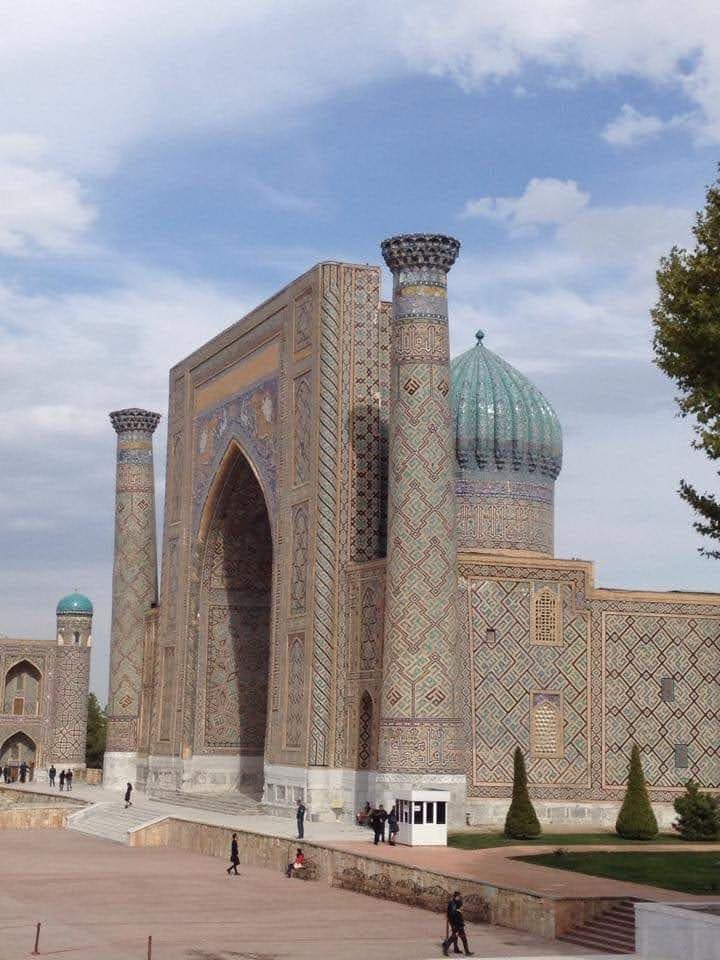
Samarkand
Silk Road jewel with turquoise domes and timeless majesty
Samarkand hits different. This isn't just another historic city – it's where empires collided, where Tamerlane built monuments that still make architects weep, and where you can eat like royalty for the price of a coffee back home. The turquoise domes of Registan Square catch the light at sunset like nowhere else on earth. But here's the thing: Samarkand manages to feel both ancient and alive, with locals going about their daily business around 14th-century masterpieces. Sure, the crowds are growing, but step off the main tourist trail and you'll find workshops where artisans still practice crafts their great-grandfathers taught them.
Best Months
APR · MAY · JUN · SEP · OCT · NOV
~24°C · moderate crowds
Culture & Context
TIMUR'S ORNATE EMPIRE
Samarkand is one of the oldest continuously inhabited cities on earth, founded around the 7th century BC. That makes it older than Rome. It hit its peak under Timur (Tamerlane) in the 14th and 15th centuries, when he made it the capital of his empire and summoned the best architects, scholars, and artists from across the Islamic world to build it up. The result is some of the most precise and ornate tilework you'll ever see anywhere. UNESCO recognized the whole place in 2001 as "Samarkand, Crossroads of Cultures."
Here's the thing about modern Samarkand: the main monuments have been heavily restored. It doesn't feel like a crumbling, spontaneous old city the way Bukhara does. It's more polished, more photogenic, and considerably more crowded with tour groups. Two blocks off the main sights though, it snaps back into a very normal, lived-in Uzbek city. Soviet-era apartments, kids playing football, grandmothers selling dairy products at dawn.
Uzbek is the official language, but Russian is widely spoken across generations as a Soviet legacy. What surprises most visitors is that many Samarkand residents actually speak Tajik Persian as their first language at home, a hangover from the city's Persian-influenced past. English works fine in tourist areas and with younger locals, but don't count on it once you step off the main drag. The city is majority Muslim but very secular in daily practice. Alcohol is available. Women traveling solo report feeling safe and respected.
Local Customs
BARGAIN HARD ALWAYS
Cover knees and shoulders when entering mosques and madrasahs. Women should bring a headscarf for entering active mosques. The dress code is genuine, not just a sign on a wall..
Check for 'no photography' signs before shooting inside religious monuments. Some interior spaces prohibit it, and staff do enforce this.. Always agree on a taxi price before you get in.
Drivers see tourists and double or triple the standard rate. The going rate for city center trips is around 20,000 UZS. Don't start the journey without a number..
Bargain at bazaars. The opening price at Siab Bazaar and souvenir stalls around the Registan is aimed at tourists. Haggle down to at least one-third of what they first quote..
Restaurant bills often include a service charge of 10–15% that isn't mentioned on the menu. Check the bottom of the bill before adding a tip on top of it.. Hotels register your passport automatically with local authorities, which is legally required within 3 days of arrival.
Keep any registration slips the hotel gives you in your passport until you leave the country.. Do not bring cannabis products, vapes, or codeine-based painkillers into Uzbekistan. These are banned and customs does check.
Declare all prescription medications on entry.. Register your phone's IMEI number at UZIMEI.UZ within 3 days of arrival or purchase of a local SIM.
This is a government requirement that most tourists don't know about.. Don't drink tap water. Even most locals don't.
Stick to bottled water.. The Siab Bazaar is closed on Mondays. Plan accordingly if you're only in town for a couple of days.
Safety
TOURIST-PROTECTED SAFE
Samarkand sits at US State Department Travel Advisory Level 1, which is "Exercise Normal Precautions" — the lowest risk rating possible. Violent crime against tourists is rare. The Uzbek government has put real resources into tourist police, who have booths stationed at major monuments throughout the city. You'll see them. They're there to help, not hassle.
The real risks are mundane: taxi drivers overcharging tourists (always agree the price before getting in), vendors quoting tourist prices that are double or triple the going rate (bargain firmly), and occasional petty theft at crowded bazaars (keep your phone and wallet in a front pocket at Siab Bazaar). Solo women consistently report feeling safe and not experiencing harassment.
A few practical things worth knowing: don't bring codeine-based painkillers or any cannabis products, including CBD gummies or vapes. Customs does find them. Declare all prescription medications on arrival. Tap water is not safe to drink. Road safety is a genuine concern — crosswalks are treated as suggestions by local drivers, so don't trust the light and always make eye contact with drivers before stepping off the curb.
Getting Around
WALKABLE WITH YANDEX
Getting to Samarkand is easy. The Afrosiyob high-speed train from Tashkent takes just over two hours and costs $8–$15 one way. Book ahead on the Uzbekistan Railways website or the Uzrailway app because seats sell out on popular routes. There's also a direct Afrosiyob service from Bukhara. Samarkand also has its own international airport with direct flights from Istanbul and several other cities, so you can fly straight in without routing through Tashkent.
But here's the thing that trips people up: the train station is NOT near the Registan. It's a 15–20 minute drive away. A taxi from the station to the city center should cost around 20,000 UZS. Bus #3 and #75 also make the connection, and there's a tram running from the station toward Siyob Bazaar if you have patience and a sense of adventure.
Within the city, install the Yandex Taxi app before you arrive. It shows you the fare upfront and removes the negotiation hassle entirely. Standard cab rides within the city center run 15,000–20,000 UZS. Most of the key sights are walkable from a centrally located hotel — Registan to Bibi-Khanym to Hazrat Khizr Mosque to Shah-i-Zinda is all one connected walking corridor. Gur-e-Amir is a short additional walk or cheap cab ride from the main cluster.
Useful Phrases
Money-Saving Tips
- 1.Bargain at Siab Bazaar – vendors expect it and prices start at 3x what locals pay
- 2.Eat at local places, not hotel restaurants – you'll save 70% and get better food
- 3.Take shared taxis instead of private ones – they cost 1/10th the price if you're patient
- 4.Buy souvenirs directly from artisan workshops, not tourist shops near monuments
- 5.Stay in guesthouses over hotels – family-run places cost $20-30 vs $60+ for hotels
- 6.Visit during shoulder season (April-May, September-October) for 30% cheaper accommodation
Travel Tips
- •Register with police within 72 hours – most guesthouses handle this automatically
- •Carry cash in small bills – many places can't break large notes
- •Download offline maps before arriving – internet can be spotty in old city areas
- •Dress modestly when visiting mosques – long pants and covered shoulders required
- •Learn basic Russian phrases – more useful than English outside tourist areas
- •Book Registan night illumination tours in advance – they sell out during peak season
- •Bring sunscreen and a hat – the desert sun is intense even in spring and fall