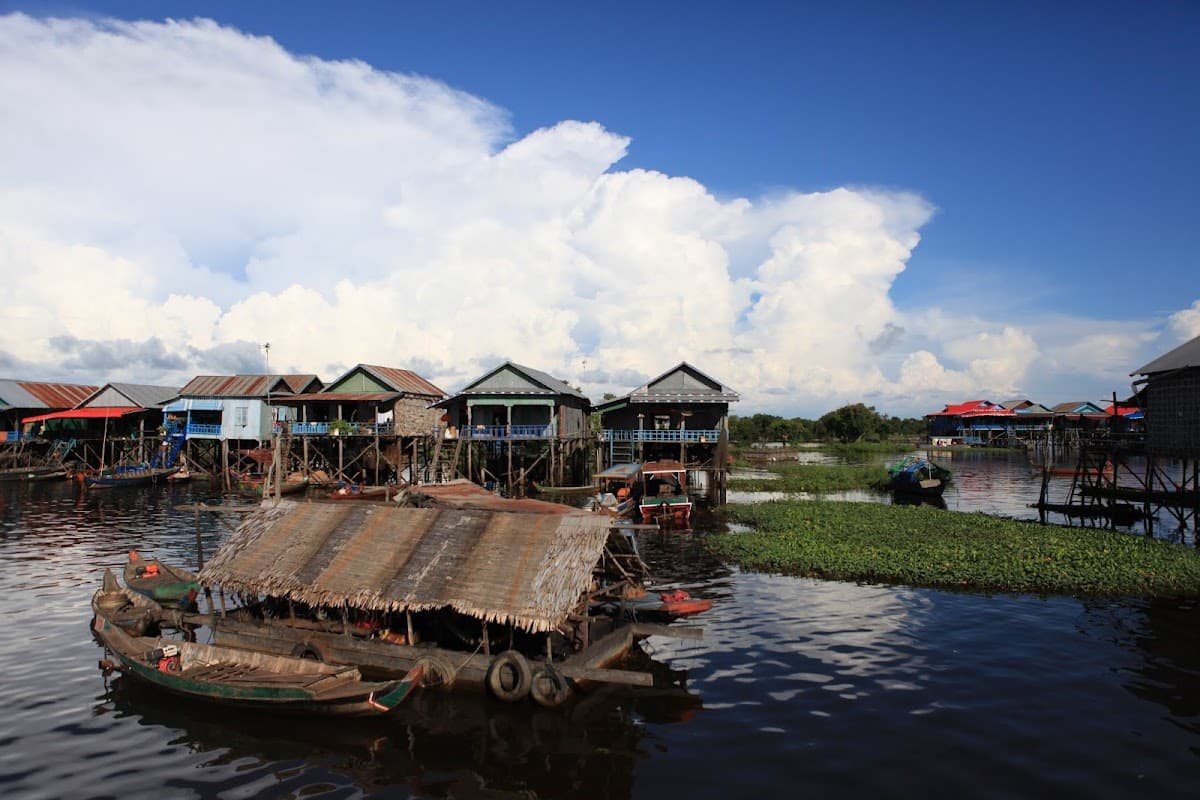
Tonlé Sap
Cambodia's great lake where floating villages dance with seasons
Cambodia's Tonlé Sap isn't just a lake. It's a living, breathing ecosystem that doubles in size during monsoon season, lifting entire villages on its swollen waters. This UNESCO Biosphere Reserve stretches across 2,700 square kilometers in dry season, then explodes to 16,000 when the rains come. The floating communities here don't just adapt to the water levels — they dance with them, moving their homes, schools, and pagodas as the lake dictates. You'll find families who've lived on houseboats for generations, their children learning to swim before they walk. But here's the thing: tourism here still feels raw and real. No resort chains, no sanitized experiences. Just Cambodia's largest freshwater lake doing what it's done for centuries, with communities that welcome curious travelers willing to venture beyond Angkor Wat.
Money-Saving Tips
- 1.Negotiate boat prices before boarding — tourist rates start at $25 but locals pay $10
- 2.Buy supplies in Siem Reap, not at floating villages where prices double
- 3.Homestays cost $10-15 vs $50+ for Siem Reap hotels
- 4.Shared tuk-tuks to villages cost $5 per person vs $15 for private rides
- 5.Pack lunch to avoid overpriced floating restaurant meals
- 6.Bring small bills — change is scarce in remote villages
- 7.Local fishing trips cost half the price of tour company excursions
Travel Tips
- •Bring mosquito repellent — the lake breeds billions of them
- •Pack waterproof bags for your electronics and documents
- •Wear shoes you can get muddy, sandals slip on wet boat decks
- •Learn basic Khmer greetings — villagers appreciate the effort
- •Bring a headlamp for early morning boat trips
- •Download offline maps — cell service disappears on the water
- •Respect photography rules — some families charge $1 for photos
- •Book homestays through village chiefs, not tour operators