Kuching
Borneo's charming riverside gateway to wild adventures
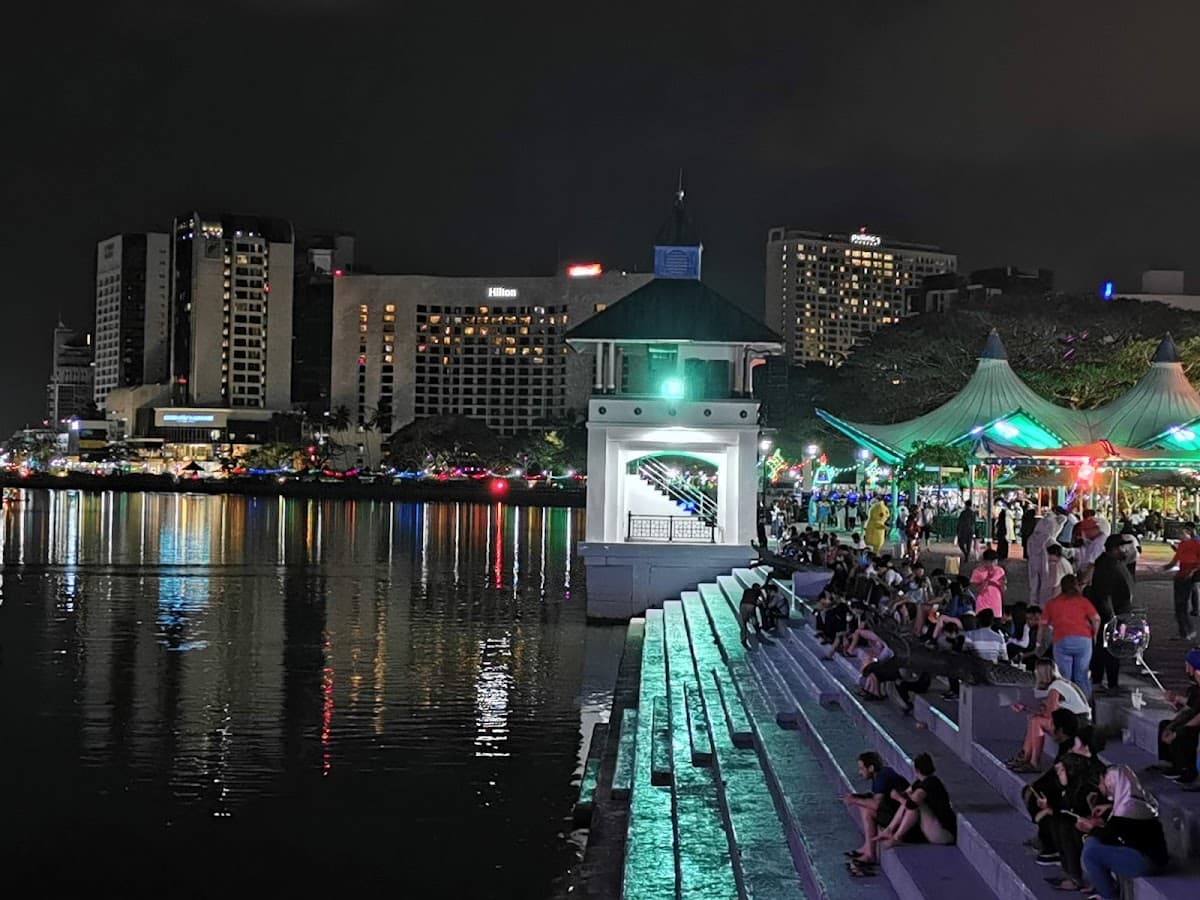
Kuching sits along the Sarawak River like a cat stretching in the sun — and yes, "kuching" means cat in Malay. This riverside capital feels worlds away from Malaysia's west coast bustle. Here, you'll find Chinese shophouses painted in fading pastels, Malay kampungs on stilts, and some of the best laksa outside of Penang. But Kuching's real draw isn't just the city itself. It's your launching pad to Borneo's wild heart — orangutan sanctuaries, limestone caves, and longhouse communities are all within day-trip distance. The city moves at its own pace. Locals linger over kolo mee at hawker stalls, and the evening brings families to the waterfront for sunset walks. It's laid-back without being sleepy, authentic without trying too hard.
Best Months
MAR – AUG
~33°C · moderate crowds
Culture & Context
CATS & CONVERGENCE
Kuching is the capital of Sarawak, sitting on the banks of the Sarawak River in Malaysian Borneo. "Kuching" means cat in Malay, and the city absolutely leans into it. Cat statues line the sidewalks, traffic circles, and parks.
There's even a Cat Museum. But the feline branding is just the quirky surface layer. Underneath is something genuinely interesting: 27 different ethnic groups living in the same city, each with their own language, food, and calendar of celebrations.
The dominant groups are Chinese, Malay, and indigenous Iban, and you feel all three constantly. One street has a Hokkien kopitiam. The next has a mosque.
Around the corner, an Iban longhouse design decorates a government building. UNESCO named Kuching a City of Gastronomy. That title is earned.
Anthony Bourdain once called the Sarawak laksa at Choon Hui Cafe the "Breakfast of the Gods," and he visited twice. Temperatures sit between 24-32°C year-round. The northeast monsoon runs November to March, bringing daily heavy rain.
May through September is drier and better for outdoor trips to places like Bako National Park. Afternoons in May are almost guaranteed to bring rain starting around 5pm, and it doesn't stop after 15 minutes like Thai rain. Budget a few indoor hours.
Local Customs
SARAWAK NOT MALAYSIA
Sarawak has its own immigration controls, completely separate from Peninsular Malaysia. Even arriving from KL, you get a fresh entry stamp. Your Peninsular visa allowance doesn't carry over — a 90-day visa for Malaysia may only get you 30 days in Sarawak.
Check this before you book.. Cash is still widely used at night markets, kopitiams, and hawker stalls. Don't assume your card works everywhere..
When visiting longhouses (a genuine privilege if invited), accept the welcome drink of tuak (rice wine) even if you don't drink much — refusing is considered rude. Sip it.. Download Grab before you land.
It's the ride-hailing app everyone uses. Street taxis exist but pricing is opaque and the experience inconsistent. Grab is both cheaper and more reliable..
Dress modestly when visiting government buildings, mosques, or temples. Covered shoulders and knees. This applies regardless of the heat..
Be careful around monkeys near Bako National Park and tourist areas. Do not feed them and do not make eye contact or show food. They are fast and aggressive and will absolutely snatch your sunglasses..
Bahasa Malaysia is the official language, but English is widely spoken in the city — hotels, restaurants, and most shops are fine. In rural areas and longhouses, a few Malay phrases go a long way.. The Malaysia Digital Arrival Card (MDAC) is mandatory for all international arrivals and must be submitted online at least 3 days before you land.
It's free and takes 5 minutes. Don't skip it or you'll face delays at immigration.
Safety
PETTY THEFT WATCH
Kuching is genuinely safe by most measures. Serious crime is rare and the city has a low-key, relaxed feel even after dark. That said, petty theft and pickpocketing can happen at busy markets, the Waterfront, and the Main Bazaar — the usual crowded tourist spots.
Keep your phone in your front pocket and don't leave bags unattended. Matang Jaya is the one neighborhood worth avoiding after dark based on local reports of petty crime. The bigger practical hazard is the weather: afternoon rain from November through March can be heavy and sustained (an hour or more), so carry a small umbrella.
Tap water is not reliably safe to drink — stick to bottled water or filtered options at cafes and restaurants. Dengue fever is present in Malaysia year-round; use mosquito repellent in the evenings and wear long sleeves if you're sitting outside. The US State Department rates Malaysia at Level 1 (Exercise Normal Precautions) as of February 2026.
Healthcare in the city is adequate for standard issues, though specialized treatment may require traveling to Kuala Lumpur.
Getting Around
WALKABLE, GRAB EASY
Getting to Kuching is easy and cheap. AirAsia runs frequent flights from Kuala Lumpur in about 90 minutes, often with promotional fares if you book early. There are also direct international flights from Singapore, Brunei, Indonesia, and Macau.
Once you're there, the city center is compact and walkable. The waterfront, Main Bazaar, and Padungan are all manageable on foot if the heat doesn't get to you (it will, eventually). Use Grab for any distance over 20 minutes of walking — it's reliable, air-conditioned, and the app shows the price upfront.
Avoid flagging street taxis unless you like surprise pricing. For longer stays or day trips to national parks, a motorbike rental is the most practical option: RM 600/month for semi-automatic or RM 800 for automatic. Bako National Park is about a 30-minute drive plus a boat ride from the city — most people join a day tour or arrange private transport.
Public buses exist but routes are not intuitive and schedules are inconsistent. Damai Beach (for the RWMF or a beach day) is about 30 minutes north and most easily reached by Grab or rented transport.
Useful Phrases
Money-Saving Tips
- 1.Eat at hawker stalls and zi char shops — a full meal costs RM8-15 compared to RM40+ at restaurants
- 2.Take the 50-sen tambang boats across the river instead of RM10 Grab rides
- 3.Book accommodations during weekdays — weekend rates can be 40% higher
- 4.Buy groceries at local markets instead of hotel convenience stores — prices are triple
- 5.Join group tours for day trips — solo travelers pay premium rates for private transport
- 6.Carry cash — many local spots don't accept cards, and ATM fees add up
- 7.Avoid airport transfers from hotels — public buses cost RM4 vs RM60 for hotel shuttles
Travel Tips
- •Download offline maps — cell coverage drops quickly outside the city
- •Bring insect repellent with DEET — dengue fever is present year-round
- •Pack a rain jacket, not an umbrella — sudden downpours make umbrellas useless
- •Learn basic Malay greetings — locals appreciate the effort, especially in rural areas
- •Carry tissues everywhere — public restrooms rarely provide toilet paper
- •Book national park permits online in advance — daily visitor limits apply
- •Wear long sleeves and pants for jungle trips — leeches and thorns are real
- •Keep passport copies separate from originals — some tour operators require ID
- •Bring a headlamp for cave visits — phone flashlights aren't sufficient
- •Pack quick-dry clothes — humidity means nothing dries overnight