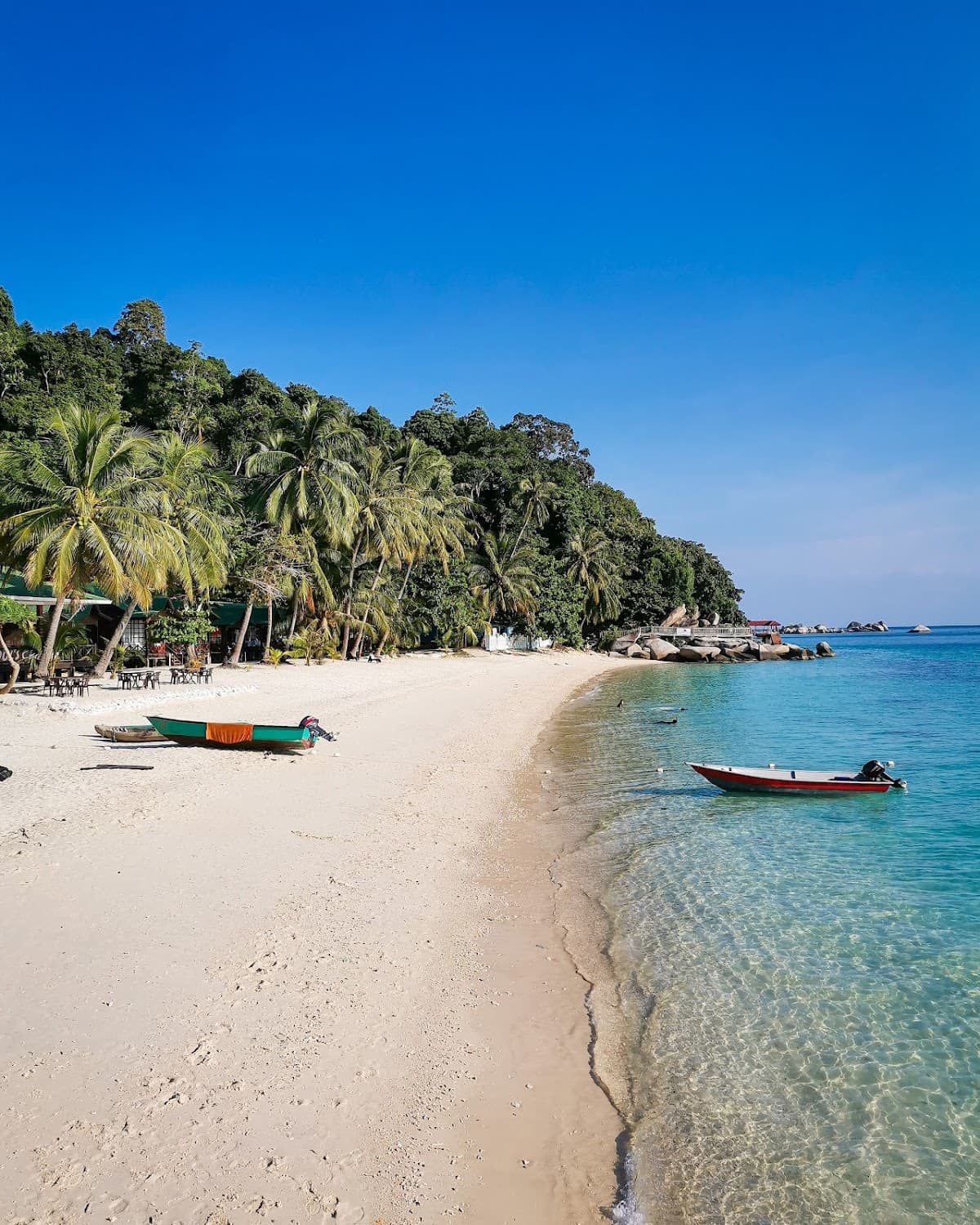
Perhentian Islands
Malaysia's tropical diving paradise with crystal waters and coral reefs
The Perhentian Islands sit 19 kilometers off Malaysia's northeast coast like two emerald drops in the South China Sea. Perhentian Besar and Perhentian Kecil offer some of Southeast Asia's clearest waters, where you can spot blacktip sharks from the surface and dive coral walls that drop into deep blue. No cars, no ATMs, no rush. Just jungle-backed beaches, dive boats puttering between islands, and that rare feeling of being properly disconnected. The islands close during monsoon season, making them feel even more special when they reopen each March.
Best Months
MAR – SEP
~33°C · moderate crowds
Culture & Context
MALAY MUSLIM SANCTUARY
The Perhentian Islands sit in Terengganu state, and that matters. Over 90% of the population here is Malay and Muslim. The word "Perhentian" roughly translates to "stopping point" in Malay, which tells you everything about the pace of life.
On the beach, no one cares what you're wearing. Walk into Fisherman's Village on Kecil, though, and you should cover your shoulders and knees. It's not optional etiquette.
It's just respectful. The Floating Mosque (Masjid AR Rahman) off the coast of Kecil is genuinely worth visiting. Built for around $3 million USD, it appears to hover over the water at high tide.
Entry is free, but dress appropriately. Shoulders covered, knees covered, and women may need a headscarf. There are no roads on either island.
No cars. No motorbikes. That single fact shapes everything about the experience here.
The call to prayer drifts across the water five times a day. Budget accommodation on Kecil often runs generators that shut off between 10am and 5pm. Plan your phone charging accordingly.
2026 is Visit Malaysia Year, and Terengganu is leaning into it, so expect slightly more organized cultural programming near the jetty and fishing village areas than in previous years.
Local Customs
COVER UP, RIGHT HAND
Dress modestly when passing through Fisherman's Village on Kecil or any local community area. Beachwear stays on the beach.. Remove your shoes before entering homes, certain shops, and all mosques and temples..
Use your right hand for eating, passing items, and greeting people. The left hand carries a different cultural association in Islamic and Malay tradition.. Point with your thumb, not your index finger.
Pointing with the index finger is considered rude throughout Malaysia.. Alcohol is limited and expensive on the islands. What exists is mostly found on Long Beach on Kecil.
Bring your own from the mainland if you want to drink regularly.. Drugs carry extremely harsh penalties in Malaysia. Don't..
Tap water is not safe to drink. Bring a filtered water bottle or buy sealed mineral water.. Budget chalets often run generators that shut off between roughly 10am and 5pm.
Charge devices in the evening.. There are no ATMs on either island. Bring sufficient cash in Malaysian Ringgit from the mainland..
Respect the marine park rules: no touching coral, no feeding fish, no standing on reef formations. Violations have actual consequences here.
Safety
SAFE, FOLLOW RULES
The islands are generally safe. Petty theft is rare, there are no touts hassling you, and the local community is genuinely friendly. A few practical things that actually matter: drugs are completely illegal in Malaysia with severe mandatory penalties, including for cannabis.
Don't. Tap water is unsafe. Use a filter bottle or buy sealed mineral water.
The boat crossing from Kuala Besut can get rough, especially toward the end of the season in October. The speedboats are small and there is no port on the islands, so you wade in from a small dock. Emergency number in Malaysia is 999.
Water taxis operate after dark but are more expensive at night, and walking jungle paths between beaches in the dark is genuinely disorienting. Use a torch and tell someone where you're going. The marine park regulations are real: touching coral or harassing turtles can result in fines.
Waste management on the islands is a known problem, particularly around Fisherman's Village. The water in the tourist areas is generally clean, but the fishing side of the island has visible litter issues. Pack out what you bring in.
Getting Around
BOATS & JUNGLE PATHS
There is no airport on either island. Getting here takes commitment. From Kuala Lumpur, fly to Kota Bharu (1 hour) then take a taxi to Kuala Besut Jetty (about 1 hour, 70-90 MYR).
Alternatively, take an overnight bus from Terminal Bersepadu Selatan (TBS) in KL direct to Kuala Besut for around 40-51 MYR. The bus takes roughly 9 hours. From the jetty, speedboats depart between 9am and 5pm without a fixed timetable.
They leave when full. The return trip costs 70 MYR, one way is 40 MYR. The crossing takes 30-40 minutes.
Boats from the islands back to the mainland depart at 8am, 12pm, and 4pm, or when full. Tell the boat operator your resort and they'll drop you as close as possible. On the islands, water taxis are how you move between beaches and between the two islands.
The trip between Kecil and Besar takes about 10 minutes and costs around 12 MYR. Longer beach-to-beach trips can cost 20-50 MYR. There are no roads, no cars, no motorbikes.
Walking jungle paths is free and most don't require a guide. Long Beach to Coral Bay is a classic 15-minute walk on Kecil. The full trail around Kecil by kayak takes 3-5 hours.
Useful Phrases
Money-Saving Tips
- 1.Bring all cash needed – no ATMs on either island and cards rarely accepted
- 2.Eat at local warungs instead of resort restaurants to save 50-70% on meals
- 3.Book accommodation directly through Facebook pages to avoid booking fees
- 4.Share water taxi costs with other travelers – they charge per boat, not per person
- 5.Buy snacks and toiletries in Kuala Besut before taking the boat over
- 6.Visit during shoulder season (March-May, September) for lower accommodation rates
- 7.Rent snorkeling gear by the day rather than per use to save money on multiple sessions
Travel Tips
- •Pack reef-safe sunscreen – regular sunscreen damages the coral reefs
- •Bring a waterproof phone case for underwater photos and boat rides
- •Download offline maps before arriving as WiFi is spotty across both islands
- •Pack insect repellent for jungle walks and evening beach time
- •Bring a headlamp or flashlight – paths between beaches have no lighting
- •Check boat schedules the night before departure as they change with weather
- •Book diving courses in advance during peak season as spots fill up quickly
- •Respect turtle nesting sites and maintain distance if you encounter turtles while snorkeling
Frequently Asked Questions
Explore Perhentian Islands
BUILD YOUR
PERHENTIAN ISLANDS PLAN
Insider picks, smart timing, and a plan ready when you are.
Start Planning