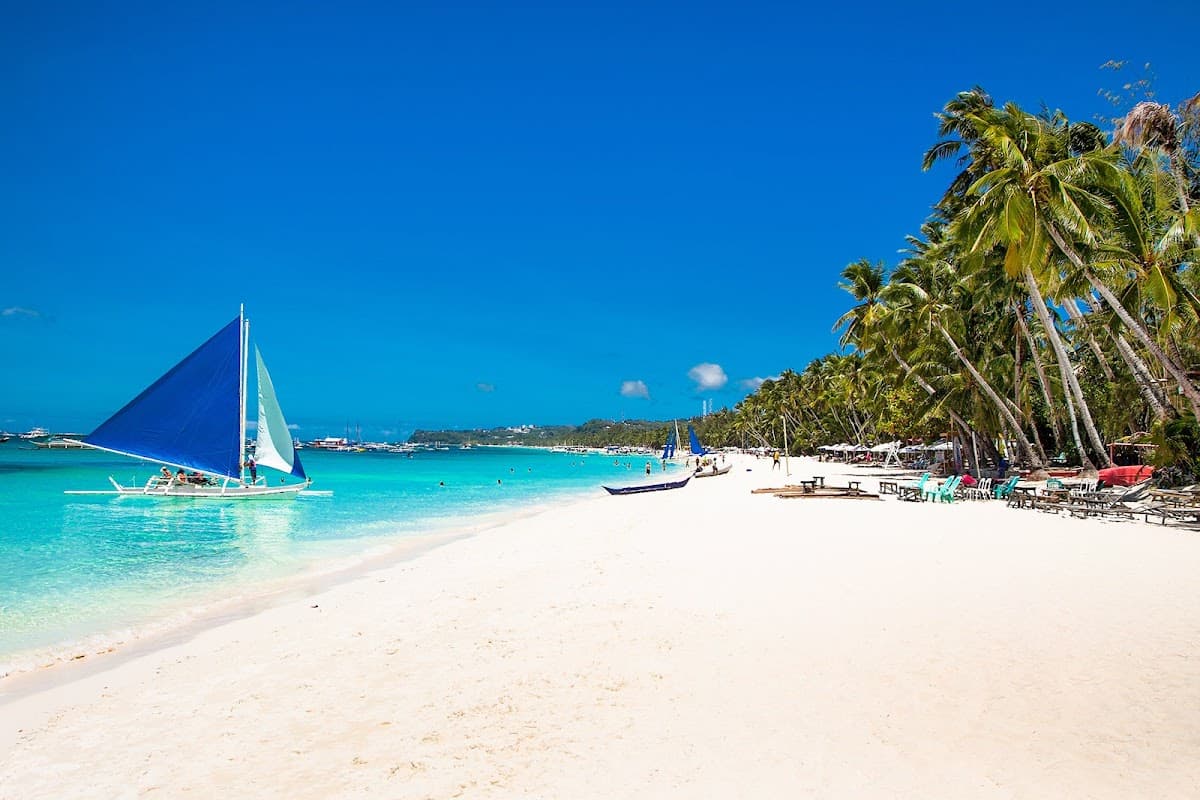
Boracay
Philippines' party island with pristine white sand beaches
Boracay isn't just another tropical island. It's where backpackers blow their budgets on fire dancing shows, honeymooners sip cocktails on talcum-powder sand, and adrenaline junkies kitesurf until sunset. This 4-mile stretch of paradise in the Philippines packs more action per square meter than anywhere else in Southeast Asia. But here's what the Instagram posts don't show you: the island gets seriously crowded, especially around Station 2. The good news? You can still find your slice of paradise if you know where to look.
Best Months
JAN · FEB · MAR · APR · MAY · NOV · DEC
~30°C · high crowds
Culture & Context
COMEBACK ISLAND
Boracay is a tiny 7-kilometer island in the Western Visayas that punches way above its weight. It went from a backpacker haunt in the 1970s to one of the world's most famous beaches, then nearly destroyed itself through overcrowding and raw sewage pumping into the sea. In 2018 the Philippine government did something almost unthinkable: closed the whole island for six months to clean it up.
That closure reshaped everything. The place that reopened is cleaner, more regulated, and run by a multi-agency task force that actually enforces its rules. Locals here are largely from Aklan province and speak Aklanon as their mother tongue, though Tagalog and English are both widely understood.
The island's original indigenous community, the Ati people, are still present, their Inati language now spoken by very few. The culture is warm and hospitable in a distinctly Filipino way, and the island runs on "island time" — which is fine once you stop fighting it.
Local Customs
RULES HEAVILY ENFORCED
No drinking alcohol on White Beach or any public beachfront. It's an actual law enforced by local marshals, not a suggestion. Keep your drinks inside the bar where you bought them..
No smoking outside designated areas. First offense is PHP 500, repeat offenders pay PHP 1,500. Designated smoking spots exist but aren't always well-signed, so ask your hotel where the nearest one is..
Single-use plastics including straws and stirrers are banned island-wide. Violations start at PHP 2,500. Bring a reusable bottle..
Do not take sand, pebbles, or shells from the beach. This sounds harmless until you realize it's a PHP 2,500 fine and potential imprisonment for repeat offenders. Anything white and sandy found in your luggage off-island counts as evidence..
Cover up when walking through residential areas and local streets. Swimwear is fine on the beach. The moment you're in a restaurant, shop, or walking through Balabag or the interior, a shirt and shorts are the respectful minimum..
Tipping isn't mandatory but 10% in restaurants where no service charge is already included is standard. Round up trike fares. Small tips for hotel porters are appreciated..
Always ask before photographing locals, especially in the interior barangays away from the tourist strip. Filipinos are generally warm and will often say yes, but the ask matters.. You need a confirmed booking from a DOT-accredited hotel to enter the island.
'No Booking, No Entry' is enforced at Caticlan Jetty Port. This is not optional.. Po and Opo are respect markers added to sentences when speaking to elders or authority figures.
You don't need to use them, but noticing when locals use them with you is useful context.. Drone photography requires a permit from both the Civil Aviation Authority of the Philippines and the local Mayor's Office. Flying without one is a real enforcement risk on the island.
Safety
WATCH YOUR DRINK
Boracay is genuinely safe for tourists, especially across White Beach and the main resort zones. But 'safe' doesn't mean 'zero risk.' The beach-relaxed atmosphere makes people careless.
Don't leave phones, wallets, or cameras on towels while you swim, even for a minute. Station 2 and busy nightlife areas are where most opportunistic theft happens. Agree on tricycle fares before getting in — overcharging first-timers at the port is common.
The sunset-to-cocktail pipeline is fast on this island, and most tourist trouble happens after drinking; keep an eye on your drink in bars. The rainy season (June–October) brings typhoon risk and rough seas that can delay or cancel boat transfers. Algal bloom season runs roughly February to June along the shore, though by late April it typically clears.
There's a hospital on the island and several clinics, but for serious medical situations, Kalibo or Manila is where you want to be. Emergency number is 117 or 911, though 911 routes to Manila call centers. Water from taps isn't reliably potable — stick to bottled or filtered.
ATMs at D'Mall can run low during peak season, so don't arrive on a Friday night with no pesos.
Getting Around
BOATS & E-TRIKES
Getting to Boracay involves multiple hops no matter where you're coming from. There's no airport on the island itself. Fly into Caticlan Airport (MPH) for the closest option: the airport is 2 km from Caticlan Jetty Port, and from there a 10-15 minute boat ride gets you to the island.
Alternatively, fly into Kalibo Airport (KLO), which is cheaper on flights, but adds a 1.5-2 hour van ride to the port. At Caticlan Jetty, pay the environmental fee (PHP 300 for Filipinos, PHP 600 for foreigners), terminal fee (PHP 150), and boat fare (PHP 50 for a pump boat or PHP 100 for a speedboat).
Save time by pre-registering and paying via the Boracay iPass system at aklan.gov.ph/boracay-ipass — you just show a QR code at a dedicated counter instead of queuing at four separate windows.
Once on the island, there are no cars. E-trikes (electric tricycles) are the main way to get around. A shared ride runs PHP 15-25 per person along the main road route.
Charter one for PHP 150-350 if you have luggage or want door-to-door. But honestly, walking the beach path is often faster than the main road and far more enjoyable. Most resorts in Station 1 have their own boats and port lounges — check when booking.
For international visitors: Philippine Airlines, Cebu Pacific, and AirAsia all fly Manila to Caticlan daily. Book the Manila leg separately from your international flight to avoid baggage issues if connections are tight.
Useful Phrases
Money-Saving Tips
- 1.Buy groceries at Talipapa Market instead of hotel shops – prices are 3x cheaper
- 2.Negotiate tricycle fares before getting in, especially for longer trips across the island
- 3.Book accommodations directly with hotels during low season for better rates than booking sites
- 4.Eat at local carinderias near the market – full meals cost ₱150 vs ₱600 at beach restaurants
- 5.Buy alcohol at 7-Eleven before hitting the bars – beachfront drinks cost 4x retail price
- 6.Book island hopping tours the night before for better prices than same-day bookings
Travel Tips
- •Bring reef-safe sunscreen – the island banned harmful chemicals to protect coral reefs
- •Download offline maps before arriving – cell service gets spotty during peak season
- •Pack flip-flops for beach walking – the sand gets scorching hot by midday
- •Book ferry tickets in advance during peak season – boats fill up fast
- •Bring a waterproof phone case for water activities and beach days
- •Learn basic Tagalog phrases – locals appreciate the effort and it helps with prices