
Ha Long Bay
Emerald waters dotted with limestone karsts and floating villages
Ha Long Bay isn't just another pretty postcard. Sure, those emerald waters dotted with 1,600 limestone karsts look impossible, but here's what the photos don't tell you: you'll share this UNESCO site with about 6 million other visitors each year. And that's okay. Some places earn their crowds.
The bay stretches across 1,553 square kilometers of northern Vietnam, where Cat Ba Island anchors the southern edge and floating fishing villages still harvest pearls the way their great-grandparents did. You can sleep on a traditional junk boat, kayak through hidden caves, or watch the sunrise paint those ancient towers gold from your hotel balcony in Ha Long City.
But timing matters here. Show up in July and you'll battle typhoon season and cruise ship crowds. Come in October, and you'll have cool mornings, clear skies, and enough space to actually hear the water lapping against those famous rocks.
Best Months
MAR · APR · MAY · SEP · OCT · NOV
~27°C · moderate crowds
Culture & Context
LIMESTONE DRAGON LEGEND
Ha Long Bay sits in Quang Ninh Province, about 170 kilometers east of Hanoi. The name literally translates to "descending dragon," rooted in a legend about a dragon plunging into the sea and carving the bay's valleys with its tail. The result is roughly 1,969 limestone islands rising from the Gulf of Tonkin, most of them uninhabited and unnamed.
UNESCO declared it a World Heritage Site in 1994, expanded the inscription in 2000, and has recognized it three times total. Ha Long City is the gateway, split into two very different worlds: Bai Chay (the tourist zone, west side) and Hon Gai (where locals actually live, east side, connected via Bai Chay Bridge). The bay itself is managed with increasing strictness — quarterly boat inspections, mandatory insurance, and unannounced maritime safety checks have reduced violation rates by 62% since 2020.
But the cruise industry here is massive. There are thousands of boats on the water, and quality varies wildly. The seaplane service from Hanoi, once a popular option, stopped operating in April 2026.
The bay is genuinely spectacular. That's not hype — it's just fact. It does, however, come with an entire tourism ecosystem built around extracting money from people who don't know local prices.
Go in with eyes open and it rewards you.
Local Customs
BARGAIN STREET, PAY TOURIST
Bargaining is expected at the Ha Long Night Market and local markets in Hon Gai. The waterfront tourist restaurants in Bai Chay do not negotiate — they overcharge and that's the whole model. Know the difference..
Always agree on a price with a xe om (motorbike taxi) BEFORE you get on. Non-negotiable. The moment you're seated, your leverage is gone..
Don't photograph people in floating fishing villages without asking first. These are working communities, not exhibits.. At pagodas and temples — including Long Tien Pagoda at the foot of Bai Tho Mountain — cover shoulders and knees.
Ha Long is relaxed by Vietnamese standards, but religious sites are not the beach.. Tipping is appreciated but not mandatory. On cruises, 50,000–100,000 VND for the crew is appropriate for good service.
At restaurants, 20,000–50,000 VND is plenty.. Don't touch cave formations. Ever.
The stalactites in Sung Sot Cave took thousands of years to form.. Vietnamese culture is conservative. Public displays of affection beyond holding hands draw stares, especially outside tourist zones..
Cash is still preferred at street markets and smaller stalls. Carry Vietnamese Dong in smaller denominations. ATMs in Halong City have better exchange rates than hotel desks..
Don't drink tap water anywhere in the bay region. Stick to bottled water or use a filtered bottle.. On cruises, follow crew safety briefings seriously.
The bay looks calm — and usually is — but the Australian government explicitly notes that vessels have sunk and people have died on Ha Long Bay from unregulated operators.
Safety
CHOOSE YOUR BOAT CAREFULLY
Biggest safety issue by far: the cruise boat you choose. Cheap cruises offered by random "travel agencies" in Hanoi's Old Quarter for $40–60 are typically overcrowded day boats with 80+ passengers, uninspected safety equipment, and no private cabins. Multiple fatalities have been recorded on Ha Long Bay from unregulated operators.
This is documented, not alarmist. Book mid-range overnight boats with 12–20 passengers maximum, licensed crews, and verifiable TripAdvisor reviews. Look for boats that meet quarterly inspection requirements.
The sweet spot for value and safety is the mid-range overnight junk ($80–180/person). Bay entrance fees also differ: Ha Long Bay charges 590,000 VND, Lan Ha Bay charges 300,000 VND. Swimming is safe only at designated spots — Titop Island, Soi Sim Island, and Bai Tu Long Bay all have supervised areas.
The water can have jellyfish and sea urchins in other areas. On land, use Grab or named taxi companies (Mai Linh, Vinasun) and never hail unmarked cabs near tourist spots. At Van Don Airport, the commission-based fixers at arrivals will quote $30–50 for rides that cost $9–11 on Grab.
Walk past them and book inside the terminal. Medical emergencies on the water are serious — the nearest international-standard hospitals are in Hanoi, 2–3 hours away. Travel insurance with marine activity coverage and medical evacuation is genuinely important here, not optional boilerplate advice.
Getting Around
HANOI SHUTTLE OR GRAB
Most travelers arrive from Hanoi, 160–170km west. Shared shuttles ($12–18/person) depart from central Hanoi hotels between 7:30–9 AM and reach Ha Long in about 3 hours via the modern expressway. Luxury limousine vans cost $30–60/person with more legroom.
Public buses from Luong Yen or My Dinh stations in Hanoi cost $8–10 but take 3.5–4 hours with more stops — fine for ultra-budget travelers comfortable navigating Hanoi's bus stations. Private car hire runs $70–90 for the whole vehicle; good value if you're splitting it with a group of 3–4.
Note: the seaplane service between Hanoi and Ha Long Bay stopped operating in April 2026. Van Don International Airport (VDO) handles domestic routes and some regional connections; it's 50km from Ha Long City, about 40 minutes by car. Grab from VDO terminal: 230,000–280,000 VND (~$9–11).
Official airport bus to Ha Long Bus Station: 60,000–80,000 VND (~$2.50–3). Within Ha Long City, Grab Bike covers most local trips for 20,000–40,000 VND.
Grab Car across town runs 50,000–100,000 VND. The Bai Chay Bridge connects the tourist and local districts but pedestrians cannot cross it — you need a vehicle. For Cat Ba Island, fast ferries from Hai Phong run every 1–2 hours for 30-minute crossings at $8–12/person.
Useful Phrases
Ha Long Bay Itineraries
View all
Emerald Karsts & Jungle Waters: 3 Days in Ha Long Bay
Weekend · $$$
Emerald Karsts & Jungle Waters: 3 Days in Ha Long Bay
Day Trip · $$$
7 Romantic Jungle-Bay Days in Ha Long & Lan Ha
Week · $$$

Romantic Jungle Bays: 3 Days in Ha Long & Lan Ha
Weekend · $$$
3-Day Jungle-Wild Romance in Ha Long Bay
Day Trip · $$$

Halong Bay Family Escape: Caves, Cruises, and Jungle Views
Week · $$$
Things to Do in Ha Long Bay
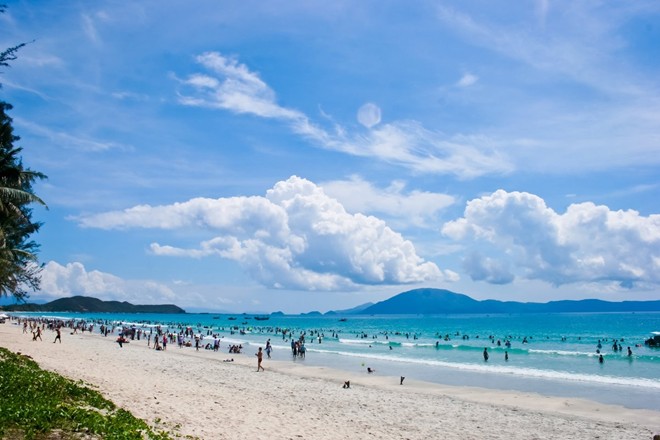
Bãi Cháy Beach & Coastal Promenade
Bãi Cháy (Halong City) · 90 min
Sun World Ha Long Park (Cable Car & Dragon Park Area)
Bãi Cháy (Halong City) · 150 min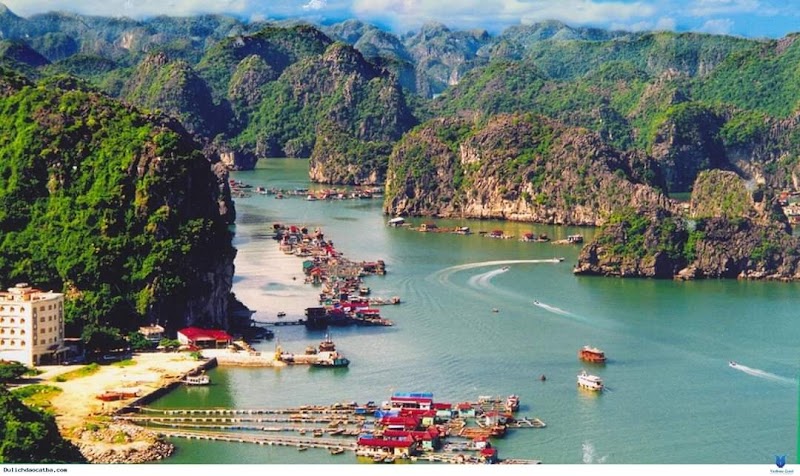
Cat Ba National Park Short Family Hike
Cat Ba National Park · 150 minMoney-Saving Tips
- 1.Book junk boat cruises directly through hotels to avoid harbor touts who promise cheap prices but deliver overcrowded boats with terrible food
- 2.Eat at the night market behind Bai Chay Bridge instead of waterfront restaurants – same seafood for one-third the price
- 3.Stay on Cat Ba Island instead of Ha Long City for better value accommodations and easier access to less crowded Lan Ha Bay
- 4.Visit during shoulder seasons (March-May, September-November) when hotel prices drop 30-40% compared to peak summer rates
- 5.Rent motorbikes on Cat Ba Island for $8/day instead of paying $25+ for organized island tours
- 6.Buy snacks and drinks before boarding boats – onboard prices are 3-4x higher than mainland shops
- 7.Use the new expressway from Hanoi (opened 2024) to cut 45 minutes off travel time and save on expensive private transfers
Travel Tips
- •Pack motion sickness pills – the hydrofoil to Cat Ba Island and boat tours can get rough, especially in winter months
- •Bring cash in small bills – floating villages and many local restaurants don't accept credit cards or large denominations
- •Download offline maps before boat trips – cell service cuts out once you're away from the main islands
- •Book accommodations 2-3 months ahead for peak seasons (March-May, September-November) when quality options fill up fast
- •Avoid Chinese New Year and Vietnamese holidays when crowds triple and prices skyrocket across all accommodation types
- •Start cave tours early (before 10am) or skip them entirely – popular spots like Sung Sot Cave become unbearably crowded by midday
- •Pack layers for overnight cruises – temperatures can drop 15-20 degrees on the water, even in summer
- •Negotiate taxi fares upfront or insist on meters – drivers often 'forget' to use them with foreign tourists