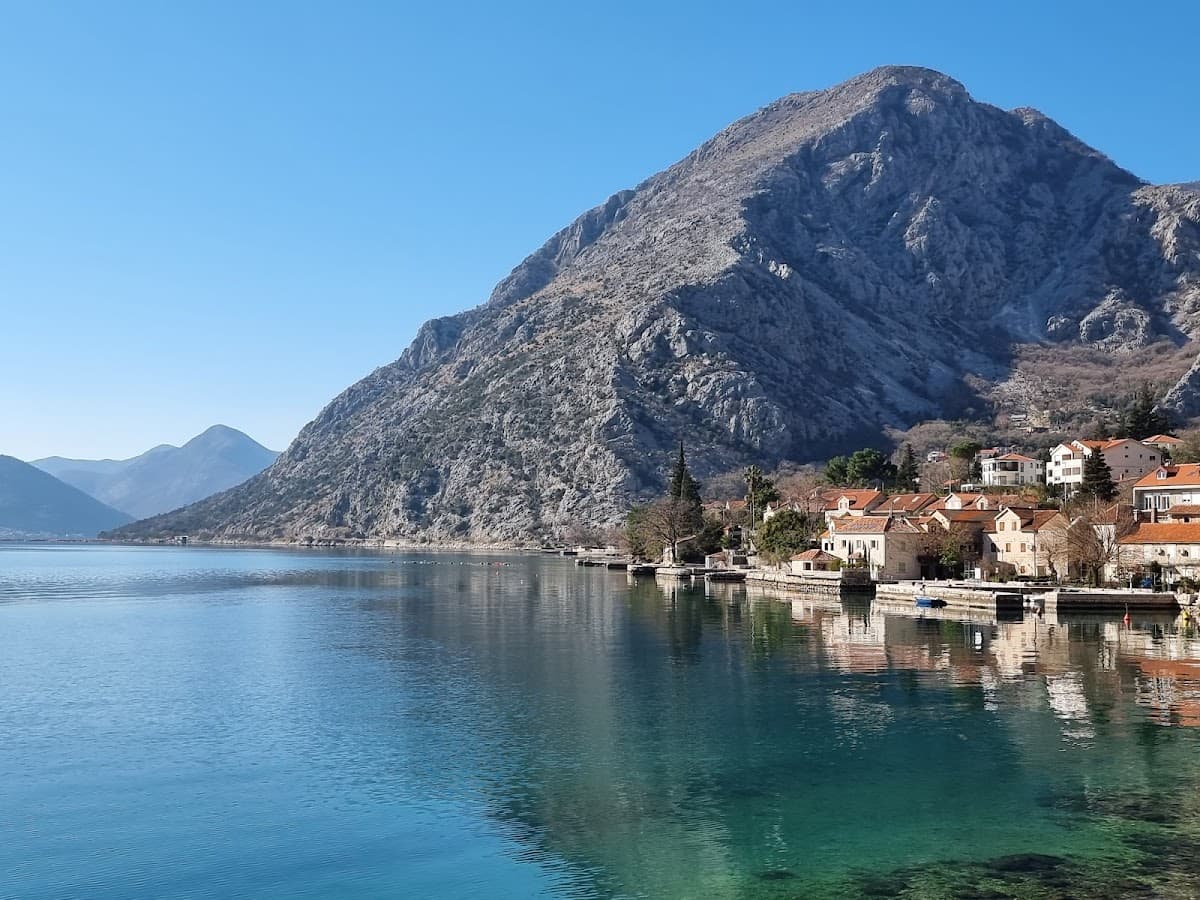
Bay of Kotor
Medieval towns nestled in dramatic fjord-like bay
The Bay of Kotor cuts into Montenegro's coast like a secret nobody told you about. Four interconnected bays create what looks like a fjord but isn't - it's actually a drowned river canyon. Medieval towns cling to the shoreline while limestone mountains shoot straight up from the water. You'll find yourself in Kotor's maze-like old town one moment, then watching the sun set over Perast's baroque churches the next. The whole bay feels like stepping into a fairy tale that somehow survived the modern world.
Culture & Context
VENETIAN MARITIME LEGACY
Kotor's entire personality is shaped by the 377 years it spent under Venetian rule (1420–1797). The architecture, the carnival traditions, the maritime culture — all of it traces back to that period. Walk through the Sea Gate and you're stepping into something that was already old when Columbus was sailing.
The town was a UNESCO World Heritage Site as of 1979, and it wears that status without making a big deal of it. The Boka Navy, founded in 809 CE, is the world's oldest continuously operating seafaring organization and is still active today — you'll see them perform at festivals in their distinctive black and gold uniforms. Kotor's V-shaped bay geography means one side gets morning sun while the other stays in shadow, then they flip in the afternoon.
It sounds charming. In summer it means the canyon can trap heat and turn mid-afternoon into something brutal. The town is also watching Montenegro's EU accession process closely — Montenegro adopted the euro in 2002 and has been an EU candidate since 2010.
The legal, cultural, and economic changes that come with accession are already rippling through tourism regulations and visa rules. And yes, the cruise ships. Two or three ships per day during peak summer, each unloading hundreds of passengers into a walled city that fits maybe 5,000 comfortably.
They leave by late afternoon, and the Old Town transforms. Plan your sightseeing around that rhythm.
Local Customs
LOUD, SLOW, DEEPLY GRACIOUS
When visiting someone's home, you will be offered Turkish coffee and rakija (local grape brandy, 40%+ alcohol). Refusing either is considered rude. Accept both, sip slowly..
Greetings between friends involve one kiss on the cheek plus a hug. Family greetings are three cheek kisses. If you're unsure, follow the local's lead..
Montenegrins speak loudly and directly, and they genuinely enjoy long conversations. A chat with a shopkeeper can stretch to 15 minutes. That's not a problem — it's the point..
Tipping isn't mandatory but appreciated. Rounding up the bill or leaving 10% in sit-down restaurants is the norm.. Dress codes matter in churches.
Knees and shoulders must be covered to enter any religious site in the Old Town, including St. Tryphon's Cathedral. Scarves and wraps are sold near the Sea Gate..
Register your stay within 24 hours of arrival — hotels do this automatically, but Airbnb hosts sometimes don't. If they don't, you need to visit the local Tourist Info Office in the Old Town. There is a fine for not registering..
Bargaining is not standard practice in shops or restaurants. You might find some flexibility at outdoor markets, but don't expect it.. Cats in Kotor are locals, not strays.
They're considered a symbol of the city and are looked after by residents. There's even a Cat Museum and a Cats' Square (Mačji Trg) in the Old Town. Don't try to chase them away from restaurant tables — that won't go well..
The 'Samo polako' pace is real. Service at cafes and restaurants is slower than in Western Europe. Order, settle in, and stop watching the clock.
Safety
VERY SAFE, WATCH PICKPOCKETS
Kotor is genuinely safe. Montenegro ranks 34th on the 2025 Global Peace Index, ahead of Sweden and Poland, and the U.S.
State Department holds it at Level 1 — the lowest possible advisory, meaning 'exercise normal precautions.' Violent crime against tourists is practically nonexistent. The realistic risks are: pickpockets during peak season (July–August) in heavily crowded areas of the Old Town, particularly when cruise ships are in; and taxi drivers quoting inflated prices to visitors.
Local taxi trips inside Kotor should cost €10–20. If someone quotes €100, they're targeting you. Make sure the meter is running from the moment you get in.
The Old Town is well-lit and regularly patrolled at night. Solo female travelers consistently report feeling safe. LGBTQ+ travelers: same-sex civil unions were legalized in 2020 and Montenegro has held Pride Parades in Podgorica since 2013, but Kotor is a conservative coastal town — public displays of affection may draw uncomfortable attention in more traditional settings.
Tap water is safe to drink. Mountain and hiking safety matters more than street crime here: summer heat on the fortress climb is serious (start before 9am or after 5pm), and weather changes quickly in the mountains. Get travel insurance with medical coverage — public healthcare is basic.
Getting Around
WALKABLE OLD TOWN, BUS OUTSIDE
The closest airport is Tivat (TIV), about 15 minutes from Kotor by taxi (€20–25). Pre-book a transfer to avoid airport markup. Podgorica Airport (TGD) is about 2 hours away — useful if you're flying from places that don't serve Tivat.
Dubrovnik Airport in Croatia is another option about 2.5 hours out, with bus connections via the border. Inside Kotor, you don't need a car for the Old Town — it's car-free inside the walls anyway.
The main bus station is just outside the Old Town gates, with regular buses to Budva (30–45 min, ~€3), Tivat (20 min), and Herceg Novi. One-way local bus tickets cost €1. Buses to Perast run from outside the walls, take about 30 minutes, and drop you in front of the main church.
The schedule can be unreliable, so build flexibility into day trips. Scooter and bike rentals are available in town — cycling around the bay is genuinely pleasant and a solid way to reach Dobrota or Prčanj. Renting a car opens up the mountain roads to Lovćen National Park and inland Montenegro.
Montenegro drives on the right, traffic police are active, and mountain roads are narrow and winding. The Tivat-to-Kotor coastal road gets congested in peak summer. Parking in tourist zones is aggressively enforced — the tow trucks are notoriously fast.
Use designated parking areas.
Useful Phrases
Itineraries coming soon
We're working on adding amazing itineraries for Bay of Kotor. In the meantime, try the app to create your own!
Money-Saving Tips
- 1.Eat lunch at konobas (taverns) inland from the coast - prices drop significantly just a few kilometers from tourist areas
- 2.Buy groceries at Idea or Voli supermarkets rather than corner shops in old towns where prices are inflated
- 3.Free parking exists in residential areas of Kotor - walk 10 minutes to save 15-20 euros per day
- 4.Many churches and museums offer combined tickets - the Kotor Cultural Route pass covers multiple sites for 8 euros
- 5.Local buses cost 1-2 euros between towns versus 20+ euros for tourist shuttles
- 6.Happy hour at waterfront bars typically runs 5-7 PM with half-price drinks
- 7.Accommodation prices in Tivat and Herceg Novi run 30-40% less than equivalent places in Kotor
Travel Tips
- •Climb Kotor's city walls early morning (opens 8 AM) to avoid crowds and heat - it takes about 90 minutes round trip
- •Bring cash - many smaller restaurants and shops don't accept cards, especially in Perast and Risan
- •The Our Lady of the Rocks boat trip from Perast costs 5 euros and runs every 30 minutes in summer
- •Download offline maps - cell service can be spotty in the mountains above the bay
- •Pack layers even in summer - temperatures can drop 10-15 degrees in the mountains
- •Book accommodations well ahead for July-August, especially in Kotor's old town where options are limited
- •The Ladder of Kotor hiking trail to Cetinje is spectacular but requires good fitness and starts before 8 AM in summer
Frequently Asked Questions
Explore Bay of Kotor
BUILD YOUR
BAY OF KOTOR PLAN
Insider picks, smart timing, and a plan ready when you are.
Start Planning