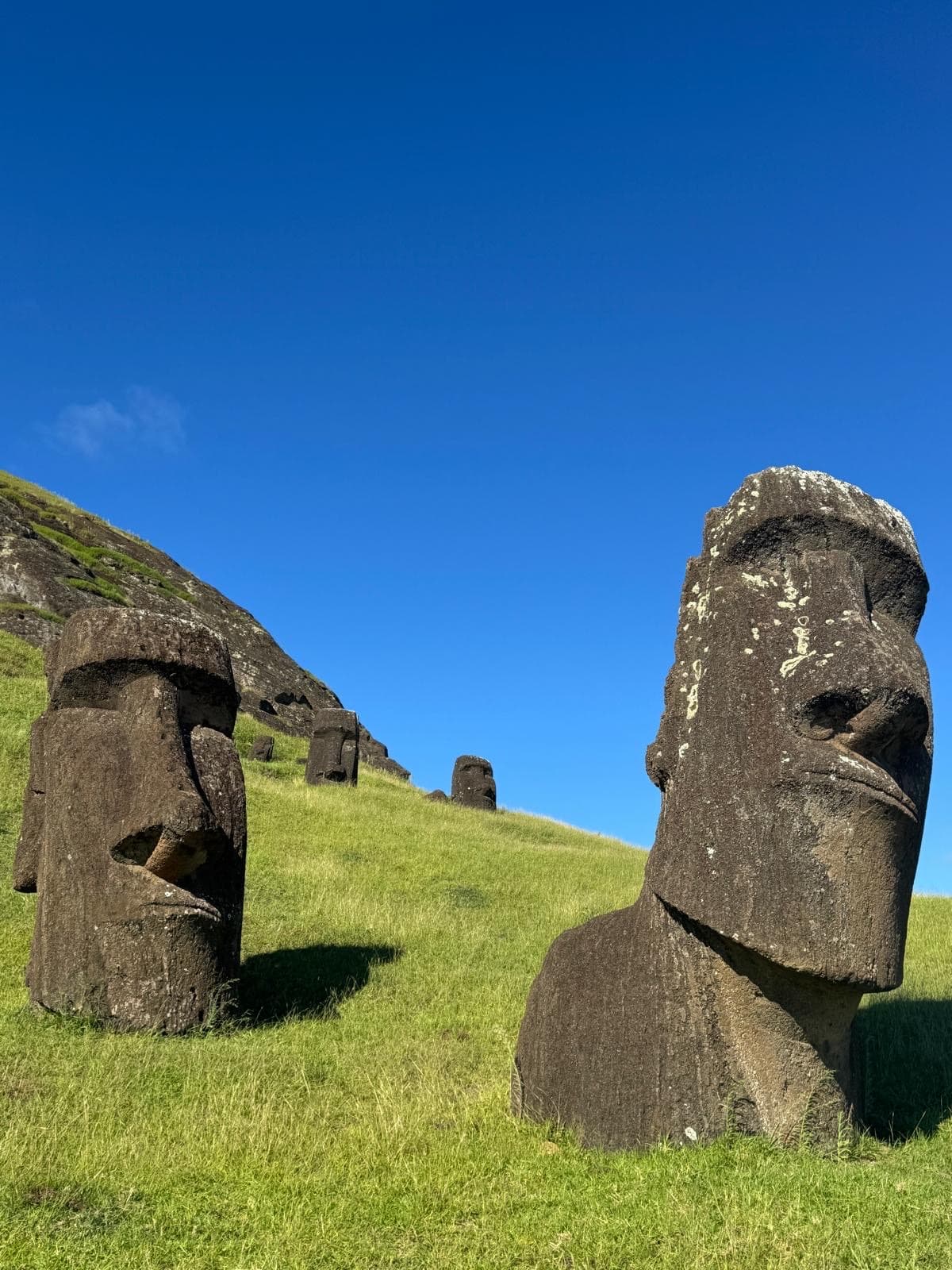
Easter Island
Remote Pacific paradise of mysterious moai statues
Easter Island sits 2,300 miles from the nearest populated land, making it one of the most isolated places on Earth. But that remoteness is exactly what makes Rapa Nui extraordinary. Here, nearly 1,000 moai statues stand guard across volcanic landscapes, their backs turned to the Pacific Ocean. The Rapanui people have called this 64-square-mile triangle of land home for over 1,500 years, creating a culture that's distinctly Polynesian yet unlike anywhere else. You'll find yourself questioning everything you thought you knew about ancient civilizations while watching sunrise paint the moai in golden light. The island challenges you — flights are expensive, accommodations fill up fast, and everything costs more than you'd expect. But standing alone with these stone giants at dawn, you'll understand why this place pulls people from across the globe.
Itineraries coming soon
We're working on adding amazing itineraries for Easter Island. In the meantime, try the app to create your own!
Money-Saving Tips
- 1.Bring cash — many places don't accept cards and ATMs charge hefty fees
- 2.Pack snacks and water from home — a bottle of water costs $4 on the island
- 3.Book accommodations 3-6 months ahead to avoid premium last-minute rates
- 4.Rent a car for multiple days to get better daily rates than single-day rentals
- 5.Buy the National Park pass ($80) at the airport — you'll need it for all major sites
- 6.Eat lunch at local spots like Empanadas Tía Berta instead of hotel restaurants
- 7.Bring sunscreen and toiletries — basic items cost 3x mainland prices
Travel Tips
- •Download offline maps — cell service is spotty outside Hanga Roa
- •Bring layers and rain gear — weather changes quickly on this exposed island
- •Pack a good flashlight for early morning moai photography sessions
- •Learn basic Rapanui greetings — locals appreciate the effort
- •Respect the moai — climbing on statues results in hefty fines
- •Book the Orongo and Rano Raraku sites for different days — each deserves half a day
- •Bring reef-safe sunscreen — the sun is intense at this latitude
- •Pack a reusable water bottle — staying hydrated is crucial in the constant wind
Frequently Asked Questions
Explore Easter Island
Ready to explore Easter Island?
Get a personalized itinerary in seconds with Takeoff.
Free on iOS. No credit card required.