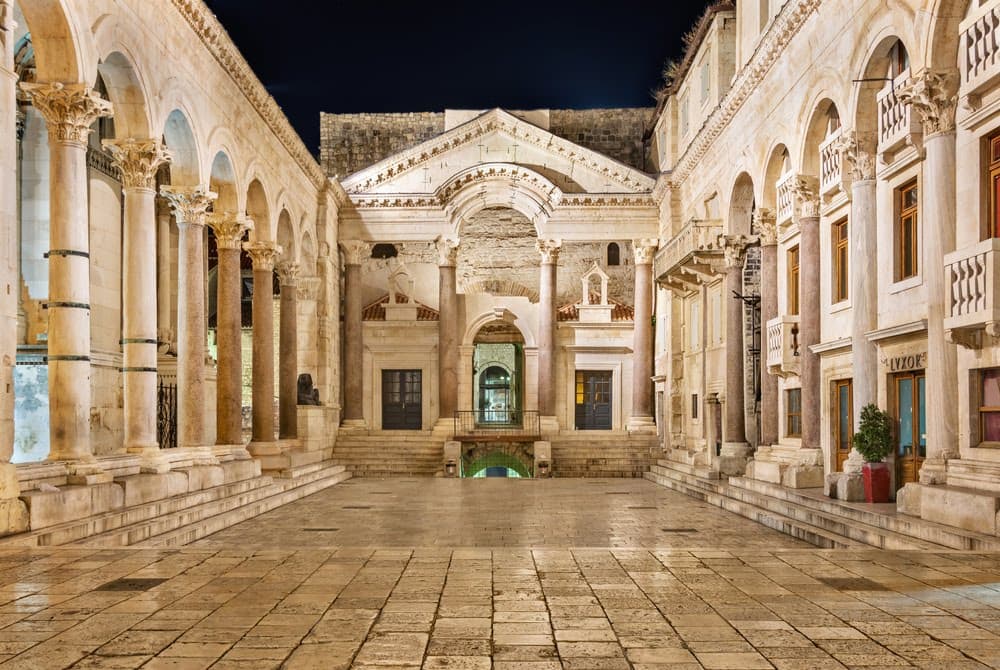
Diocletian's Palace
Living Roman palace in the heart of Split
Here's something you don't see every day: a Roman emperor's retirement home that's still very much alive. Diocletian's Palace isn't your typical archaeological site collecting dust behind velvet ropes. People live here. They hang laundry from ancient windows, run coffee shops in former imperial quarters, and sell postcards where Roman soldiers once marched.
Built around 305 AD for Emperor Diocletian, this massive complex covers about half of Split's old town. Walk through the palace gates and you're stepping into 1,700 years of continuous habitation. Medieval houses sprout from Roman foundations. Renaissance facades mask ancient walls. And that apartment building? It's probably sitting on top of a Roman temple.
The palace works as both museum and neighborhood. You'll find Roman columns supporting modern restaurants, ancient cellars turned into wine bars, and locals shortcuts through what used to be the emperor's private quarters. It's messy, authentic, and completely unique in the world of ancient sites.
Money-Saving Tips
- 1.Palace entry is free - you're walking through a living neighborhood, not a paid attraction. Only specific sites like the cathedral bell tower charge admission (35 kuna).
- 2.Restaurants inside the palace charge tourist prices. Walk 5 minutes outside the walls to Marmontova Street for better value local spots.
- 3.Buy souvenirs at the Green Market (Pazar) near the Silver Gate instead of palace shops - same items, half the price.
- 4.Free walking tours start from the Golden Gate daily at 10am and 6pm (tip-based). Much better value than private guides charging 200+ kuna.
- 5.Many palace courtyards and cellars host free cultural events in summer - check the Split Summer Festival program.
- 6.Apartment rentals inside the palace walls cost premium rates. Stay just outside in Veli Varoš neighborhood for authentic experience at lower prices.
Travel Tips
- •Download the offline map before visiting - GPS signals can be weak inside the thick Roman walls.
- •Respect the residents - people live in these ancient buildings. Keep noise down in residential courtyards and don't peer into ground-floor windows.
- •The palace layout can be confusing. Use the four gates as reference points: Golden Gate (north), Silver Gate (east), Iron Gate (west), Bronze Gate (south).
- •Summer temperatures inside the stone walls can be 5-10 degrees hotter than outside. Bring water and seek shade in the underground passages.
- •Many palace restaurants don't take reservations - arrive early for dinner (7pm) or be prepared to wait.
- •The best photos come from elevated positions. Try the cathedral bell tower, Marjan Hill, or the upper floors of cafes around the Peristyle.
- •Avoid visiting during major cruise ship arrivals (usually 9am-11am). Check the Split port schedule online.
- •Palace stones are slippery when wet. Rain boots or shoes with good grip are essential during winter visits.
Frequently Asked Questions
BUILD YOUR
DIOCLETIAN'S PALACE PLAN
Insider picks, smart timing, and a plan ready when you are.
Start Planning