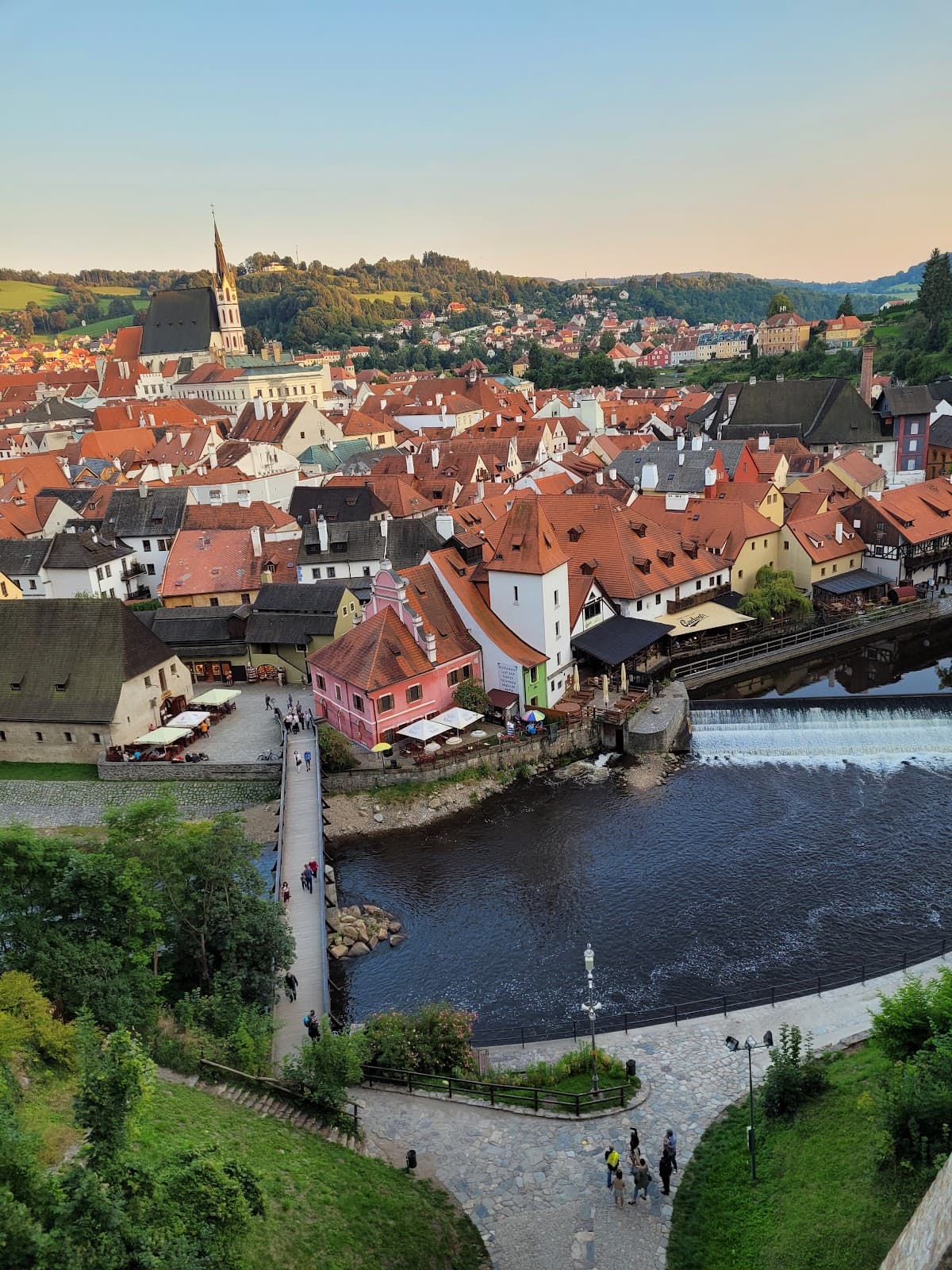
Český Krumlov
Medieval fairy-tale town frozen in time along Vltava River
Picture a medieval town so perfectly preserved it feels like stepping into a storybook. That's Český Krumlov for you — a Gothic masterpiece curled around a bend in the Vltava River like a sleeping dragon.
This UNESCO World Heritage site in southern Bohemia has barely changed since the 14th century. Cobblestone streets wind between Renaissance houses painted in sherbet colors. The massive castle complex looms over red-tiled roofs. And here's the thing — it's not a museum piece. Real people live here, work here, fall in love on these very stones.
Sure, the crowds can be intense in summer. But catch it in late spring or early fall, when mist rises from the river at dawn, and you'll understand why artists have been drawn here for centuries. The light hits those painted facades just right, casting shadows that photographers dream about.
Best Months
MAY – SEP
~22°C · high crowds
Culture & Context
BEARS, BAROQUE, BEAUTY
Český Krumlov sits in a horseshoe loop of the Vltava River in South Bohemia, and it is genuinely one of those places that makes you stop mid-stride and just stare. But fair warning: 13,000 people actually live here, and over 2 million tourists show up every year. The math is brutal on a July afternoon.
The castle complex is the second-largest in the Czech Republic, after Prague Castle, and it has a moat full of live bears, not water. That's not a gimmick. The ruling Rosenberg family claimed lineage from the Italian Orsini (literally "bear people") and kept bears here for centuries as a kind of medieval power flex.
The castle also contains one of the best-preserved Baroque theatres in the world, which survived simply because it went out of fashion and nobody touched it. Egon Schiele lived here briefly, and the Egon Schiele Art Centre (celebrating its 30th anniversary in 2026) keeps his work and legacy alive. The town uses the Czech koruna, not the euro.
Always pay in koruna.
Local Customs
ZERO TOLERANCE CULTURE
Say 'Dobrý den' when you walk into any shop, restaurant, or café. Skipping it is a social misstep locals pick up on immediately.. Tip 10–15% if service is good, but check the bill first — some tourist-oriented spots add it automatically..
The Czech Republic is not Eastern Europe. It's Central Europe. Don't call it Czechoslovakia either — that ended in 1993..
Zero tolerance for alcohol and cycling. The law is 0.0% BAC for anyone operating any vehicle, including a bike.
Fines run up to 50,000 CZK.. Street drinking in the historic center is restricted and actively enforced. Fines start at 5,000 CZK.
Drink at pub terraces and beer gardens instead, not while wandering around.. Do not feed the castle bears. Seriously.
It's prohibited and the bears have been there since the 16th century — they're not a photo prop.. Book timed-entry tickets for the castle tours online in advance, especially from June through August. Walk-up queues in peak season are genuinely punishing..
In restaurants, wait until everyone at the table has been served before eating. Saying 'Dobrou chuť' before digging in goes a long way.. Dress modestly in churches — shoulders and knees covered.
The Church of St. Vitus and the chapel inside the castle both apply.. The town is actively discussing visitor caps and a ticketing system for the historic center.
Check for any new entry requirements before arriving, especially for summer 2026.
Safety
STAY ALERT, STAY LEGAL
Český Krumlov is genuinely one of the safer small towns in Europe. Violent crime against tourists is rare. The main risks are the standard tourist-town stuff: overpriced restaurants on Náměstí Svornosti that know you won't come back, exchange offices with suspiciously favorable rates near major attractions (the Czech National Bank actively warns against these), and pickpockets in tightly packed festival crowds during peak summer events.
Keep your bag in front during the Five-Petalled Rose Festival and the International Music Festival when visitor numbers spike hard. Street drinking fines in the historic center are real and increasingly enforced — 5,000 to 10,000 CZK, roughly €200–400. The town has only 13,000 residents dealing with 2 million annual visitors and is pushing back.
Drink on pub terraces. Don't carry open containers. The US State Department rates Czechia at Level 1 (exercise normal precautions) as of 2025, and that assessment hasn't changed heading into 2026.
Getting Around
WALKABLE, BUS-ACCESSIBLE
Getting here is easiest by bus. FlixBus, RegioJet, and IC Bus all run multiple daily routes from Prague, with tickets from around $10–14 one-way and a journey time of roughly 2 hours 35 minutes. The bus drops you at Nemocniční 586 (the bus station on the edge of town), which is closer to the center than the train station and has that hill viewpoint right next to it.
The train from Prague technically works but requires transfers and takes significantly longer — not worth it unless you specifically enjoy trains. From Linz, Austria, the bus takes about 90 minutes. From Vienna, figure around 3 hours.
Once you're in Český Krumlov, you walk everywhere. The Old Town is mostly car-free, and the entire historic area is compact enough to cover on foot in an hour. There's no real local transit network worth planning around.
Taxis exist for trips to the train station or outlying hotels. Drivers, note that the historic center has very limited parking — use the paid lots on the periphery and walk in. Cycling is doable in the surrounding countryside, but remember: zero BAC applies to bikes as well.
Useful Phrases
Money-Saving Tips
- 1.Buy castle tickets online in advance — saves 50 CZK per person and lets you skip ticket lines
- 2.Eat lunch before 2pm at local restaurants for cheaper daily menus (usually 150-200 CZK vs 400+ for dinner)
- 3.Park at P4 lot (25 CZK/hour) instead of P1 (40 CZK/hour) — it's only 5 minutes further but much cheaper
- 4.Stay in nearby Holubov village instead of the historic center — half the accommodation cost with easy access
- 5.Visit museums on the first Monday of each month for free entry (except July-August)
- 6.Buy beer at grocery stores (25 CZK) instead of tourist restaurants (80+ CZK) for evening drinks by the river
Travel Tips
- •Arrive before 9am or after 4pm to avoid the worst crowds and get better photos
- •Wear comfortable walking shoes — those medieval cobblestones are slippery when wet
- •Download offline maps — GPS can be spotty in the narrow streets between tall buildings
- •Bring a portable charger — you'll take more photos than expected and drain your battery fast
- •Learn basic Czech greetings — locals appreciate the effort even if they speak English
- •Pack layers even in summer — riverside location means cool evenings and morning mist
- •Book restaurant reservations for dinner, especially May-September when tables fill quickly
- •Carry cash — many smaller shops and cafes don't accept cards despite being in tourist areas
Frequently Asked Questions
Explore Český Krumlov
BUILD YOUR
ČESKÝ KRUMLOV PLAN
Insider picks, smart timing, and a plan ready when you are.
Start Planning