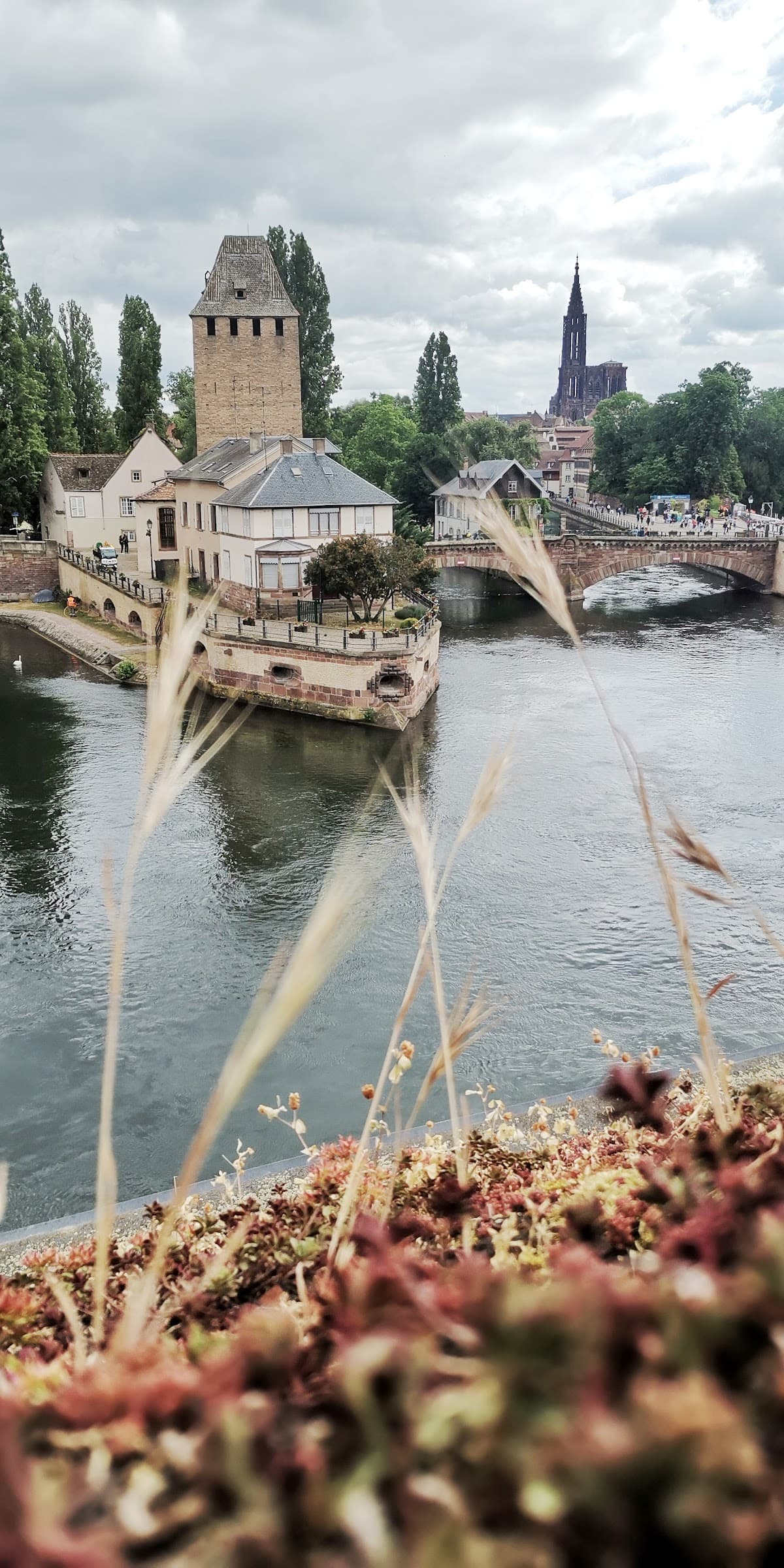
Strasbourg
Franco-German cultural crossroads with European Parliament grandeur
Strasbourg sits right on the Rhine, caught between France and Germany like a cultural ping-pong ball that's been bouncing for centuries. The result? A city that speaks both languages, serves sauerkraut with wine, and houses the European Parliament in a building that looks like it belongs in Brussels.
Walk through Grande Île and you'll see half-timbered houses that could be straight out of a Grimm fairy tale, then turn a corner to find a French café serving tarte flambée. The Cathédrale Notre-Dame dominates the skyline with its single spire – they ran out of money for the second one, but honestly, it looks better this way. This is where Gutenberg perfected his printing press, where Goethe studied, and where EU politicians debate the future of Europe over lunch breaks in Petite France.
Best Months
APR · MAY · JUN · SEP · OCT · DEC
~17°C · moderate crowds
Culture & Context
FRANCO-GERMAN BLEND
Strasbourg sits right on the French-German border, and the city knows it. Street signs are dual-language. Tram stops like Langstross/Grand'Rue carry both their Alsatian and French names.
The region has changed hands between France and Germany five times since 1681, and locals have a distinct Alsatian identity that sits comfortably alongside both national cultures. It's not quite French, not quite German. It's something stubbornly its own.
The city also serves as the seat of the European Parliament, the Council of Europe, and the European Court of Human Rights, which means suits from every country on earth mingle with students from the University of Strasbourg and old Alsatian grandmothers comparing produce at the weekly market. That mix creates a city that feels more cosmopolitan than its size (around 300,000 people) would suggest. The Grande Île, the historic island at the city's core, is the first city center ever classified entirely as a UNESCO World Heritage Site.
But look past the half-timbered facades and you'll find a city genuinely wrestling with rising rents, a changing center, and older residents who quietly mourn the loss of traditional shops replaced by boutiques aimed squarely at tourists.
Local Customs
SAY BONJOUR ALWAYS
Always say 'Bonjour' when entering any shop or café. This is non-negotiable across France, and Strasbourg is no different. Skipping it marks you immediately as someone who doesn't bother to try..
Cash still rules at food stalls and weekly markets. ATMs near Place Kléber drain fast on Saturdays and during Christmas markets. Pull euros out before you need them..
Tarte flambée is eaten with your hands. You roll the slice up and eat it. No cutlery.
Pair it with a cold Alsatian beer or a glass of dry Riesling.. Shops are closed on Sundays, and many close Monday mornings too. Some bakeries and corner shops open Sunday, but plan around this or you'll be wandering closed streets..
Bring a reusable cup to beer and wine festivals. Many stalls take €1 off your drink for skipping single-use plastic — it adds up fast.. Locals are proud to be Alsatian, which is distinct from being simply French.
If you show genuine curiosity about the Alsatian dialect, regional food, or local history, it goes a long way. Don't call it 'basically German food.' It's Alsatian..
Validate your tram ticket at the stop BEFORE boarding. Inspectors do check, and buying on the bus costs €0.60 more per trip..
Don't lock your bike to anything flimsy. Bike theft is genuinely common. Use a proper lock and return rental bikes to staffed Vélhop stations before 9 PM.
Safety
WATCH CROWDED SPOTS
Strasbourg is one of France's safer cities. Violent crime against tourists is rare. The main thing to manage is petty theft.
Pickpockets work the areas around the Cathedral, Place Kléber, Gare Centrale, and Les Halles — exactly where everyone's looking up at buildings instead of their bags. Keep your backpack zipped and in front of you on trams. Don't keep your wallet in a back pocket.
At the Christmas market, the crowds are dense enough that it becomes prime pickpocket territory, so a money belt isn't overkill. Watch for specific scams: on Pont du Corbeau, someone may offer to tie a 'free' colored string on your wrist then demand €10 once it's knotted — say 'Non merci' firmly and keep walking. Near the Cathedral, a woman may pretend to find a gold ring and offer to sell it for luck; her partner uses the distraction.
At tram stations, clipboard-wielding people claim to collect for a deaf charity while an accomplice goes for your wallet. The area around Gare Centrale gets rowdy late at night — use the lighted tram stop near Place Broglie instead of the station tunnel after 11 PM if you're alone. Hautepierre in the west gets mentioned as an area to approach cautiously at night.
The big tourist neighborhoods (Petite France, Grande Île, Krutenau, Orangerie) are all safe day and night with normal awareness.
Getting Around
TRAM & CROSS BORDER
The tram is the backbone of the city. Six lines (A through F) run by CTS (Compagnie des Transports Strasbourgeois) cover nearly everywhere you'd want to go. Five of the six lines converge at Homme de Fer, which is also the closest stop to Place Kléber and the historic center.
Trams run every 5–15 minutes from around 4:30 AM to 12:30 AM. Night service drops to once an hour on three routes after that. Buy tickets via the CTS app or a Badgéo card for €1.
90 per single trip. Buying on the bus costs €2.50 — avoid it.
A 24-hour unlimited pass costs €4.60 and pays for itself after three rides. A three-day pass is €10.
40. Validate every time you board — inspectors check. Tram Line D is special: it crosses the Rhine into Kehl, Germany, in about 15 minutes.
Useful for a cheap German grocery run or just the novelty of tram-hopping between countries. Getting to Strasbourg: TGV from Paris Gare de l'Est takes 1 hour 46 minutes. The city center is a 15-minute walk from the main train station, or two tram stops.
Strasbourg Entzheim Airport is served by a TER train connection with a 24-hour transit pass that covers it. Driving into the center during Christmas markets is a logistical nightmare — park at a P+R lot on the tram line (€7.20 for 24 hours, includes unlimited tram rides for up to 7 people) and ride in.
Or park in Kehl, Germany, for €2 all day and take the tram.
Useful Phrases
Money-Saving Tips
- 1.Buy the Strasbourg Pass for €22.50 – includes public transport, museum entries, and discounts at restaurants. It pays for itself if you visit 2-3 attractions.
- 2.Eat lunch at winstubs between 11:30am-2pm for prix fixe menus around €15-18. Same restaurants charge €25+ for identical dishes at dinner.
- 3.Shop at Monoprix or Auchan for groceries instead of corner shops. A bottle of decent Alsatian wine costs €8-12 at supermarkets vs €35+ at restaurants.
- 4.Book hotels outside European Parliament session weeks (check EU calendar) – prices drop 30-40% when MEPs aren't in town.
- 5.Take advantage of happy hour at bars around Place du Marché aux Cochons de Lait – drinks are half price 5-7pm most weekdays.
- 6.Many museums offer free entry first Sunday mornings of each month. Plan accordingly to save €8-12 per person per museum.
Travel Tips
- •Download the CTS app for real-time tram schedules. Trams run every 5-7 minutes during peak hours but can be spotty on Sundays.
- •Learn basic German phrases – many locals switch between French and German mid-conversation, especially older residents.
- •Carry cash. Smaller winstubs and traditional restaurants often don't accept cards, especially for amounts under €20.
- •Book restaurant reservations for Friday/Saturday nights, especially during Christmas market season. Popular spots fill up weeks ahead.
- •Pack layers year-round. The Rhine valley creates unpredictable weather – sunny mornings can turn rainy by afternoon.
- •European Parliament visits require advance booking and passport ID. Tours are free but fill up quickly during session weeks.