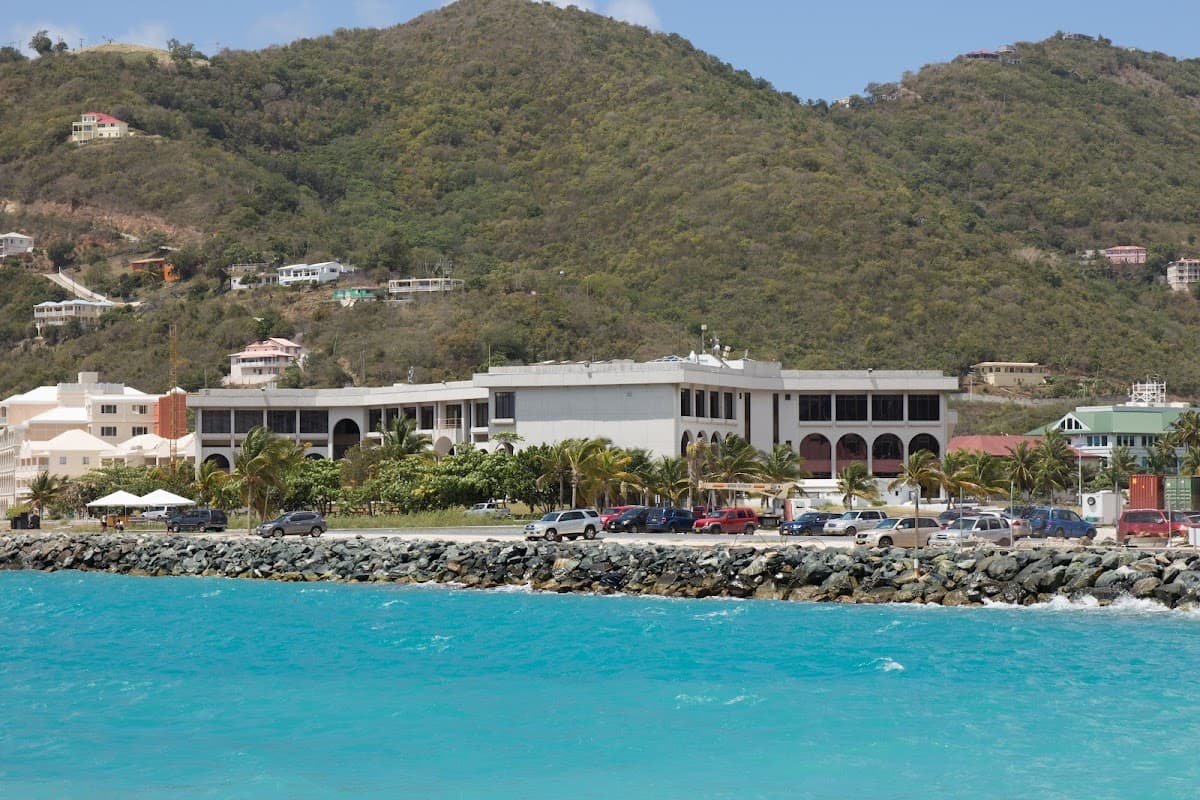
British Virgin Islands
Pristine Caribbean Sailing Paradise with Secluded Beaches
The British Virgin Islands don't just do Caribbean well — they perfect it. Sixty tropical islands scattered across crystal-clear waters, where barefoot luxury meets world-class sailing and beaches that actually live up to the photos. This isn't the overdeveloped Caribbean you're thinking of. Here, you'll find more sailboats than cruise ships, more iguanas than tourists, and beaches where your footprints might be the only ones in the sand. The BVI moves at island time, and honestly, that's exactly the point.
Best Months
JAN · FEB · MAR · APR · MAY · DEC
~29°C · peak crowds
Culture & Context
SAILING CAPITAL
The British Virgin Islands are a British Overseas Territory, but don't expect anything particularly British beyond the passport and the left-hand driving. The culture is Caribbean through and through, shaped by the history of slavery, emancipation in 1834, and the resulting African-Caribbean traditions that define island identity. The Emancipation Festival isn't just a public holiday — it's the most important cultural event of the year, and locals take genuine pride in it.
The BVI runs on the US dollar and has deep economic ties to the United States, sitting just across a narrow channel from the USVI. About half the current population are non-BVI islanders drawn by the tourism and offshore financial services industries — the territory has one of the world's largest registries of offshore companies. The sailing culture is fundamental.
The BVI is widely considered the sailing capital of the world, with steady trade winds and a sheltered channel network that draws charter fleets from everywhere. This shapes the social fabric: marinas are social hubs, beach bars expect barefoot sailors, and the rhythm of the islands follows wind and tide as much as the clock. Locals speak British English in formal settings and a distinct Tortolian dialect of Virgin Islands Creole — a musical English-based creole with African, Dutch, and Caribbean influences — in everyday life.
Manners are not performative here; they are genuinely valued. The formal greeting culture (always 'Good morning' before anything else) is the single biggest behavioral difference visitors need to understand and respect.
Local Customs
GREET FIRST, ALWAYS
Greet first, always. Walk into any shop, bar, or office and say 'Good morning' or 'Good afternoon' before speaking to anyone. It's not optional — skipping it is genuinely considered rude, and you'll feel the chill immediately..
Cover up off the beach. Wearing swimwear in town or residential areas is considered offensive. A sarong or t-shirt is all it takes.
This is a socially conservative culture despite the tropical setting.. No nude bathing anywhere in the BVI. It's not just frowned upon — it's illegal..
Drive on the left. The roads are narrow, steep, and mountain roads on Tortola have limited signage. Livestock on the road at night is a real hazard.
Take it slow.. Embrace the pace. Things run slower here intentionally.
If you show frustration at a late ferry or a relaxed restaurant service, you're the problem. 'Limin'' is a cultural value, not laziness.. Tipping is expected.
15–20% if service charge isn't already included. Check your bill before adding extra.. Carry cash.
Small beach bars, local Lolos, and taxis often don't take cards. ATMs are available in Road Town but not everywhere.. Passport required between BVI and USVI.
It's an international maritime border. Don't attempt the crossing without it.. Hurricane season runs June through November.
Monitor forecasts seriously if you're on a boat or a smaller island.. Respect the sailing community culture. The BVI is one of the world's top charter destinations.
Sailors have right of way in marinas, and there's an unspoken code of courtesy on the water.
Safety
LEVEL 1: VERY SAFE
The US State Department rates the BVI at Level 1 (Exercise Normal Precautions) as of May 22, 2026 — the lowest risk category. Violent crime against tourists is rare. The main risks are petty theft from unattended beach gear or boats, not targeted scams or street crime.
On roads, watch for steep narrow mountain roads on Tortola, limited signage, reckless local drivers especially at night, and livestock wandering onto roads after dark. Renting a 4WD vehicle is genuinely recommended. Medical care at Peebles Hospital in Road Town handles minor issues, but serious emergencies require air evacuation to St.
Thomas USVI — a $20,000+ bill without travel insurance. There is no hyperbaric chamber in the BVI, which matters for divers. Travel insurance covering medical evacuation and water activities is not optional here, it's essential.
Tap water is generally safe on Tortola but unreliable on smaller islands — bottled water is the safer call everywhere. The BVI experiences water shortages and power outages with some regularity, so don't be surprised. Hurricane season runs June through November.
Solo female travelers will find the BVI among the safer Caribbean destinations, though nightlife hubs warrant the usual common sense. Use reef-safe sunscreen to protect the coral reefs — both legally and ethically, as local marine ecosystems are closely protected.
Getting Around
FERRIES & FOUR-WHEEL
The BVI runs on water. Ferries are the backbone of getting around, and Tortola is your hub. Three main departure points on Tortola: Road Town (central, most routes), West End (ferries to Jost Van Dyke, St.
John, St. Thomas), and Trellis Bay/Beef Island (closest to the airport, ferries to Virgin Gorda). Key operators include Speedy's, Native Son Ferry, Road Town Fast Ferry, Smith's Tortola Fast Ferry, and New Horizon Ferry for Jost Van Dyke.
Trellis Bay to Spanish Town (Virgin Gorda) runs daily at 6:30am, 9am, 1pm, 4:30pm, 6:30pm, and 9pm. West End to Great Harbour (Jost Van Dyke) runs daily at 8am, 10am, 1pm, 4pm, and 6pm. Fares are roughly $30–$50 one way inter-island.
Always check schedules locally — weather cancellations happen with little notice. Most international travelers fly into St. Thomas (STT) in the USVI, then take a 45-minute ferry to Tortola.
Tortola's own Terrance B. Lettsome International Airport (EIS) at Beef Island handles short-haul regional flights from San Juan, Antigua, and St. Maarten.
On land, there's no formal public bus system. Safari vans (open-air modified pick-up trucks with bench seating, called 'safaris') are the cheapest option and run loose routes on Tortola. Taxis are reliable but expensive — agree on the fare before you get in.
Car rental (~$60–80/day, 4WD strongly recommended) is useful for Tortola and Virgin Gorda if you want to explore beyond the main ports. Drive on the LEFT. Roads are steep and narrow in the hills.
Livestock on roads at night is a genuine hazard. You'll need a temporary BVI driving permit if you don't have a local license — rental companies usually sort this out.
Useful Phrases
British Virgin Islands Itineraries
Money-Saving Tips
- 1.Book accommodations 3-4 months early for 20-30% savings during peak season
- 2.Grocery shop at RiteWay Food Markets instead of resort stores to cut food costs in half
- 3.Charter boats split among 6-8 people costs less than individual day tours
- 4.Ferry passes offer unlimited inter-island travel for $45/week vs $30 per round-trip
- 5.Eat lunch at local food trucks in Road Town - $8 roti vs $25 resort sandwiches
- 6.Villa rentals with kitchens save $100+ per day on restaurant meals for families
- 7.Book flights through San Juan instead of direct charters to save $200+ per person
Travel Tips
- •Download offline maps before arriving - cell service can be spotty between islands
- •Pack reef-safe sunscreen - many dive sites prohibit chemical sunscreens
- •Bring cash - smaller establishments and taxi drivers prefer cash payments
- •Reserve rental cars in advance - limited fleet means frequent sellouts during peak season
- •Check ferry schedules daily - weather can cause unexpected cancellations
- •Pack light layers for evening - trade winds make nights surprisingly cool
- •Bring snorkeling gear - rental quality varies and good spots are everywhere
- •Download weather apps - afternoon thunderstorms develop quickly in summer
- •Book restaurant reservations when you book hotels - popular spots fill up fast
Frequently Asked Questions
Explore British Virgin Islands
BUILD YOUR
BRITISH VIRGIN ISLANDS PLAN
Insider picks, smart timing, and a plan ready when you are.
Start Planning