
Hebrides
Scotland's mystical islands where ancient culture meets wild beauty
The Hebrides don't mess around. These Scottish islands scattered across the Atlantic offer some of Europe's most dramatic coastlines, ancient stone circles that predate Stonehenge, and beaches that rival the Caribbean (minus the warmth, obviously). You'll find over 500 islands here, though only about 100 are inhabited. The locals speak Gaelic, puffins nest on clifftops, and the Northern Lights dance overhead on clear winter nights. Here's the thing: the weather can be brutal, the midges are legendary, and getting around takes patience. But if you're after raw beauty and a glimpse into Scotland's ancient soul, nowhere else comes close.
Best Months
MAY – SEP
~16°C · moderate crowds
Culture & Context
GAELIC STILL SPOKEN HERE
The Hebrides are two island groups off Scotland's northwest coast: the Inner Hebrides (Skye, Mull, Islay, Jura, and dozens more) and the Outer Hebrides, also called the Western Isles. The Outer Hebrides are where things get genuinely remote. Think 26,000 people spread across 70-odd islands from the Butt of Lewis in the north to Vatersay in the south.
Gaelic is the first language here, not a heritage performance. You'll hear it in supermarket queues, on ferries, from the radio. The Outer Hebrides are the last place in Britain where Gaelic is spoken daily by the majority of the population.
Harris Tweed is woven here too, protected by its own Act of Parliament. You cannot legally call cloth Harris Tweed unless it was hand-woven in these islands. That's not marketing.
That's law. National Geographic named the Outer Hebrides one of its "Best of the World" destinations for 2025, so the secret is getting out. Come sooner rather than later.
Local Customs
SUNDAY STANDS STILL
Sunday shuts things down, especially in the north. On Lewis in particular, the Sabbath is observed seriously. Most shops, cafes, and visitor attractions are closed.
Even some petrol stations. Plan around it.. Wave when someone pulls into a passing place to let you through on single-track roads.
It's not optional politeness. It's just how roads work here.. Attempt a Gaelic greeting.
Even a botched 'Feasgar math' (good evening) gets a warm reaction. Locals are not precious about it; they just appreciate the effort.. Ceilidhs are not tourist shows.
They're community events anyone can walk into. You don't need to know the dances. Someone will grab your hand and show you..
Do not call whisky 'Scotch' in casual conversation with locals. It's just whisky. Or uisge-beatha if you want to be fancy about it..
Book ferries and accommodation well in advance for July and August. During HebCelt in particular, flights, ferries, and beds get booked solid.. If you're driving a motorhome or campervan, check designated spots.
Wild camping is mostly permitted under Scotland's Land Reform Act, but overnight parking in laybys is not the same thing.
Safety
RESPECT THE ATLANTIC
The Hebrides are genuinely safe. Crime is rare. The hazards here are natural, not human.
Single-track roads with passing places catch out drivers who aren't paying attention: pull left, wait, wave. Weather shifts fast. Atlantic storms cancel ferries and boat trips with short notice; always have a flexible day built into your plans.
Pack waterproofs no matter what month you go. Midges are the most-complained-about irritation. They're at their worst May to October, dawn and dusk, on still overcast days.
The good news: the Atlantic breeze on the Outer Hebrides keeps them less awful than on the Scottish mainland. Coastal and breezy spots are mostly fine. Bring Smidge repellent or Avon Skin So Soft and wear light-coloured clothing.
Sea conditions can be rough; if you're booking a boat trip to St Kilda or Mingulay, accept that it may be cancelled. Bring adequate medication supplies; remote islands have limited pharmacy access. The midges won't kill you.
The Atlantic will respect you if you respect it.
Getting Around
FERRIES & SINGLE TRACKS
Getting here takes commitment. There's no quick route. From the mainland, Caledonian MacBrayne (CalMac) runs ferries from Ullapool to Stornoway (about 2.
5 hours), from Uig on Skye to Tarbert on Harris or Lochmaddy on North Uist (about 1 hour 40 minutes), and from Oban to Barra or South Uist (longer crossings). Ferries carry cars. Book early, especially in summer.
Cancellations happen in bad weather with no warning. Loganair flies to Stornoway from Inverness, Edinburgh, and Glasgow. There's also a tiny Barra Airport where the runway is a tidal beach.
Once on the islands, a car is almost essential unless you're doing Barra (which has a circuit bus). New for 2026: all bus journeys within the Outer Hebrides cost just £2 for a single fare. Buses run Monday to Saturday only; nothing on Sundays.
No 5G anywhere on Lewis or Harris yet. 4G exists in Stornoway and Tarbert but gets very patchy outside town. There are about 25 EV charge points scattered across the islands.
Useful Phrases
Hebrides Itineraries
View allSeven Wild Days Across Scotland’s Outer Hebrides
Week · $$$
Wild Isles Weekend: A Solo Escape to the Hebrides
Weekend · $$$
Wild Hebridean Romance: 7 Days in the Isles
Week · $$$
Wild Hebridean Escape: Sands, Stones and Stormy Skies
Weekend · $$$
Wild Hebrides: A 7-Day Family Island Adventure
Week · $$$
Hebridean Wild Shores: A 3-Day Lewis & Harris Escape
Weekend · $$$
Things to Do in Hebrides
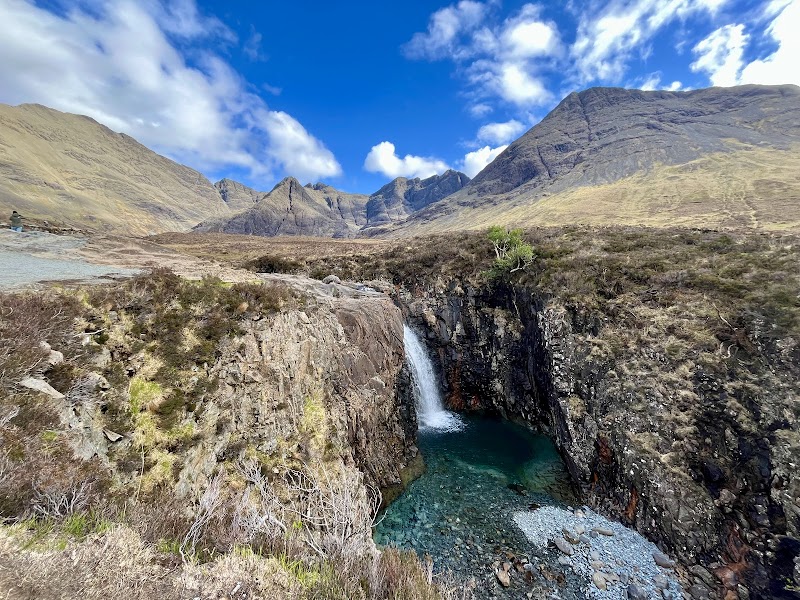
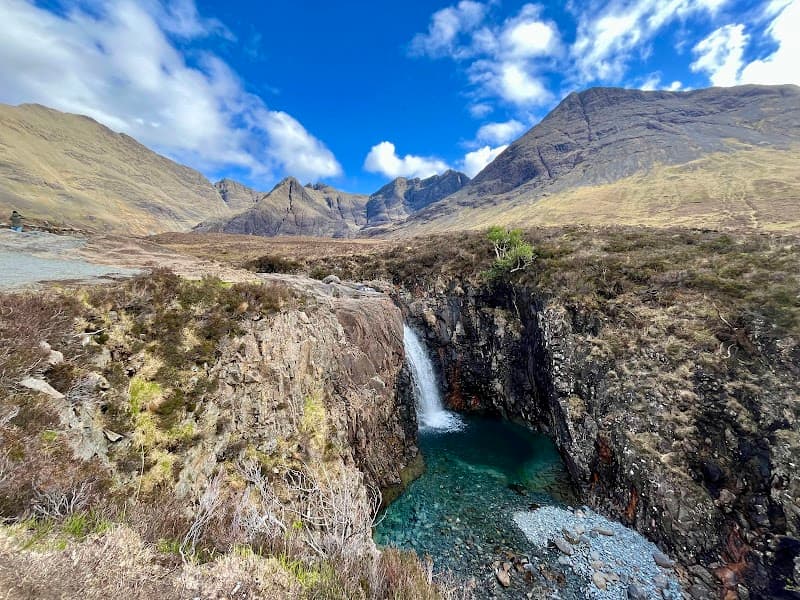
Fairy Pools Walk
Glen Brittle (Isle of Skye) · 150 minMoney-Saving Tips
- 1.Ferry foot passenger tickets cost half the price of car bookings – consider island-hopping without a vehicle
- 2.Wild camping is free and legal in Scotland, saving £20-30 per night on accommodation
- 3.CalMac's Island Hopscotch tickets offer 30% savings on multiple ferry routes
- 4.Distillery tours often include generous tastings that substitute for expensive bar visits
- 5.Local fish markets sell fresh seafood at fraction of restaurant prices
- 6.Many hiking trails and beaches are completely free to access
- 7.Supermarkets in Stornoway and Portree offer better prices than village shops
- 8.Off-season accommodation rates drop by 40-50% between October and March
Travel Tips
- •Download offline maps – mobile coverage is patchy across the islands
- •Pack layers and waterproofs regardless of forecast – weather changes hourly
- •Book ferry car spaces months ahead for summer travel
- •Carry cash – many small businesses don't accept cards
- •Respect Sunday closures on Lewis and Harris – most shops and restaurants shut
- •Bring midge head nets and repellent for June-August visits
- •Fill up petrol tanks whenever possible – stations are far apart
- •Learn basic Gaelic greetings – locals appreciate the effort
- •Check tide times for coastal walks and beach access
- •Pack snacks for long drives on single-track roads