Fiji (Mamanuca Islands)
Pristine coral islands perfect for tropical paradise escapes
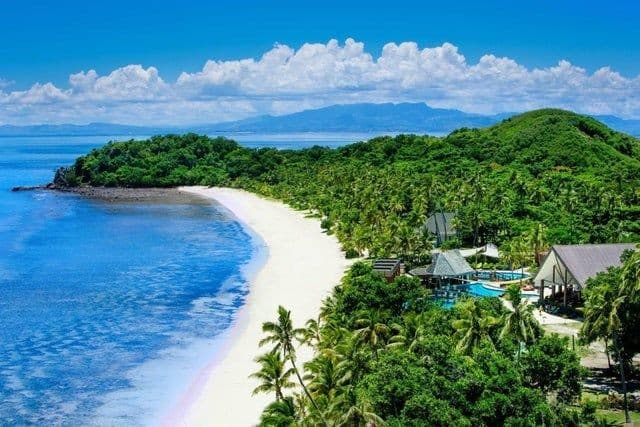
The Mamanuca Islands float like scattered emeralds just off Fiji's western coast. These 20 coral islands serve up exactly what you picture when someone says "tropical paradise" — sugar-white beaches, gin-clear lagoons, and that particular shade of blue that doesn't exist anywhere else. But here's what makes them special: each island has its own personality. Castaway Island buzzes with families and day-trippers. Malolo Island Fiji offers adults-only luxury. And tiny Monuriki? That's where Tom Hanks filmed Cast Away, though it looks nothing like a deserted island these days.
Best Months
MAY – OCT
~26°C · moderate crowds
Culture & Context
THREE CULTURES, ONE CEREMONY
Fiji's cultural identity runs deep, and the Mamanucas sit right at the crossroads of it. Indigenous iTaukei Fijians, Indo-Fijians (descendants of indentured laborers who arrived from India starting in 1879), and a smaller number of other Pacific islanders all share this space. That means you'll hear Fijian, Hindi, and English in the same afternoon.
The Girmit Carnival, held near Suva, specifically honors the history of those first Indian arrivals. On the islands themselves, culture shows up in the small stuff: the kava ceremony that starts every village visit, the meke (traditional dance) performed at resort evenings, the lovo feast where whole meals are cooked underground on hot stones. Malolo Island is one of the few Mamanuca islands with actual Fijian villages — places like Yaro village that offer real insight without theatrical staging.
The sevusevu is the formal welcome ceremony involving the presentation of yaqona (kava root). If you're visiting a village, bring some. You can buy a proper bundle at Nadi market for around FJD 20–40.
Your resort can advise on the right amount and protocol. Take it seriously. It matters to people.
Local Customs
RESPECT THE HEAD, DRINK KAVA
The sevusevu ceremony involves presenting kava (yaqona) root to a village chief as a sign of respect before entering. Skipping this is genuinely rude. Your resort can prep you on exactly what to bring and say..
Remove your hat and lower your voice when entering a Fijian village. Walking in with your hat on reads as disrespectful, full stop.. Never touch anyone's head, including children's.
The head is considered sacred in Fijian culture. Even a playful ruffle of a kid's hair is a cultural misstep.. Point with your whole hand open, not just one finger.
Pointing with a single finger is considered impolite.. Fiji Time is real. Things start late, boats run behind schedule, and staff operate on a relaxed clock.
Build buffer into everything and you'll enjoy yourself. Fight it and you'll be miserable.. Dress modestly when visiting villages or temples — cover your shoulders and knees.
Swimwear stays at the beach.. Kava sessions at resorts are usually open to guests in the evenings. You drink from a coconut shell bowl called a bilo.
Clap once with cupped hands before you drink, say 'bula,' then drain it in one go. Clap three times after. Don't sip it..
Reef-safe sunscreen is not just a recommendation — it's a practical issue. Standard chemical sunscreens are actively damaging Fiji's coral. Bring mineral-based SPF before you arrive, as it's harder to find on the islands..
Cash is king on smaller islands and for tipping. ATMs are limited once you leave Viti Levu. Withdraw FJD before boarding your ferry..
Ask before photographing people, especially in villages. Most Fijians are happy to oblige, but asking first shows basic respect.
Safety
WARM PEOPLE, WATCH WEATHER
The Mamanucas are genuinely safe. Fijians are, by most travelers' accounts, some of the warmest people in the Pacific. Normal precautions apply: watch your bag in crowded areas and don't walk alone late at night in Nadi or Suva.
On the islands themselves, petty crime is rare. But there are a few practical safety issues worth knowing. Fiji's hyperbaric chamber is currently not in service — the nearest ones are in New Zealand and Australia.
If you plan to scuba dive, get travel insurance that explicitly covers decompression treatment and medical evacuation. This is serious; don't skip it. Cyclone season runs November to April, with strong winds and heavy rain possible.
The Mamanucas experience a drier microclimate than the mainland, but keep an eye on weather forecasts during this period. Fiji sits in the Pacific Ring of Fire, so minor seismic activity is possible. If snorkeling or swimming around reefs, use mineral-based reef-safe sunscreen — both for the coral's sake and because chemical sunscreens can cause skin irritation in warm water.
Rip currents exist on some exposed beaches; ask resort staff which beaches are safest before swimming. Traffic drives on the left in Fiji. Roads outside Nadi are poorly maintained and best avoided after dark.
Getting Around
FERRY & SEAPLANE HOPS
Port Denarau Marina, a 15-minute drive from Nadi International Airport, is where everything starts. All ferry and boat transfers to the Mamanucas depart from here. South Sea Cruises is the biggest operator, covering 14 islands with scheduled departures and day cruises.
Malolo Cat connects Port Denarau to Malolo Lailai, taking about 50 minutes. One-way ferry tickets run FJD 120–190 per person depending on your destination island. The Bula Pass (multi-day hop-on-hop-off) starts around FJD 400 and covers the eastern Mamanucas including South Sea, Beachcomber, Treasure, and Serenity islands — solid value for backpackers island-hopping across several days.
For speed, seaplanes and helicopters fly from Nadi and land near your resort; prices start around FJD 800–1,200 one-way. If you're staying at Malolo Lailai, the airstrip there handles 10–15 minute scenic flights. 24-hour private water taxis operate from Port Denarau and generally align with flight arrival times.
Luxury properties coordinate these directly. Once on the islands, there are no roads and no cars. You walk, take resort boats, or hire kayaks.
For inter-island day trips while based in the Mamanucas, Cruisin Fiji and Whale's Tale offer excursions from Port Denarau, and Vuda Water Taxis operate from Vuda Marina as an alternative launching point.
Useful Phrases
Money-Saving Tips
- 1.Book resort packages that include meals — individual dining costs add up quickly on resort islands
- 2.Bring your own alcohol from Nadi duty-free to avoid 300% resort markups
- 3.Day trips from Denarau cost less than staying overnight, especially for South Sea Island visits
- 4.Travel during shoulder season (April-May, November) for 30-40% lower resort rates
- 5.Stock up on sunscreen, snacks, and toiletries in Nadi — island shops charge premium prices
- 6.Split helicopter transfers between couples to justify the FJ$890 cost for scenic arrival
- 7.Book inter-island boat transfers in advance — walk-up rates cost 50% more
- 8.Choose resorts with free snorkeling gear included rather than paying FJ$25 daily rental fees
Travel Tips
- •Pack reef-safe sunscreen — many resorts ban regular sunscreen to protect coral
- •Bring water shoes for walking on coral beaches and rocky reef areas
- •Download offline maps before leaving Nadi — cell service varies between islands
- •Pack light, quick-dry clothing — laundry services cost FJ$15 per item at resorts
- •Bring cash in Fijian dollars — many village visits and local tours don't accept cards
- •Book manta ray dives 2-3 days in advance during peak season (July-August)
- •Respect village dress codes during cultural visits — cover shoulders and knees
- •Time low tide visits to sandbars using tide charts available at resort front desks
- •Bring underwater camera or GoPro — rental costs FJ$45 per day at dive shops
- •Learn basic Fijian greetings — locals appreciate the effort and open up more
Frequently Asked Questions
Explore Fiji (Mamanuca Islands)
BUILD YOUR
FIJI (MAMANUCA ISLANDS) PLAN
Insider picks, smart timing, and a plan ready when you are.
Start Planning