Franschhoek
Culture & Context
WINE CAPITAL OF SA
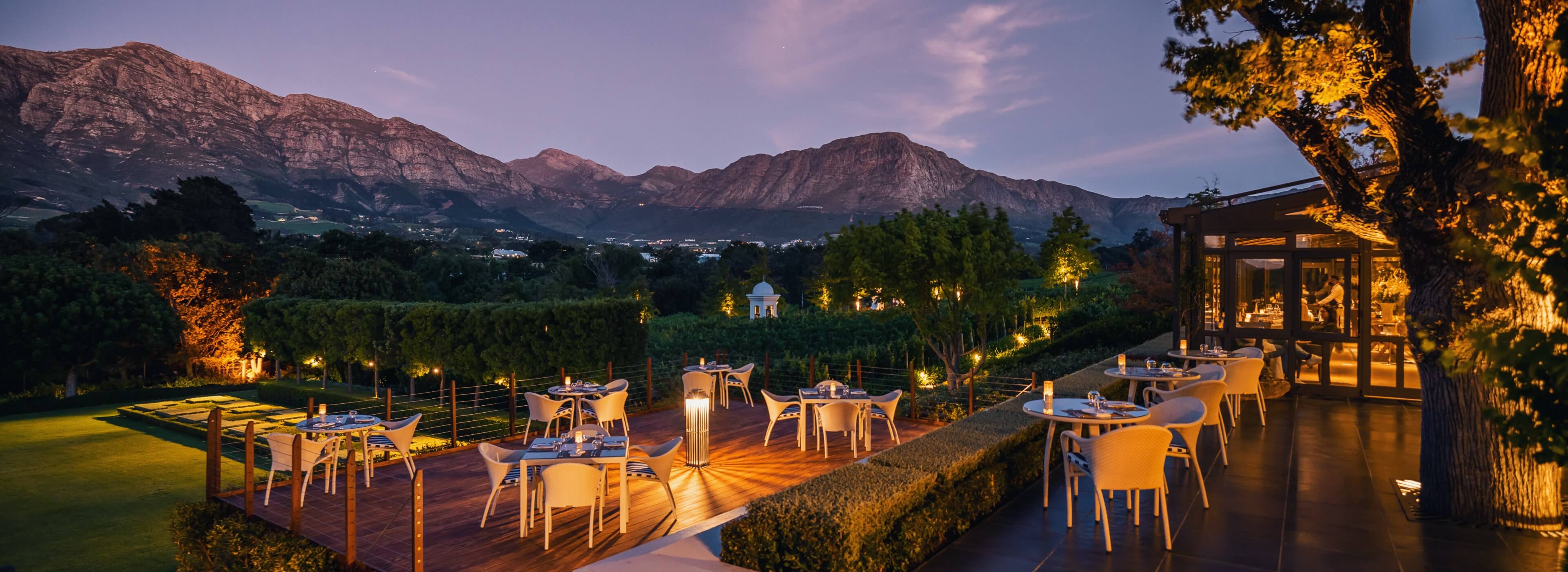
Franschhoek (meaning "French Corner" in Dutch) was founded in the 1680s by French Huguenot refugees who brought centuries of wine and culinary tradition with them. That heritage didn't fade — it calcified into an identity. The valley is called South Africa's food and wine capital, and it earns the title.
The main drag, Huguenot Road, is lined with Cape Dutch architecture, art galleries, and some of the country's most decorated restaurants. But here's the thing: it's not precious about it. You'll find world-class tasting menus sitting comfortably next to a Saturday market under oak trees.
Every July it goes full French for the Bastille Festival, complete with red, white and blue dress codes and a boules tournament. The art scene is serious too — Everard Read Gallery and rotating exhibitions at Leeu Estates keep it honest year-round. This is a tiny town that punches at a weight class well above its size.
Local Customs
TIP 10–15%
Tipping is mandatory culture, not optional courtesy. Start at 10% in restaurants — 15% is more standard and expected. Hand cash directly to your server rather than relying on card payments, which can take weeks to reach staff.
Petrol attendants, car guards, and hotel porters all expect and depend on small tips (R5–R20 for casual services).. The braai is sacred. A barbecue in South Africa is not a casual cookout — it's a social institution.
If you're invited to one, don't show up empty-handed and don't rush it. Meat goes on the coals on the host's schedule, not yours.. Greet before you ask.
South Africans deeply appreciate a 'How are you?' before diving into questions or requests at tasting rooms, restaurants or shops. Skipping the greeting reads as rude, even in busy tourist settings..
Book everything ahead. La Petite Colombe and similar high-end restaurants fill up weeks out. The Wine Tram sells out on weekends.
The Bastille Festival is adults-only (18+) and tickets go through Webtickets — no walk-ins at the gate.. Weather layers are non-negotiable. Mountain weather in the valley changes fast.
A misty, cool morning can flip to blazing sun and back again by afternoon. Bring a jacket even in summer.
Safety
SAFE, STAY SMART
Franschhoek is one of South Africa's safer tourist destinations. Daytime along Huguenot Road and on the wine estates is relaxed and well-patrolled. Since 2023, municipal Safety Monitors have been deployed daily to the CBD alongside SAPS and private security patrols.
The main risks are what you'd expect: petty theft (phone snatches, pickpocketing) and vehicle break-ins in busy parking areas. Lock your car and don't leave anything visible inside — thieves have been known to jam remote-locking signals so double-check your car is actually locked. After dark, skip the solo stroll and book a ride instead.
Uber works in Franschhoek. The Wine Tram is a smart choice for estate-hopping — it keeps you off the roads after tastings and is considered safe and reliable. Note from early 2026: major wildfires in January burned significant areas of the Franschhoek/Wemmershoek mountains.
Mont Rochelle Nature Reserve trails were indefinitely closed after bridges on the Uitkyk route were destroyed — check current status before planning any hikes. The wine estates themselves remain open.
Getting Around
HIRE A CAR
Franschhoek is walkable for the village itself — Huguenot Road and its side streets hold most of what you need, and you can cover the main strip on foot in under 20 minutes. But the wider valley, meaning the wine estates, scenic passes, and neighboring towns like Stellenbosch and Paarl, requires wheels. Hire a car from Cape Town (about 75 minutes away) for the most flexibility.
Uber operates here and is a solid option for evenings when you've been tasting. The Franschhoek Wine Tram is the local legend: a hop-on-hop-off tram running different routes through the estates. It costs around $40 per person and books out fast in peak season — do it online in advance.
Cape Town to Franschhoek costs roughly $10–$15 in fuel if you're driving. There's no reliable public bus service between towns, so don't count on that. If you arrive on a Thursday rather than the weekend you'll find tasting rooms less crowded and roads calmer.
Useful Phrases
Where to Stay in Franschhoek
6 recommended properties