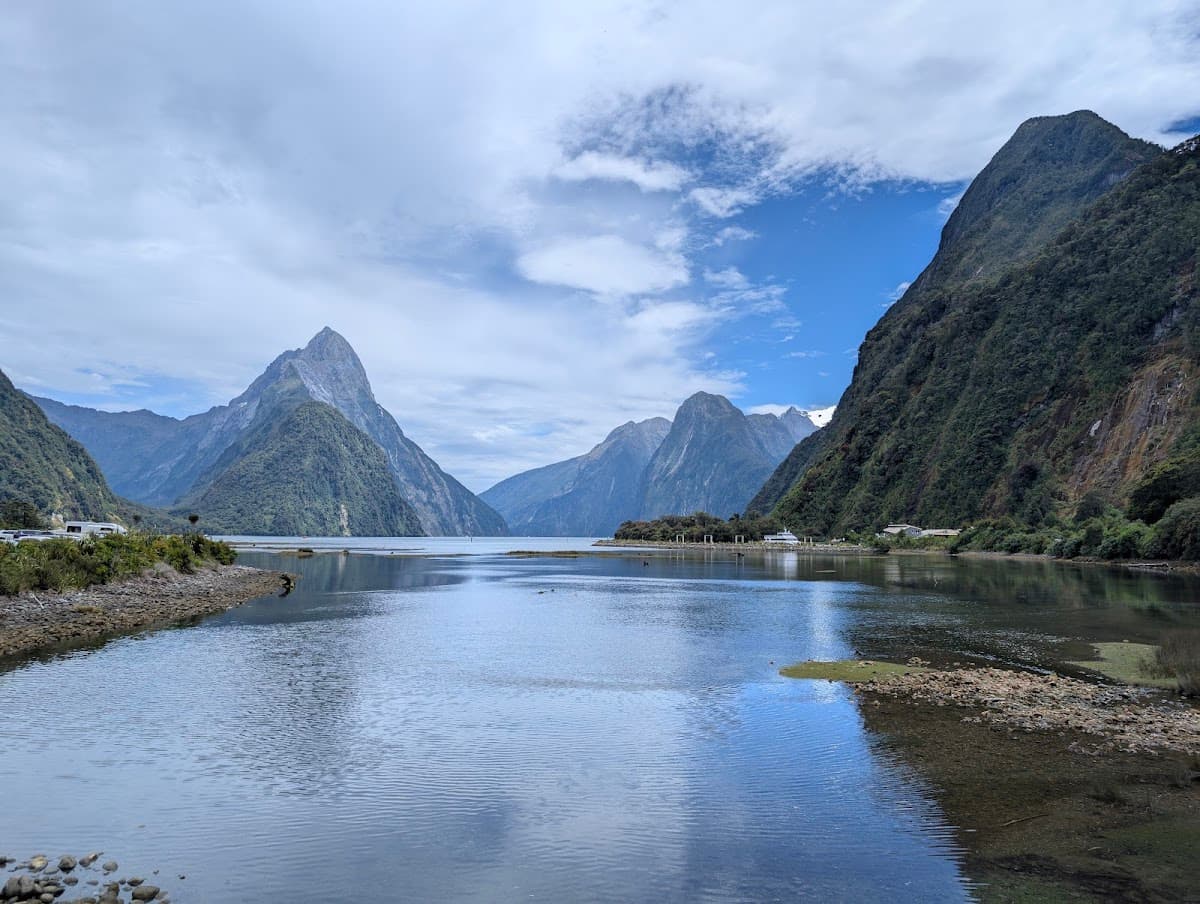
Milford Sound
New Zealand's crown jewel of dramatic fiords and waterfalls
Milford Sound isn't actually a sound at all — it's a fiord carved by glaciers millions of years ago. But nobody seems to care about the technicalities when they're standing on the deck of a boat, craning their necks up at Mitre Peak's 1,692-meter granite face rising straight from the water.
This slice of Fiordland National Park delivers drama on an almost ridiculous scale. Waterfalls tumble 146 meters from hanging valleys. Fur seals lounge on rocks like they own the place. And when it rains — which it does about 200 days a year — the whole fiord transforms into a thundering showcase of temporary waterfalls that appear overnight.
Look, the journey here isn't easy. You'll drive the winding Milford Road through Homer Tunnel, or fly over some of the most remote wilderness in New Zealand. But that's exactly why it feels so special when you arrive.
Itineraries coming soon
We're working on adding amazing itineraries for Milford Sound. In the meantime, try the app to create your own!
Money-Saving Tips
- 1.Book cruise tickets online in advance — walk-up prices at the terminal cost 20-30% more than pre-booking
- 2.Stay in Te Anau instead of Milford Sound accommodation — you'll save $200+ per night and get better restaurant options
- 3.Pack lunch for the drive — the only food stop on Milford Road charges tourist prices for basic sandwiches
- 4.Consider flying one-way if weather's good — drive to Milford, fly back to save time and see different scenery
- 5.Visit during shoulder seasons (April-May, Sept-Oct) for lower accommodation rates and fewer crowds
- 6.Fill up with fuel in Te Anau — there's no petrol station at Milford Sound
Travel Tips
- •Leave Te Anau by 7 AM for first cruise departures — the drive takes 2+ hours and parking fills up quickly
- •Download offline maps — cell coverage disappears completely on the Milford Road
- •Pack layers and waterproof gear regardless of the forecast — weather changes fast in the mountains
- •Stop at Mirror Lakes on calm mornings for perfect reflections of the surrounding peaks
- •Book accommodation well ahead for summer visits — Te Anau fills up and options are limited
- •Check road conditions before leaving — Homer Tunnel can close for avalanche control in winter
- •Bring a good camera with zoom lens — you'll spot seals, dolphins, and sometimes penguins from the boat
- •Take motion sickness tablets if you're prone to seasickness — the Tasman Sea can get rough
Frequently Asked Questions
Explore Milford Sound
Ready to explore Milford Sound?
Get a personalized itinerary in seconds with Takeoff.
Free on iOS. No credit card required.