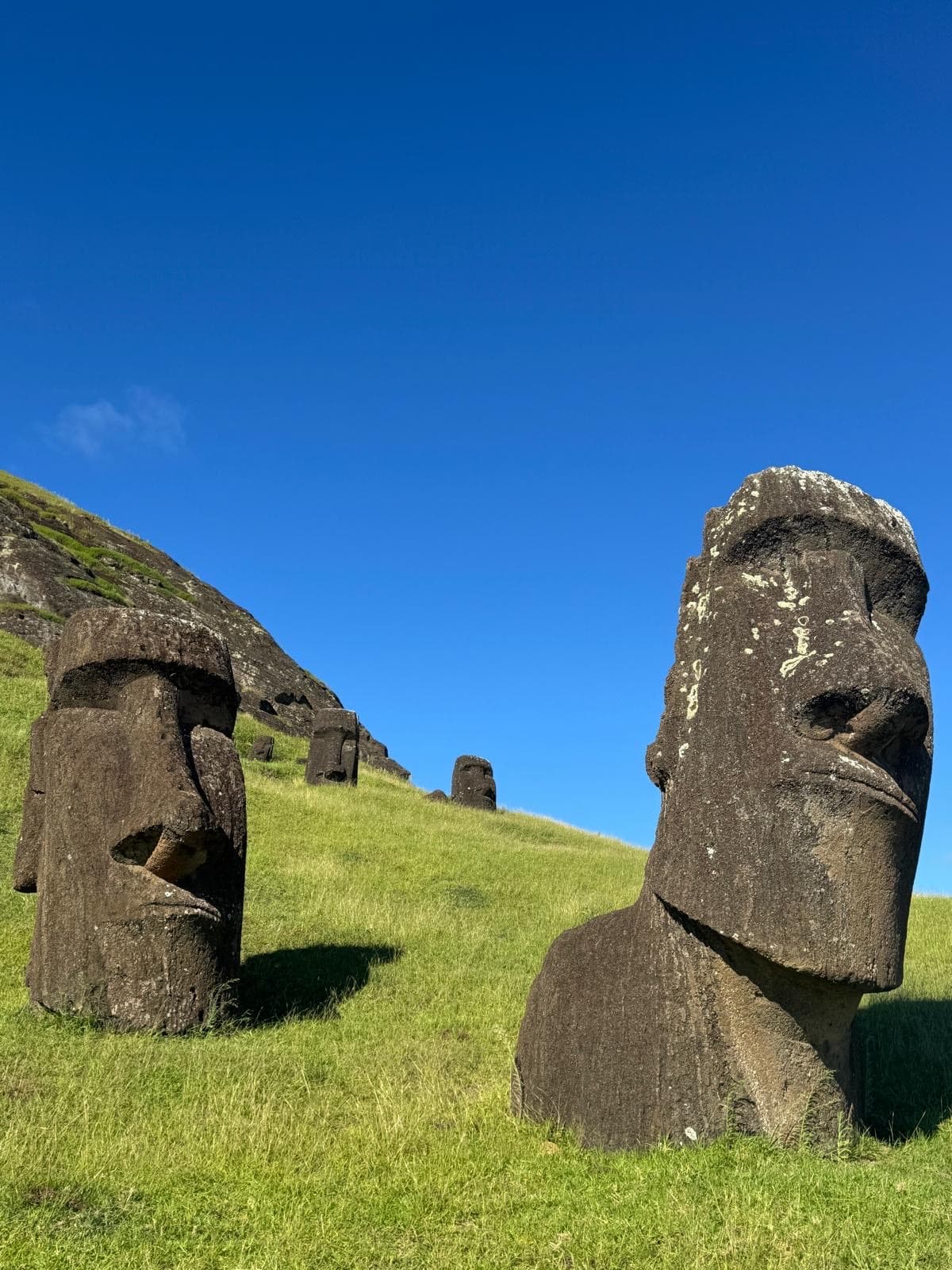
Moai of Easter Island
Ancient stone giants guarding Pacific mysteries
Nearly 1,000 stone giants stand silent watch across Easter Island, their backs turned to the Pacific Ocean they've guarded for centuries. These Moai statues aren't just Instagram bait—they're the remnants of a sophisticated Polynesian civilization that somehow transported 14-ton sculptures across an island 2,300 miles from the nearest populated land.
But here's what most people don't realize: the famous heads actually have bodies buried underground. And those mysterious red topknots? They came from a separate quarry entirely, requiring yet another engineering marvel to place on top.
Rapa Nui (the island's Polynesian name) feels like stepping onto another planet. The landscape shifts from volcanic craters to grassy plains dotted with these ancient sentinels. You'll find yourself alone with history in a way that's increasingly rare in our connected world.
Itineraries coming soon
We're working on adding amazing itineraries for Moai of Easter Island. In the meantime, try the app to create your own!
Money-Saving Tips
- 1.Book flights 3-4 months in advance for better prices—last-minute tickets to Easter Island can cost $2000+
- 2.Stay in guesthouses instead of hotels to save $50-100 per night and get local recommendations
- 3.Buy groceries at the supermarket in Hanga Roa rather than eating every meal out—restaurants charge $25-40 per entree
- 4.Rent a car with friends to split costs—taxis charge $15-20 per trip to major sites
- 5.Pack reef-safe sunscreen from home—island prices are 3x mainland Chile costs
- 6.Bring a reusable water bottle—bottled water costs $3-4 each and creates waste on this remote island
Travel Tips
- •Download offline maps before arriving—cell service is spotty outside Hanga Roa town
- •Pack layers for temperature changes—mornings can be cool while afternoons get hot in the sun
- •Bring a good camera battery pack—you'll take hundreds of photos and charging opportunities are limited at sites
- •Learn about Rapa Nui culture before visiting—understanding the spiritual significance makes the experience much richer
- •Plan for at least 3 full days to see all major sites without rushing
- •Book accommodations early—the island has limited lodging and fills up during peak seasons
- •Respect photography rules—some sites prohibit flash or commercial photography without permits
- •Bring seasickness medication for the flight—the approach to Easter Island can be bumpy
- •Pack sturdy walking shoes—many sites require walking on uneven volcanic rock and grass
- •Consider travel insurance—medical evacuation from Easter Island is extremely expensive
Frequently Asked Questions
Explore Moai of Easter Island
Ready to explore Moai of Easter Island?
Get a personalized itinerary in seconds with Takeoff.
Free on iOS. No credit card required.