Subregion
Bay of Fundy
World's highest tides create natural wonders
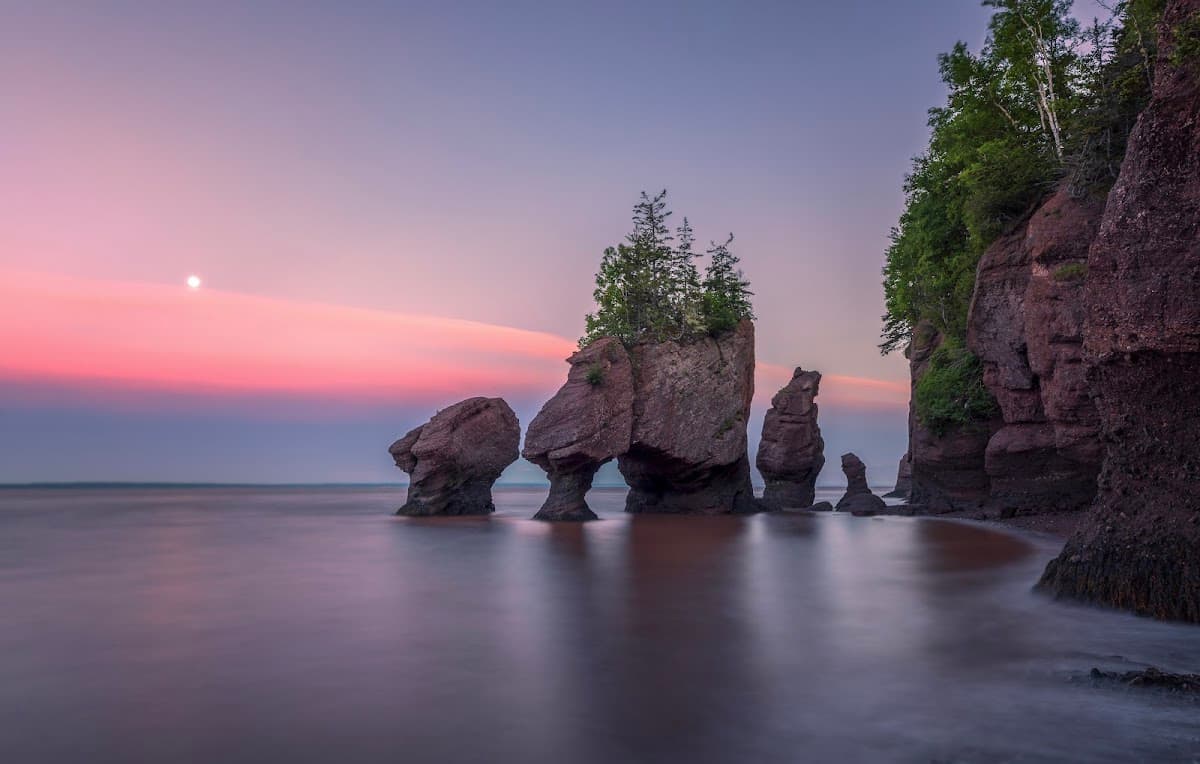
The Bay of Fundy holds the world record for the highest tides on Earth. Twice daily, 160 billion tons of seawater rush in and out of this massive inlet between Nova Scotia and New Brunswick, creating a landscape that transforms completely every six hours. One moment you're walking on the ocean floor among towering rock formations. Six hours later, that same spot sits under 50 feet of churning Atlantic water. It's nature's most dramatic magic trick, and you get front-row seats.
Itineraries coming soon
We're working on adding amazing itineraries for Bay of Fundy. In the meantime, try the app to create your own!
The Bay of Fundy stretches 170 miles between Nova Scotia and New Brunswick, but its real claim to fame happens twice daily. These aren't your typical beach tides that creep up a few feet. We're talking about water levels that rise and fall up to 53 feet in some spots – that's taller than a four-story building. The Minas Basin at the bay's eastern end sees the most extreme tidal action, while Chignecto Bay to the north offers equally dramatic scenes. Here's what makes it work: the bay's funnel shape forces massive volumes of Atlantic water into an increasingly narrow space. Add the 12.4-hour tidal cycle, and you get this incredible twice-daily show. The Hopewell Rocks become islands at high tide and towering sea stacks you can walk around at low tide. Burntcoat Head Park in Nova Scotia holds the official world record – 53.6 feet measured in 1869. But honestly, you don't need record-breaking numbers to be amazed. Even a 30-foot tide will completely reshape your understanding of what coastlines can do.
Money-Saving Tips
- 1.Tidal timing is free but parking isn't – expect to pay $5-8 at most viewing areas like Hopewell Rocks
- 2.Pack lunches for remote tidal viewing spots where restaurants are scarce and overpriced
- 3.Visit multiple tidal sites with the same day pass – many parks honor other Maritime park passes
- 4.Stay in Alma or Wolfville instead of Halifax to save $50+ per night on accommodations
- 5.Buy dulse directly from harvesters at Grand Manan for $8/bag vs $15 in tourist shops
- 6.Time restaurant visits with tidal schedules – many coastal spots offer early bird specials during low tide hours
Travel Tips
- •Download a tidal app and plan your entire itinerary around low tide times – this isn't optional
- •Bring layers and waterproof gear even in summer – coastal weather changes in minutes
- •Wear boots with good grip for walking on wet rocks and seaweed-covered surfaces
- •Keep your car keys and phone in waterproof bags – tidal spray reaches farther than you think
- •Book accommodations well ahead in Alma and Wolfville – options are limited in these small towns
- •Don't turn your back on the water during incoming tides – they move faster than you'd expect
- •Bring binoculars for whale watching and bird spotting from coastal viewpoints
- •Check ferry schedules to Grand Manan Island – they don't run frequently and book up fast
Frequently Asked Questions
The tides change twice daily, with about 6 hours and 13 minutes between high and low tide. This means the timing shifts by about 50 minutes each day, so a low tide at 9 AM today will be around 9:50 AM tomorrow.
Explore Bay of Fundy
Ready to explore Bay of Fundy?
Get a personalized itinerary in seconds with Takeoff.
Free on iOS. No credit card required.