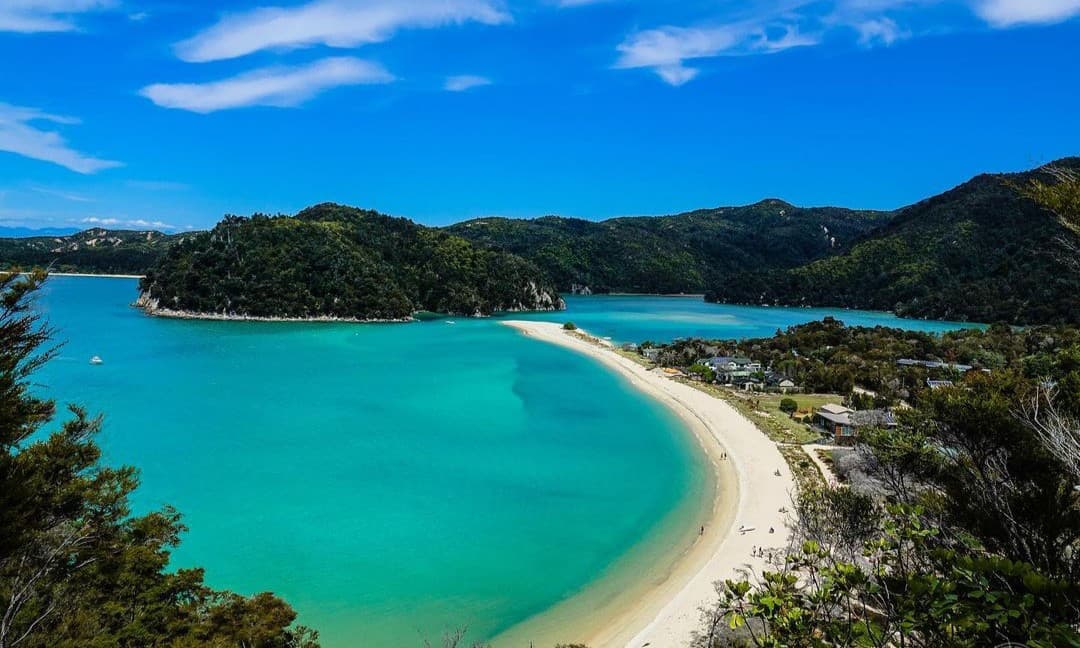
Abel Tasman Coast
Golden beaches meet pristine native forest in paradise
Golden sand beaches stretch between emerald native forest here on New Zealand's South Island. Abel Tasman National Park might be the country's smallest national park, but it packs serious punch. Think turquoise water that rivals the Caribbean, coastal walking tracks that weave between secluded bays, and enough wildlife to keep nature lovers happy for days. The whole coastline feels like someone designed it specifically for your Instagram feed, except it's been here for centuries. You can kayak to beaches only accessible by water, spot fur seals lounging on rocks, or simply find your own slice of golden sand. And here's the best part — it's actually easy to get to and navigate, unlike some of New Zealand's more remote wilderness areas.
Money-Saving Tips
- 1.Book DOC campsites directly through their website to avoid booking fees charged by third-party sites
- 2.Pack all your food and water for day trips — there are no shops or cafes inside the park boundaries
- 3.Water taxi companies offer group discounts for 4+ people, often 10-15% off standard fares
- 4.Consider staying in Motueka rather than Marahau or Kaiteriteri for cheaper accommodation options
- 5.Fuel up your car in Richmond before heading to the coast — petrol prices increase the further north you go
- 6.Rent kayaks from Motueka outfitters rather than beachfront operators to save $20-30 per day
- 7.DOC annual passes pay for themselves if you're camping more than 5 nights across New Zealand
Travel Tips
- •Download offline maps before you go — cell coverage is patchy along the coast track
- •Tides matter here: some beach access points are only walkable at low tide, check tide charts
- •Sandflies are relentless from November to April, pack strong insect repellent with DEET
- •Water taxis can't run in rough weather, always have a backup plan for getting back to your car
- •The coast track can be muddy after rain, pack gaiters or expect dirty boots and legs
- •Book water taxi transfers when you book accommodation — services fill up fast in peak season
- •Carry a whistle and let someone know your hiking plans, even for day walks
- •Freshwater is scarce in the park, carry more than you think you'll need
- •UV levels are intense due to New Zealand's thin ozone layer, pack sunscreen and a hat
Frequently Asked Questions
BUILD YOUR
ABEL TASMAN COAST PLAN
Insider picks, smart timing, and a plan ready when you are.
Start Planning