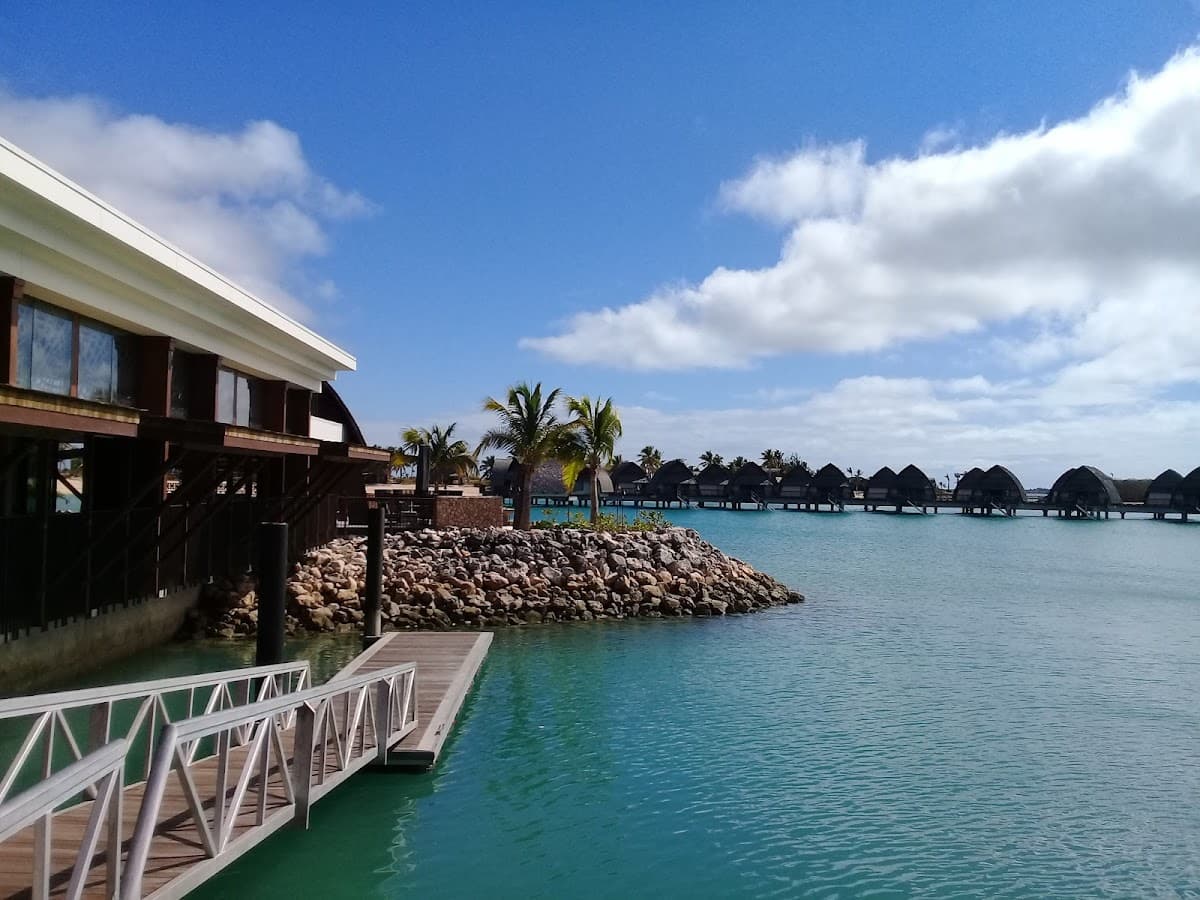
Fiji (Viti Levu)
Fiji's main island blending culture with tropical beauty
Viti Levu isn't just Fiji's biggest island — it's where the real Fiji lives. Sure, you'll find those postcard beaches everyone talks about, but you'll also stumble into kava ceremonies in mountain villages, haggle for fresh fish at Suva Municipal Market, and catch waves that make surfers from around the world book flights here. This is where most international flights land, but don't just use it as a jumping-off point. The Coral Coast stretches for miles of white sand, the interior hides waterfalls and traditional villages, and the capital city of Suva pulses with island life that goes way beyond the resort bubble.
Best Months
MAY – OCT
~26°C · moderate crowds
Culture & Context
THREE CULTURES, ONE ISLAND
Viti Levu is home to three distinct communities living side by side: indigenous Fijians (iTaukei), Indo-Fijians descended from indentured laborers brought from India starting in 1879, and smaller Pacific and European communities. This shapes everything — the food, the festivals, the language, the temples. You'll see a Sri Siva Subramaniya Swami Temple done in Dravidian architecture right in Nadi town, one of the few outside India.
The western side of the island has a higher concentration of Indo-Fijians; the east is more indigenous Fijian in character. Three official languages — English, Fijian (Bauan dialect), and Fijian Hindi — are all in active daily use. Kava (yaqona, pronounced "yan-gona") is the social glue of Fijian culture.
It's drunk from a shared bowl called a tanoa, has an earthy taste, and makes your lips go numb. Village life runs on communal values, and outsiders who show respect get welcomed with a warmth that feels completely genuine rather than performed. "Fiji Time" is real — schedules are loose, things run late, and fighting it is a losing battle.
Lean in.
Local Customs
SEVUSEVU OPENS VILLAGE DOORS
Sevusevu is the formal gift-giving ceremony required when visiting a village. Bring kava root (yaqona) — available at Nadi market for FJ$20–40 per bundle. Your resort can advise on quantity and protocol.
Skip this and you're being rude.. Never touch a Fijian person's head. It is considered deeply sacred and the offense is serious regardless of whether it was accidental..
Remove your hat and sunglasses when entering a traditional village or any village boundary. It signals respect.. When sitting in a kava ceremony, cross your legs, clap once with cupped hands when offered the bowl, say 'bula', drink it in one go, then clap three times and say 'vinaka'.
The first drink is expected — you're not obligated to keep going.. Never point the soles of your feet at the village chief or toward a kava bowl during a ceremony.. Dress modestly when visiting villages or temples — shoulders and knees covered.
Swimwear belongs on the beach, not in town centers or markets.. Tipping is not a Fijian tradition. In some contexts it causes embarrassment.
At resorts, the communal Staff Christmas Fund is the norm.. Watch out for the name-carving scam in tourist areas: someone approaches you, asks your name, carves it into a wooden souvenir, then demands FJ$50–100 claiming it's now custom-made. Politely decline any unsolicited demonstrations..
Drones require prior authorization from the Civil Aviation Authority of Fiji (Form OP 137, submitted at least three weeks before arrival). Every drone — even micro-drones under 250g — needs this. Customs will hold your gear if you arrive without printed proof.
Safety
PETTY THEFT, NOT VIOLENT
Fiji holds a US State Department Level 1 advisory as of 2026 — 'Exercise Normal Precautions' — the most favorable rating available. That said, a few specific things are worth knowing before you go. Petty theft is the main issue, concentrated in Suva and Nadi markets and around the airport arrival area.
Keep valuables in hotel safes and don't flash expensive gear in crowded spaces. The Colo-i-Suva Forest Park near Suva is flagged as Level 2 — violent robberies and assaults have occurred on trails, and there's no security presence. Only go with a guided group.
Two common scams: the name-carving trick (a local carves your name into a wooden souvenir unbidden, then demands FJ$50–100) and the wooden sword trick in Suva (a 'gift' that comes with aggressive payment demands). Decline politely and keep walking. For divers: Fiji's hyperbaric chamber is currently not operational.
The nearest working chambers are in New Zealand and Australia. Get travel insurance that explicitly covers medical evacuation. Mosquito-borne dengue fever and Zika are present, especially during the wet season (November–April).
Use high-DEET repellent. Road safety is a real concern outside cities — the 210km Kings Road has mountainous sections, rural roads have aggressive speed humps in village zones (slow to 50km/h), and driving after dark outside urban areas is genuinely risky. Use yellow-plate official taxis at night instead.
Water in main cities and major resorts is treated and safe. On outer islands, treat or filter before drinking.
Getting Around
BUSES & YELLOW TAXIS
Almost every international visitor arrives at Nadi International Airport on Viti Levu's northwest coast. Suva's Nausori Airport handles regional connections. From Nadi, the Queens Road runs south and east around the island to Suva — that's the main tourist corridor along the Coral Coast.
The Kings Road takes the northern route through sugar cane country, Ba, and Rakiraki. It's longer and less developed but genuinely interesting. Local buses are the cheapest option by far.
The Nadi-to-Suva run takes about five hours and costs FJ$22. Local town journeys start from 80 cents. Buses are reliable enough on main routes but won't get you into the highlands.
For taxis, use yellow-plate official cabs. Agree on the fare before you get in — a standard run from Nadi Airport to Denarau should be FJ$25–35. Car rental runs FJ$100–150/day.
You need a valid license (international driving permit recommended to avoid police hassle at checkpoints). Drive on the left. Village speed bumps are no joke — they'll damage your rental car if you don't slow to 50km/h.
Avoid driving outside urban areas after dark. Island hopping from Viti Levu leaves from Port Denarau Marina. The Yasawa Flyer multi-day pass costs FJ$400 for unlimited hop-on-hop-off travel — good value for backpackers.
Seaplanes run FJ$800–1,200 one-way. Day trips to the Mamanuca Islands depart Denarau daily by high-speed catamaran ferry.
Useful Phrases
Money-Saving Tips
- 1.Airport taxis charge fixed rates — negotiate before getting in or use hotel shuttles that cost half the price
- 2.Local buses cost 2-5 FJD between towns versus 100+ FJD for private transfers
- 3.Suva Municipal Market offers fresh produce and street food for under 10 FJD per meal
- 4.Many resorts include airport transfers when you book directly through their website
- 5.Kava ceremonies in villages cost 20-30 FJD per person versus 80 FJD at resort cultural shows
- 6.Rent snorkel gear in Suva for 15 FJD per day instead of paying 25 FJD per hour at resorts
- 7.Local grocery stores sell sunscreen and bug spray for half the resort shop prices
- 8.Day trips to Mamanuca Islands cost 89 FJD from Port Denarau — book direct at the marina to avoid tour operator markups
Travel Tips
- •Pack reef-safe sunscreen — many dive sites ban chemical sunscreens that damage coral
- •Bring insect repellent for interior village visits and rainforest hikes
- •Learn basic Fijian greetings — 'bula' means hello and locals appreciate the effort
- •Respect village customs — cover shoulders and knees when visiting traditional communities
- •Book shark diving at Beqa Lagoon during high tide for better visibility
- •Carry cash — many local restaurants and markets don't accept credit cards
- •Download offline maps — cell service gets spotty in mountain areas
- •Pack a light rain jacket even during dry season — tropical showers happen without warning
Frequently Asked Questions
Explore Fiji (Viti Levu)
BUILD YOUR
FIJI (VITI LEVU) PLAN
Insider picks, smart timing, and a plan ready when you are.
Start Planning