Suva
Fiji's vibrant capital where Melanesian culture meets modern Pacific life
Forget what you think you know about Fiji. Yes, there are pristine beaches and overwater bungalows, but the real heart of this Pacific nation beats in Suva. This is where 100,000 Fijians actually live, work, and eat incredible food that costs a fraction of resort prices. The capital sits on Viti Levu's southeast coast, where colonial buildings share streets with Hindu temples and the air smells like curry and frangipani. Most tourists skip Suva entirely, rushing straight to the Coral Coast or Mamanuca Islands. Their loss is your gain.
Best Months
MAY – OCT
~25°C · moderate crowds
Culture & Context
HINDU TEMPLES, METHODIST CHURCHES
Suva is genuinely one of the most ethnically layered capitals in the Pacific. About 57% of Fiji's population is indigenous iTaukei Fijian, and roughly 37% is Indo-Fijian — descendants of laborers brought over by the British between 1879 and 1916. Walk a single block downtown and you'll hear Fijian, Fiji Hindi, and English all within a few minutes. That cultural overlap shows up everywhere: Hindu temples next to Methodist churches, curry houses next to lovo pits, Bollywood music drifting out of open shop doors.
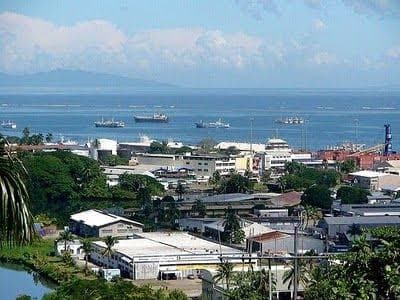
The city sits on Viti Levu's southeastern peninsula, backed by steep mountains and fronted by a deep-water harbour. It rains — a lot. Suva gets over 3,000mm of rain annually, making it the wettest city in Fiji. Afternoon downpours are part of daily life. Pack accordingly. The name "Suva" itself means "little hill," referring to a mound in what is now the Botanical Gardens where a village temple once stood.
Kava (called yaqona locally) is central to social life. You'll be offered it at village visits and many informal gatherings. Accepting is respectful. Refusing isn't catastrophic but it does close a door. Clap once before you drink, say "bula," drain the cup (the bilo) in one go, and clap three times after. Don't overthink it — locals appreciate the effort far more than perfect execution.
Local Customs
SHOES OFF, KAVA CEREMONY
Remove your shoes before entering someone's home — and most guesthouses will expect this too. It's automatic for locals.. When visiting a village, bring a gift of kava root (yaqona).
This sevusevu ceremony is how you formally ask permission to enter. Skipping it is considered rude regardless of how casual the visit feels.. Don't touch anyone's head.
In Fijian culture the head is sacred, and touching it — even a friendly pat on a kid's head — can cause real offence.. Avoid pointing with a single finger at people or sacred objects. Use your whole hand or nod in the direction instead..
Cover up when you leave the beach or pool. Swimwear on the street is a fast way to signal disrespect. Shoulders and knees covered in villages is non-negotiable..
Fiji Time is real. Don't schedule back-to-back things and expect them to run on time. Build buffer.
Getting frustrated achieves nothing and makes you the rude one.. Shouting or raising your voice in frustration is deeply offensive. Fijians are mellow and friendly, but they will shut down completely if you pressure or embarrass them.
Patience works; aggression backfires every time.. Kava before alcohol, not both together. Kava mixed with booze can cause real health issues — this isn't a myth.
Safety
PICKPOCKETS & AFTER-DARK CAUTION
Suva holds a US State Department Level 1 advisory — Exercise Normal Precautions — as of 2026. That's the best rating available and reflects the reality for most visitors. But Level 1 doesn't mean zero risk; it means manageable, predictable risk.
The concrete concerns: petty theft (pickpocketing and bag snatching) is common in downtown Suva, especially in crowded markets and along Victoria Parade. Keep bags zipped, don't flash expensive phones or jewellery, and don't carry your passport unnecessarily. ATM fraud exists — use machines inside bank branches or major hotels only.
Colo-i-Suva Forest Park is specifically flagged at Level 2 (Increased Caution) by the US State Department due to frequent phone and bag snatchings on trails, with some incidents turning violent when people fought back. Go with a guide or a group. Never go alone, and don't arrive late in the day.
After dark in downtown Suva — the waterfront, seawall, and bar district — assaults and robberies have occurred. Take door-to-door taxis rather than walking. Women traveling alone face higher risk of harassment in these areas after dark.
Health notes worth knowing: dengue fever and Zika are present year-round, and mosquito repellent with DEET is not optional. The Fiji Government declared a HIV outbreak in 2025 that remains ongoing as of 2026. Typhoid and leptospirosis cases occur — wear footwear outside and stay away from flooded creeks. Healthcare at Colonial War Memorial Hospital in Suva is functional but limited. Serious illness or injury means medical evacuation to Australia or New Zealand. Travel insurance that covers evacuation is not optional here.
Getting Around
BUSES CHEAP, TAXIS AFTER DARK
Getting into Suva from the international airport means starting in Nadi — 200km and roughly 3.5 hours away along the Queens Road. Express buses like Pacific Transport and Sunbeam run the route daily and cost around FJD $10–15. Taxis will do it for FJD $100–150 if you negotiate before getting in, though private transfer services run closer to FJD $200. Domestic flights from Nausori Airport (about 23km northeast of the city) connect to the outer islands.
Within Suva, the bus network run by Pacific Transport and Sunbeam is extensive and genuinely affordable — FJD $0.50–1.50 per ride. But routes can be confusing and timing is loose. Most expats buy a used car ($3,000–8,000 USD) for the long haul. Licensed taxis are the go-to for anything after dark. Always confirm the fare first, or use the metered cabs available at major hotels. Do not accept rides from strangers — this is a specific safety advisory from multiple government travel warnings.
Car rental is available but road conditions outside Viti Levu can be rough. Driving is on the left (British legacy). Kings Road north toward Nausori and Suva's suburban sprawl gets congested during morning and evening rush hours — Edinburgh Drive in particular can add 20–30 minutes to your journey.
Useful Phrases
Money-Saving Tips
- 1.Eat at the Municipal Market food stalls for authentic meals under F$5
- 2.Take local buses instead of taxis – F$1.20 versus F$15 for similar distances
- 3.Buy groceries at MH Supermarket rather than hotel shops to save 40%
- 4.Book accommodations directly with guesthouses to avoid booking fees
- 5.Visit during shoulder season (April-May) for 20% lower hotel rates
- 6.Drink kava at local clubs instead of cocktails at tourist bars – F$5 versus F$15
- 7.Use the free WiFi at McDonald's on Victoria Parade instead of paying hotel internet fees
Travel Tips
- •Pack rain gear year-round – Suva gets sudden downpours even in dry season
- •Download offline maps as cell service can be spotty in hillier neighborhoods
- •Carry small bills for buses and market vendors who rarely have change
- •Dress modestly when visiting temples and traditional villages outside the city
- •Learn basic Fijian greetings like 'Bula' – locals appreciate the effort
- •Book domestic flights early as inter-island connections fill up quickly
- •Bring reef-safe sunscreen as regular brands are banned in marine areas