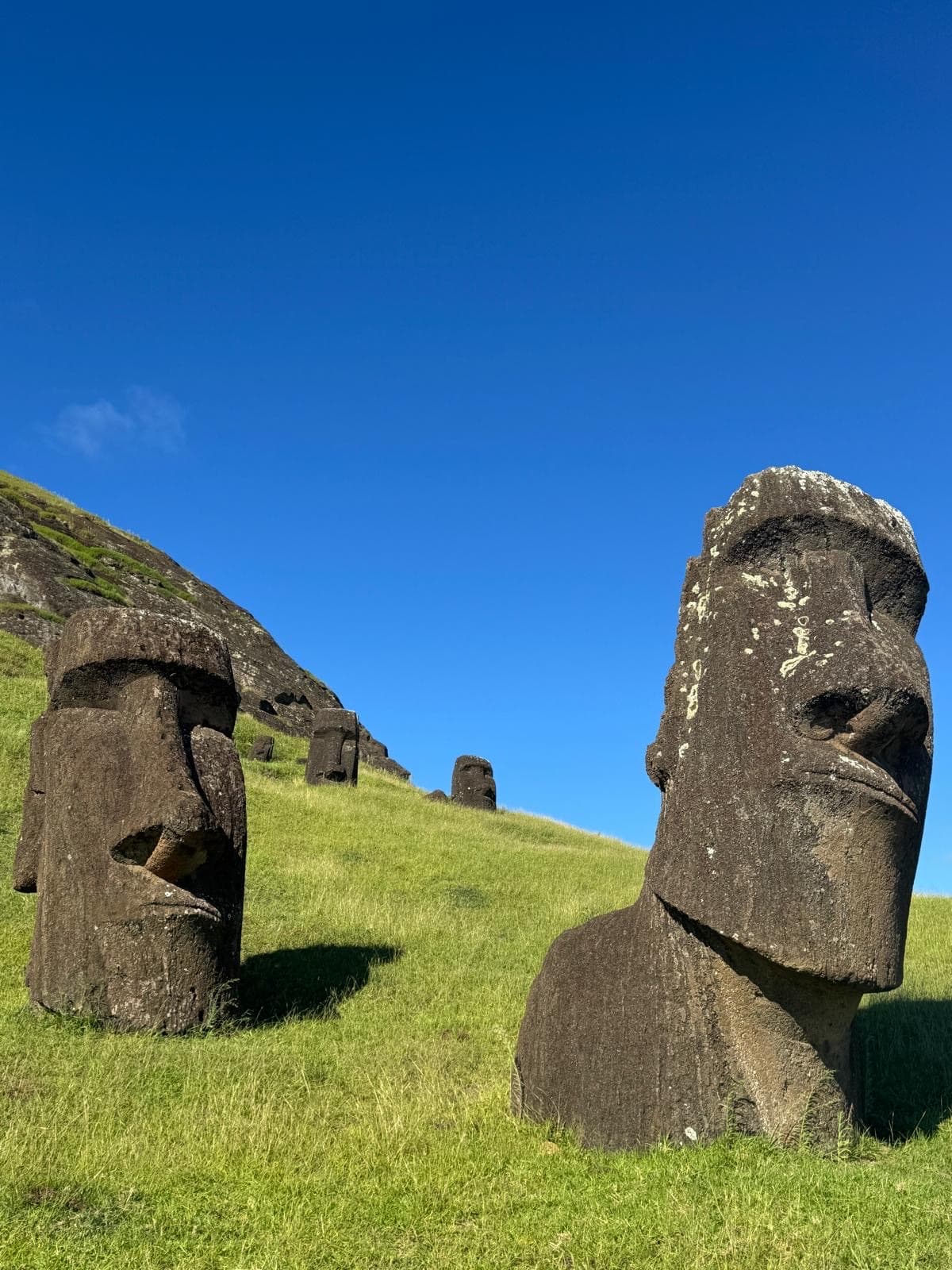
Easter Island
Remote Pacific paradise of mysterious moai statues
Easter Island sits 2,300 miles from the nearest populated land, making it one of the most isolated places on Earth. But that isolation is exactly what makes Rapa Nui so extraordinary. Here, nearly 1,000 moai statues stand guard across volcanic landscapes, their stone faces holding secrets that archaeologists are still unraveling. The island's 5,000 residents maintain a culture that's distinctly Polynesian yet shaped by centuries of mystery and hardship. You won't find resort chains or cruise ship crowds here. Instead, you'll discover a place where ancient spirituality meets raw Pacific beauty, where every sunrise feels like you're witnessing something sacred.
Itineraries coming soon
We're working on adding amazing itineraries for Easter Island. In the meantime, try the app to create your own!
Money-Saving Tips
- 1.Bring cash - many small restaurants and shops don't accept cards, and ATMs frequently run out of money
- 2.Book accommodation 6+ months ahead for peak season (Dec-Mar) to avoid paying premium rates for last-minute availability
- 3.Pack snacks and water from mainland Chile - island prices are 3-4x higher than Santiago due to shipping costs
- 4.Rent a car for multiple days to get better daily rates, typically $50-60/day vs $80+ for single days
- 5.Buy the National Park pass ($80) at the airport upon arrival - it's required for all moai sites and valid for 10 days
- 6.Eat lunch at local spots like Club Sandwich or Empanadas Tia Berta instead of hotel restaurants to save $15-20 per meal
- 7.Fill up your rental car whenever you see an open gas station - they close early and on Sundays
Travel Tips
- •Download offline maps before arriving - cell service is spotty outside Hanga Roa and GPS can be unreliable
- •Pack serious sun protection including hat, long sleeves, and SPF 50+ - UV radiation is intense with no natural shade at moai sites
- •Bring layers for unpredictable weather - Pacific winds can make 75°F feel like 60°F, especially at coastal sites
- •Respect the moai - climbing on statues results in hefty fines and helps preserve these irreplaceable artifacts
- •Learn basic Rapanui greetings like 'Iorana' (hello) - locals appreciate the effort to acknowledge their culture
- •Book the Orongo sunrise tour in advance - it's the only way to access this sacred site and witness spectacular crater views
- •Carry water everywhere - dehydration happens quickly in constant sun and wind with limited shade
- •Plan for flight delays - weather and mechanical issues frequently affect the weekly LATAM flights from Santiago
Frequently Asked Questions
Explore Easter Island
Ready to explore Easter Island?
Get a personalized itinerary in seconds with Takeoff.
Free on iOS. No credit card required.