Galápagos Islands
Pristine archipelago where evolution comes alive
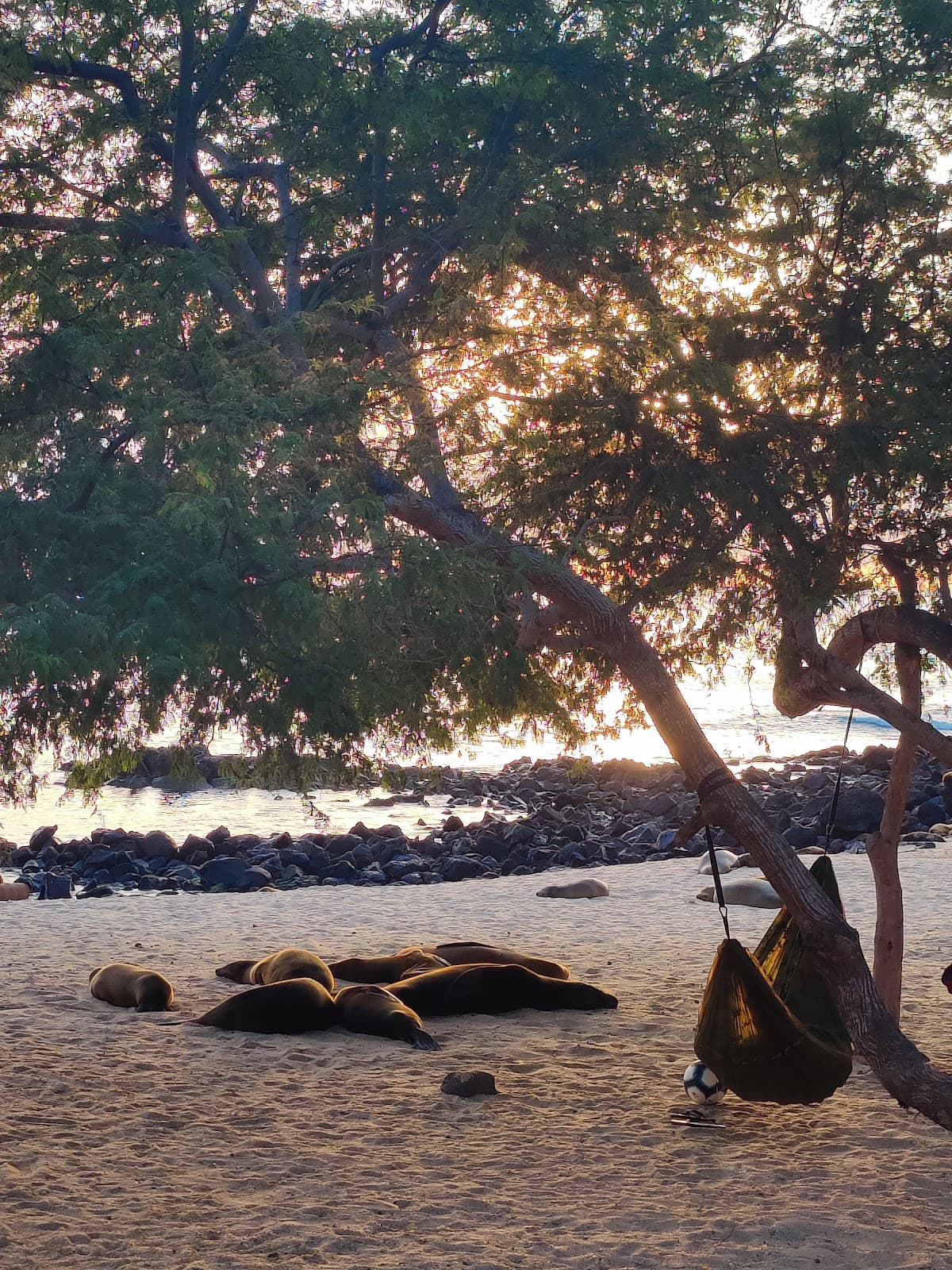
Six hundred miles off Ecuador's coast, the Galápagos Islands remain one of Earth's most extraordinary wildlife laboratories. Here, fearless sea lions surf alongside you, giant tortoises lumber through cactus forests, and blue-footed boobies perform their ridiculous mating dance just meters away. Charles Darwin called it "a world within itself" — and honestly, he undersold it.
This isn't your typical beach vacation. The Galápagos demand respect, patience, and a willingness to wake up at dawn for the best wildlife encounters. But here's what you get in return: marine iguanas that sneeze salt, penguins at the equator, and moments of pure wonder that'll spoil you for every zoo back home. The islands operate on island time, park rules, and nature's schedule — not yours.
Local Knowledge
Culture & Context
The Galápagos has around 25,000–30,000 permanent residents spread across four inhabited islands. It's not ancient indigenous territory. The population came together gradually: descendants of Ecuadorian settlers, ex-penal colony survivors, European adventurers from the 1930s, and mainland Ecuadorians who moved for tourism work. That mix gives the islands a genuinely unusual identity. Locals call themselves Galápagueños and they're proud of it. Many now own and operate the yachts, hotels, and restaurants that serve the 200,000+ annual visitors. Tourism is everything here. The economy runs on it. Because of that, residents are motivated to keep visitors happy, but also deeply aware of the conservation stakes. The Charles Darwin Research Station and Galápagos National Park are headquartered in Puerto Ayora, and conservation isn't just a marketing angle. It shapes daily life. Large shopping centers are banned to protect the ecosystem. Fresh water is scarce, and locals collect rainwater and use desalination. You'll notice conservation messages everywhere, and they mean them. Music on the islands blends Caribbean rhythms, Andean melodies, and the occasional neo-African influence, played with maraca, drum, and acoustic guitar. The local folk dance, the Galápagos Dance (or Dance of the Enchanted Islands), mimics the courtship rituals of the waved albatross. Friday nights in Puerto Ayora sometimes feature Andean and Galápagos dance performances. It's low-key, not a tourist show — locals actually attend.
Safety
Here's the honest picture: the Galápagos and mainland Ecuador are two completely different realities. Mainland Ecuador, especially cities like Guayaquil, has faced serious gang-related crime and government-issued states of emergency in recent years. But the Galápagos archipelago is heavily monitored, accessible only through controlled flights, and patrolled by park rangers and tourism police. Violent crime is virtually non-existent on the islands. The main risk for visitors is petty theft — bags or cameras left unattended on popular beaches like Tortuga Bay are the most common targets. Keep an eye on your stuff, don't leave valuables on the beach while you swim. Medical facilities on the islands are limited. Puerto Ayora has a hospital and the only hyperbaric chamber in the archipelago (useful if you're diving), but specialized care requires evacuation to the mainland. Travel insurance with emergency medical and evacuation coverage is strongly recommended, and some cruise operators require it. The US State Department rates Ecuador as Level 2 (exercise increased caution), but the Galápagos specifically is not flagged separately — conditions there are considerably safer than the mainland. One additional note: give yourself a buffer day in Quito or Guayaquil before your flight to the islands. Missing your Galápagos flight means missing your cruise, since vessels travel far from port and can't be caught up to.
Getting Around
Getting there requires flying first to mainland Ecuador (Quito or Guayaquil), then catching a domestic flight to either Baltra Island (GPS) near Santa Cruz or San Cristóbal airport (SCY). LATAM and Avianca are the two airlines operating these routes. Round-trip domestic flights cost $250–550 per person. From Baltra airport, a bus takes you to the Itabaca Channel, then a short ferry crosses to Santa Cruz, then another bus or taxi gets you to Puerto Ayora. Budget about 90 minutes total from plane to town. Once on the islands: taxis in Puerto Ayora are $2 flat rate anywhere in town. Inter-island ferries run daily between Santa Cruz, San Cristóbal, and Isabela for $30–35 one-way (2–3 hours, paid cash at the dock). Ferries to Floreana run 2–3 times per week. Water taxis for shorter hops cost $1–5. Bikes rent for $15–25 per day. All visits to national park visitor sites require a certified naturalist guide — you can't just wander up to uninhabited islands solo. Most day tours depart from Puerto Ayora at 7–8am and return by 5–6pm. Book the day before minimum to guarantee a spot.
Useful Phrases
How much does it cost?
Sea lions — you'll hear this constantly on tours and at the fish market
Turtle or tortoise — tortuga gigante means giant tortoise
The small motorized dinghy used to ferry passengers from cruise ships to shore. If someone says 'the panga leaves at 7am,' that's your ride.
The set lunch — soup, main, drink, cheap. Ask for it at local eateries.
Finch — specifically Darwin's famous finches. Your guide will say this a lot.
Literally 'big-footed one' — a playful local term inspired by the blue-footed booby. Used affectionately.
The national dish of Ecuador: a thick tuna soup with yuca, onions, and tomatoes. Common breakfast on the islands. Locals swear it cures hangovers.
Local Customs
- •Pay everything in cash USD. The $200 park fee, the $20 transit card, ferries, taxis — all cash. Show up without enough bills and you'll have a bad time.
- •Always carry your Transit Control Card. You turn it in when you leave, and officials may ask to see it.
- •Complete the biosafety affidavit online before flying from the mainland. As of December 2024, this is a digital process — fill it out up to 48 hours before your flight, get a confirmation code, and show it on arrival. Alternatively, scan the QR code at Quito or Guayaquil airport.
- •Stay 6 feet (2 meters) from wildlife. No exceptions. The animals don't fear you, which makes it tempting to get closer — but rangers do issue fines, and more importantly, contact disrupts their behavior.
- •Don't touch the wildlife. Sea lions look friendly and sometimes approach you. Resist. Same goes for iguanas, tortoises, birds, everything.
- •Don't bring restricted items to the islands. No fresh fruit, vegetables, live plants, or animals. Luggage is inspected before your mainland departure flight.
- •In restaurants, the almuerzo (set lunch) is the local move — soup, main course, and a drink for $5–8. Avoid tourist-facing menus near the main waterfront if you're watching costs.
- •Tip your naturalist guide. They're certified by the National Park and often have deep expertise. 10–15% is standard on cruises, or $10–20/day for land-based guides.
- •Book day tours at least a day ahead from Puerto Ayora — boats need minimum passenger counts to confirm. Last-minute slots disappear fast in high season (July–August and December–January).
- •Don't drink the tap water. It's used for cleaning and showers but not for drinking. Locals collect rainwater, and the island has a desalination plant. Buy bottled or bring a filter.
Itineraries coming soon
We're working on adding amazing itineraries for Galápagos Islands. In the meantime, try the app to create your own!
Money-Saving Tips
- 1.Book accommodations on inhabited islands instead of cruise ships — you'll save $200+ per night and eat at local restaurants
- 2.Bring a reusable water bottle — buying bottled water costs $2-3 per bottle, and plastic waste harms marine life
- 3.Pack all snorkeling gear from home — rental fees add up to $15-20 per day for mask, fins, and wetsuit
- 4.Eat lunch at local markets instead of tourist restaurants — a full meal costs $5-8 versus $20-25 at hotel restaurants
- 5.Book inter-island speedboats directly at the pier — tour agencies add 20-30% markup to the same $30 tickets
- 6.Stay in Puerto Ayora or Puerto Baquerizo Moreno over Isabela — accommodation and food costs run 30-40% higher on the more remote islands
Travel Tips
- •Download offline maps before arriving — cell service is spotty outside main towns, and GPS helps navigate hiking trails
- •Bring reef-safe sunscreen — regular sunscreen is banned in marine protected areas and kills coral
- •Pack seasickness medication even if you don't usually get motion sick — inter-island boats hit rough Pacific swells
- •Respect the 6-foot rule with wildlife — park rangers will fine you $200+ for getting too close to animals
- •Book popular tours 2-3 days in advance — day trips to Bartolomé and North Seymour fill up quickly during peak season
- •Bring a dry bag for boat trips — speedboats take on spray, and saltwater kills electronics fast
- •Learn basic Spanish phrases — English is limited outside tourist areas, and locals appreciate the effort
- •Pack layers for highland visits — temperatures drop 20 degrees in the cloud forests of Santa Cruz
Frequently Asked Questions
Explore Galápagos Islands
Ready to explore Galápagos Islands?
Get a personalized itinerary in seconds with Takeoff.
Free on iOS. No credit card required.