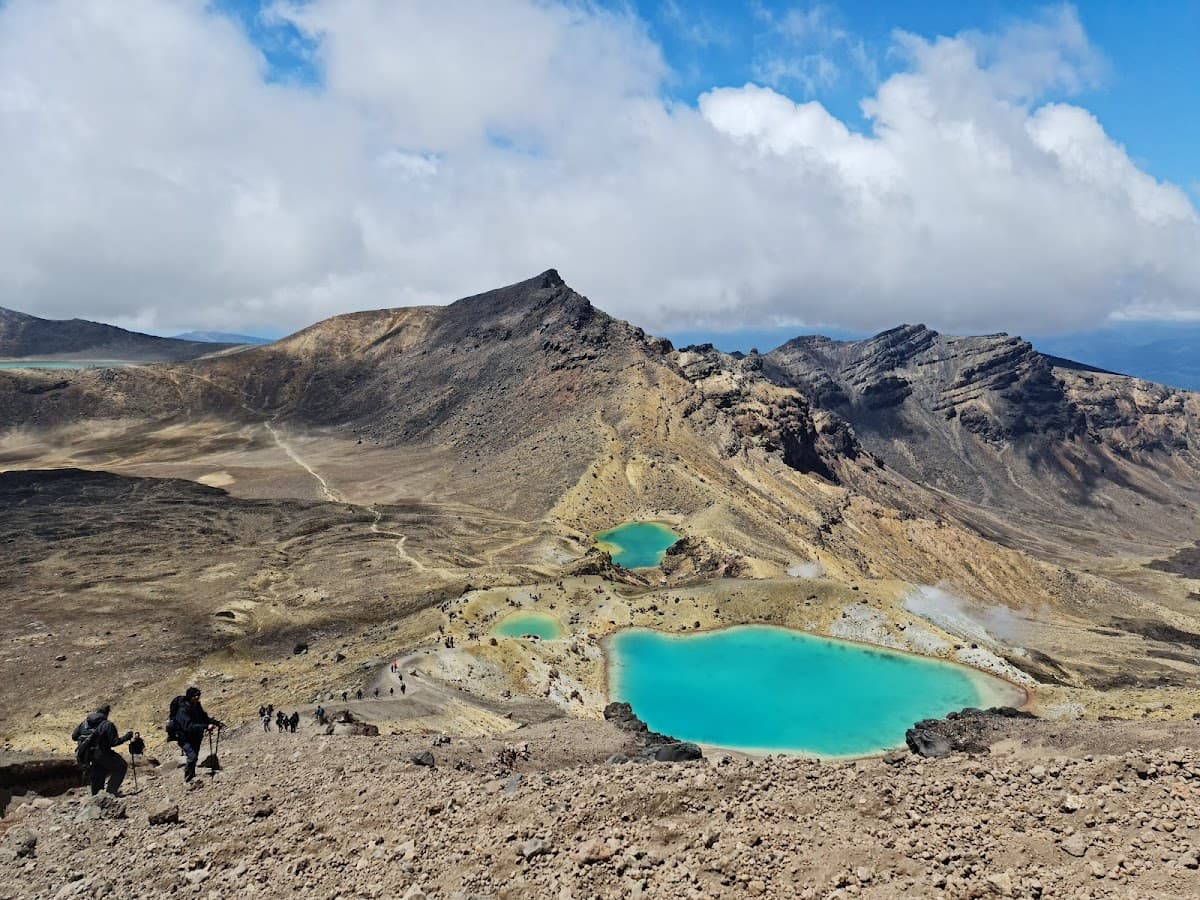
Tongariro National Park
New Zealand's sacred volcanic peaks and alpine wilderness
Three volcanic peaks rise from New Zealand's North Island like ancient guardians. Mount Ngauruhoe, Mount Tongariro, and Mount Ruapehu dominate the horizon here at Tongariro National Park – the country's oldest protected wilderness and a place the Maori people have held sacred for over a thousand years.
This isn't your typical national park experience. Sure, you'll find the usual suspects – hiking trails, alpine lakes, and wildlife. But Tongariro throws in active volcanoes, lunar landscapes that doubled as Mordor in the Lord of the Rings films, and a cultural significance that runs deeper than most tourists realize.
The park sits in the heart of the North Island, about three hours south of Auckland. Most people come for the Tongariro Alpine Crossing – that famous 19.4-kilometer day hike that everyone talks about. And yes, it's spectacular. But there's more here than one trail, even if that trail happens to be one of the world's best day walks.
Itineraries coming soon
We're working on adding amazing itineraries for Tongariro National Park. In the meantime, try the app to create your own!
Money-Saving Tips
- 1.Book shuttle transport early - prices jump from $35 to $60+ during peak season
- 2.Stay in Ohakune instead of Whakapapa Village to save $50+ per night on accommodation
- 3.Pack all your own food - the Chateau's restaurant charges $35+ for basic mains
- 4.Buy hut passes online to avoid the $5 booking fee charged at visitor centers
- 5.Fuel up in Turangi or Ohakune - gas stations near the park charge premium prices
- 6.Rent gear in Taupo or Auckland rather than paying park prices
- 7.Visit in shoulder season (April-May, September-November) for 40% cheaper accommodation
Travel Tips
- •Start the Tongariro Crossing by 6 AM to avoid afternoon weather and crowds
- •Download the MetService weather app - conditions change rapidly at altitude
- •Carry cash for parking - many lots don't accept cards
- •Book accommodation months ahead for December-February visits
- •Check volcanic alert levels before hiking - eruptions can close trails
- •Bring microspikes or crampons between May-September for icy sections
- •Fill water bottles at the visitor center - no reliable water sources on the Crossing
- •Tell someone your hiking plans - cell coverage is patchy in the park
- •Respect Maori cultural sites - don't climb Mount Ngauruhoe's summit if requested not to
- •Pack extra food and warm clothes - rescues can take hours in bad weather
Frequently Asked Questions
Explore Tongariro National Park
BUILD YOUR
TONGARIRO NATIONAL PARK PLAN
Insider picks, smart timing, and a plan ready when you are.
Start Planning