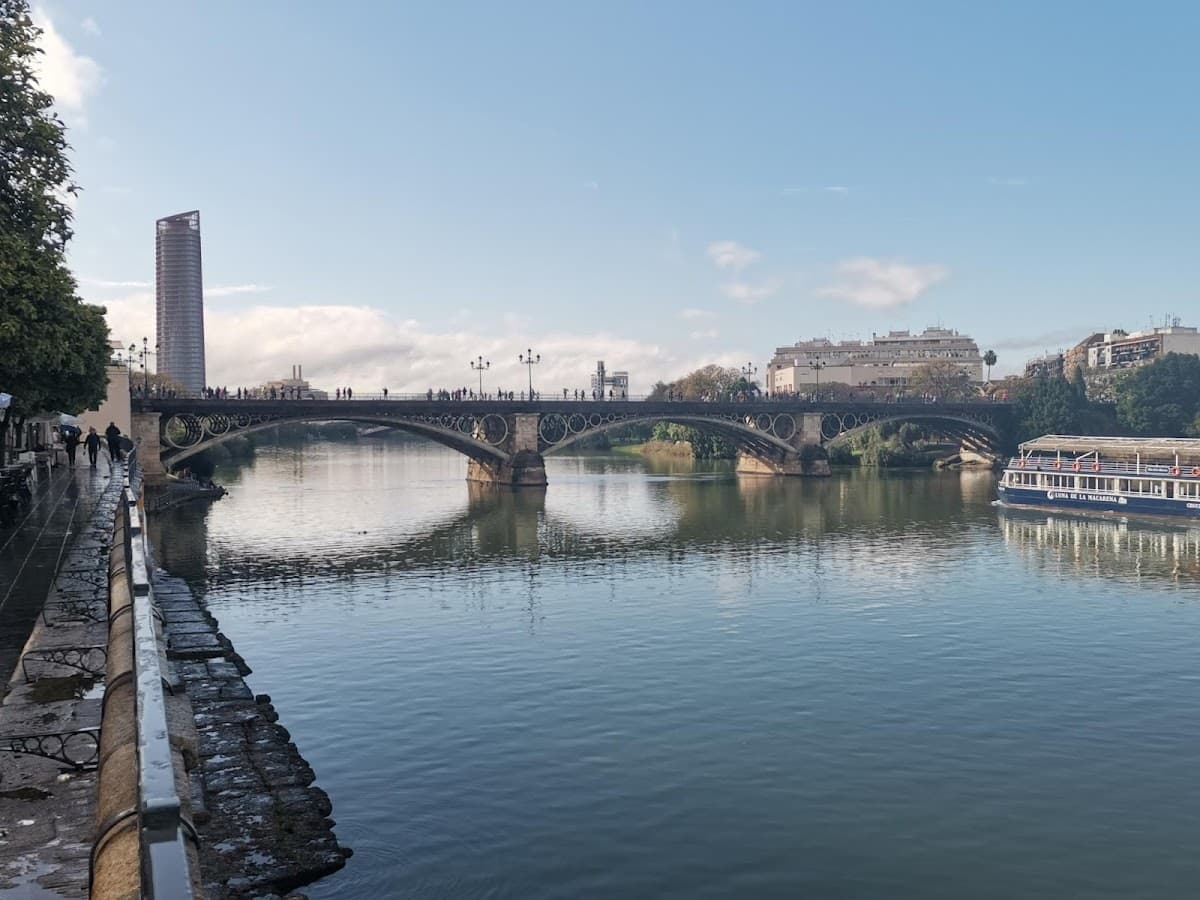
Triana
Seville's soulful flamenco heartland across the river
Cross the Guadalquivir River from Seville's main tourist zone and you'll find yourself in Triana – a neighborhood that feels like a different city entirely. This is where flamenco was born, where ceramic artisans still work their magic, and where locals gather in tiny bars that tourists rarely discover.
Triana has always been Seville's rebellious younger sibling. While the cathedral and Alcázar draw crowds on the east bank, this former gypsy quarter keeps its own rhythm. You'll hear guitar strings being tuned in workshop doorways, smell sherry wafting from century-old tabernas, and watch grandmothers hanging laundry from wrought-iron balconies painted in faded blues and yellows.
The neighborhood sits on an island between two arms of the river, connected to central Seville by the iconic Puente de Triana. But don't think of it as just an extension of the city center. Triana has its own identity, its own stories, and its own way of doing things. Here's how to experience it like the locals do.
Itineraries coming soon
We're working on adding amazing itineraries for Triana. In the meantime, try the app to create your own!
Money-Saving Tips
- 1.Many ceramic workshops offer free demonstrations if you ask politely – just don't expect a sales pitch-free experience
- 2.Lunch menus at neighborhood restaurants cost €12-15 vs €25+ in tourist zones across the river
- 3.Buy sherry directly from bars rather than shops – they often sell bottles at cost to regulars
- 4.The Mercado de Triana has the city's best prices on jamón ibérico and local cheeses
- 5.Flamenco at Casa Anselma costs whatever you want to put in the hat – usually €5-10 is appreciated
- 6.Many bars offer free tapas with drinks during afternoon hours (4-7pm)
- 7.Local bus day passes work in Triana and cost €4.50 vs individual metro tickets at €1.35 each
Travel Tips
- •Learn basic flamenco etiquette – no talking during performances, and applaud the 'olé' moments
- •Ceramic workshops close for siesta 2-5pm, so plan morning or evening visits
- •Calle Betis floods during heavy rains – check weather before booking riverside restaurants
- •Many bars don't accept cards under €10, so carry cash for tapas hopping
- •The Puente de Triana gets extremely crowded during Holy Week processions – plan alternate routes
- •Restaurant kitchens don't open for dinner until 8:30pm at the earliest
- •Ask locals about 'peñas flamencas' – private flamenco clubs that sometimes welcome respectful visitors
- •The neighborhood's narrow streets make GPS unreliable – download offline maps or ask for directions
Frequently Asked Questions
Explore Triana
Ready to explore Triana?
Get a personalized itinerary in seconds with Takeoff.
Free on iOS. No credit card required.