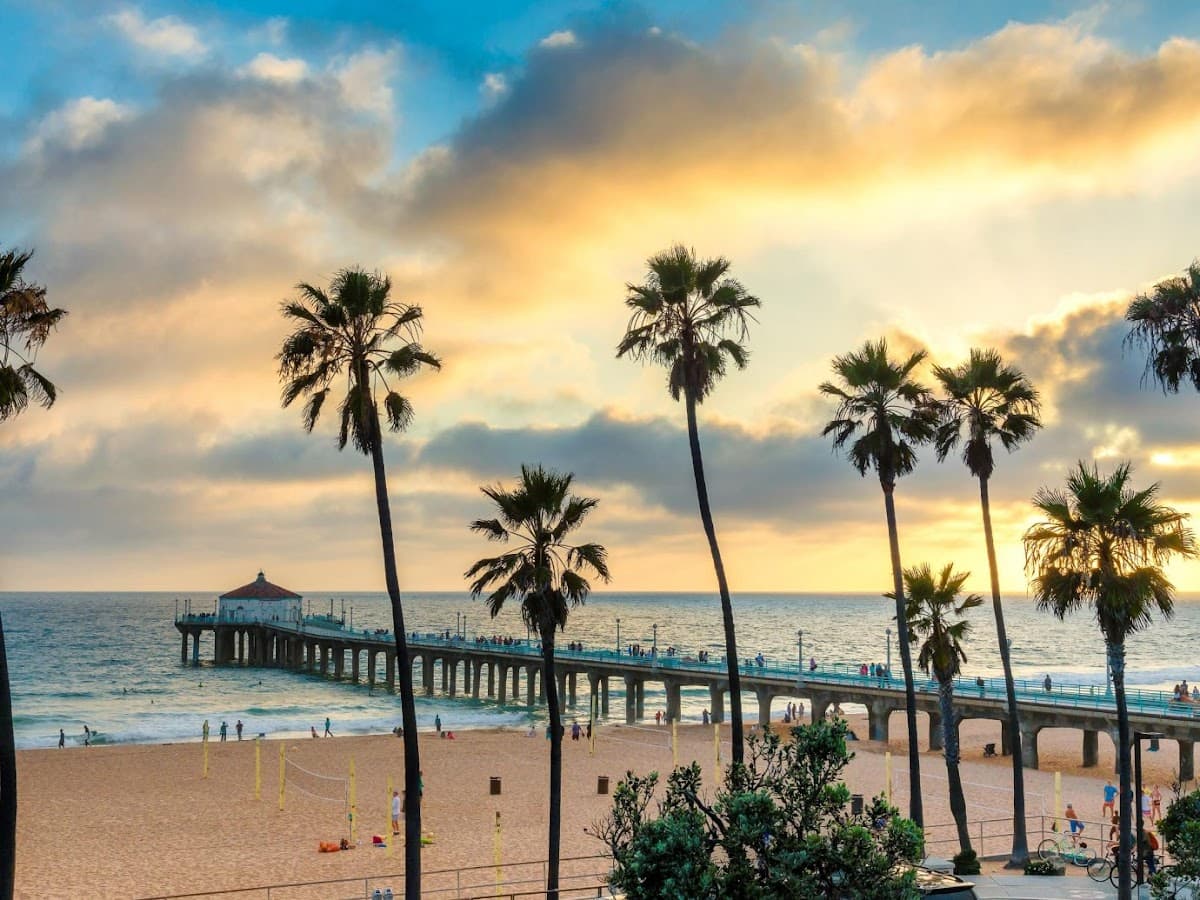
Venice Beach
LA's bohemian boardwalk where creativity meets the Pacific
Venice Beach isn't just another LA beach town. It's where street artists paint murals between palm trees, where bodybuilders pump iron steps from the sand, and where you can grab a $3 taco while watching fire breathers perform at sunset. This is LA's creative playground—equal parts gritty and gorgeous, where the Pacific Ocean meets pure artistic chaos.
Culture & Context
Venice was a dominant maritime republic for over a thousand years, controlling trade routes between Europe and the East.
It invented the ghetto (from the Venetian word for foundry), gave the world the word 'quarantine' (from quarantena, 40 days of port isolation), and came close to becoming the official language of Italy thanks to its cultural prestige. Today roughly 50,000 people live on the island itself — down from 175,000 in the mid-20th century, largely due to tourism displacing residents.
The six sestieri (districts) system has structured civic life since 1171. The Venetian dialect, locally called 'dialeto del mar' (dialect of the sea), is still spoken and alive — it shares roots with Arabic, Greek, and Slavic languages from centuries of trade. Modern Venetians maintain fierce sestiere loyalties and celebrate district-specific festivals.
The city's relationship with tourism is complicated: it drives the economy but is also blamed for hollowing out the population. In 2026, Venice introduced a day-tripper access fee system and is experimenting with crowd management, especially around Rialto and San Marco.
Local Customs
Stand at the bar ('al banco') to drink coffee.
You'll pay €1.10–1.
60 for an espresso standing versus 3–4x more seated. This is not a tourist tip — it's simply how Venetians drink coffee.. The aperitivo hour (roughly 6–8pm) is sacred.
Head to a bacaro, order a spritz and cicchetti, and do not rush. Campo Santa Margherita in Dorsoduro and Fondamenta della Misericordia in Cannaregio are the best spots.. Do not swim in the canals.
It is illegal and carries fines up to €10,000. The water is also not clean.. Respect the acqua alta.
Check the forecast at comune.venezia.it before heading out in autumn/winter.
The city posts siren alerts (number of tones = severity). Passerelle (elevated walkways) go up at Piazza San Marco and main routes.. Tipping is not mandatory in Italy and Venetians do not expect it.
Rounding up the bill or leaving a euro or two is more than sufficient. Never feel obligated.. Don't block narrow calli (alleyways) to take photos.
Traffic in Venice is pedestrian but it's still traffic. Step to the side.. The 'no sitting on church steps' rule is enforced with fines in some areas.
Same for eating on bridges near major landmarks.. Day-trip tourists on peak season dates (April 3 – July 26, 2026) must pay a small access fee and show a QR code. Overnight guests are automatically exempt but must fill in an online form before arrival to receive their exemption QR code..
Venetians use 'tu' (informal you) much more readily than other Italians. They also call friends and strangers 'amore' (love) — including between the same sex — with no romantic meaning. Don't be alarmed..
The acqua alta sirens sound across the city: one tone = 80–89cm (minor flooding), two tones = 100–109cm (flood expected), three or more tones = 120cm+ (bring the rubber boots).
Safety
Venice is one of the safest cities in Europe.
Violent crime is almost nonexistent. Italy's homicide rate is under 1 per 100,000 people annually, and in Venice specifically, police reports are overwhelmingly about theft rather than assault. As of 2026, Numbeo gives Venice a safety index of 66.1 and a daytime safety index of 78.5.
The real concerns are: (1) Pickpocketing in St. Mark's Square, Rialto Market, and on crowded vaporettos — keep bags zipped and in front of you, never put a wallet in a back pocket. (2) Tourist scams: the bracelet trick (someone ties a bracelet on your wrist and demands €10–20 — don't stop, say 'No grazie' firmly and keep walking); fake petition collectors (they distract while an accomplice picks pockets); inflated restaurant bills near major landmarks (always check that the menu has prices listed; avoid places with touts at the door or menus in 5+ languages). (3) Acqua alta flooding, particularly in autumn and winter — inconvenient but not dangerous for most tourists; follow the elevated walkways and watch the forecast.
Emergency numbers: 112 (general), 113 (police). The Questura (Police HQ) handles non-urgent reports. Tap water is safe throughout Venice. The U.S. Consular Agency in Venice is temporarily closed as of 2025 — nearest consular services are in Milan or Genoa. Walking alone at night is generally fine in central districts; avoid isolated canal banks and unlit alleys after midnight in peripheral areas of Cannaregio.
Getting Around
Venice has no cars, no bikes, and no buses on the main island.
You walk or you take the water. Here's what you need to know:
VAPORETTO (water bus): Operated by ACTV, this is the public transport backbone. Line 1 runs the entire Grand Canal slowly and panoramically — best for views. Line 2 is faster, skipping stops. Lines also serve Murano, Burano, Torcello, Giudecca, and the Lido. A single ticket costs €9.50 and is valid for 75 minutes. Multi-day passes are almost always better value: 24h = €25, 48h = €35, 72h = €45, 7 days = €65. Validate your ticket before boarding — the fine for not doing so starts at €50. Vaporettos run 4:30am to 12:30am; night lines (marked 'N') run after that on limited routes. Download the 'AVM Venezia' app for real-time route planning.
TRAGHETTO: A gondola ferry that crosses the Grand Canal at set points for just €2. Locals stand. It's fast, cheap, and one of the most authentically Venetian things you can do.
WATER TAXI: Fast (30 min airport to city), private, and expensive at €60–120 per trip. Worth it with heavy luggage or if you're splitting costs.
GONDOLA: For tourists and romance, not commuting. Set prices: €80 for 30 min before sunset, €100 after sunset. No haggling.
AIRPORT: Marco Polo Airport is on the mainland. Options into Venice: Alilaguna water bus (€15 one-way, ~70 min to San Marco), private water taxi (~€120, 30 min), or land bus to Piazzale Roma then vaporetto. Treviso Airport (used by some budget airlines) is ~30 min by bus.
TRAIN: Santa Lucia station at the northwest edge of the island connects to Mestre (5 min), Padua (30 min), and beyond. Staying in Mestre and commuting in saves serious money — around €75/night for a hostel vs €185+ on the island.
Useful Phrases
Itineraries coming soon
We're working on adding amazing itineraries for Venice Beach. In the meantime, try the app to create your own!
Money-Saving Tips
- 1.Hit the boardwalk food vendors for cheap eats—$3 tacos and $5 smoothies beat restaurant prices
- 2.Rent bikes for the day instead of paying for multiple rideshares between Santa Monica and Venice
- 3.Many street performers work for tips only, so bring singles if you want to watch the shows
- 4.Happy hour at beachside bars runs 3-6pm with $2-3 off cocktails
- 5.Free parking exists on residential streets 6+ blocks inland from the beach
- 6.The Venice Art Walls are completely free and change weekly with new graffiti pieces
Travel Tips
- •Arrive before 10am on weekends to snag good parking and avoid the heaviest crowds
- •Keep valuables locked in your car or hotel—petty theft happens on the busy boardwalk
- •The best street art changes constantly, so explore different blocks each visit
- •Muscle Beach workouts are free to watch but cost $10 if you want to use the equipment
- •Sunset happens around 7pm in summer—prime time for both beautiful views and peak crowds
- •The Venice Beach Skatepark is free but gets packed with pros, so beginners should go early morning
Frequently Asked Questions
Explore Venice Beach
BUILD YOUR
VENICE BEACH PLAN
Insider picks, smart timing, and a plan ready when you are.
Start Planning