Adirondacks
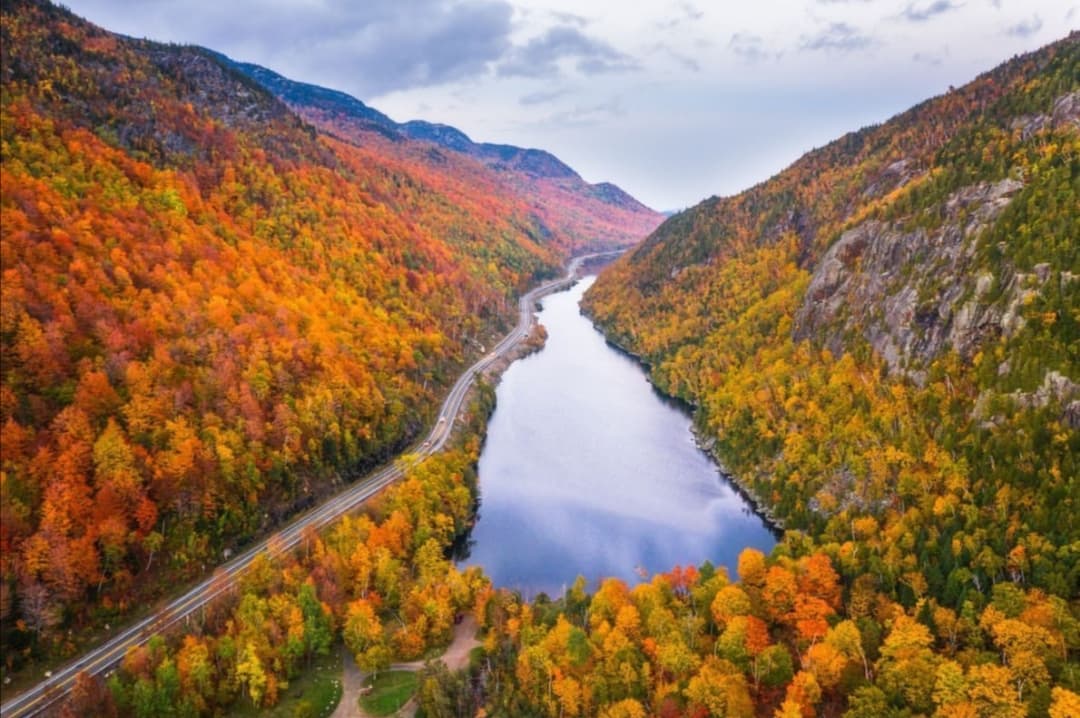
Six million acres of wilderness lakes and peaks
The Adirondacks aren't your typical mountain destination. This massive wilderness park sprawls across six million acres of upstate New York, bigger than Vermont and containing more protected land than Yellowstone and Grand Canyon combined. But here's what makes it special: it's not just a park. Real people live here, in small towns scattered between pristine lakes and forested peaks. You can paddle a remote pond in the morning and grab craft beer at a local brewery by evening. The Adirondacks mix wild adventure with genuine mountain culture in a way that feels refreshingly unpolished.
Best Months
JUN – OCT
Culture & Context
FOREVER WILD CONSTITUTIONAL PRESERVE
The name "Adirondack" comes from a Mohawk word — roughly "Hatírōntaks" — meaning "bark-eaters" or "tree-eaters," originally a Mohawk epithet for their Algonquin rivals who wintered in these mountains and ate bark in lean times. The geologist Ebenezer Emmons applied the name to the mountains in 1838. The Mohawk (Kanien'kehá:ka) and Algonquin peoples used this land as a seasonal homeland and trade corridor for thousands of years before European contact.
The community of Ganienkeh, near Altona, remains autonomous Indigenous territory today — one of the most successful land reoccupations in North America. The park itself (established 1892) is governed by a unique constitutional protection: the "Forever Wild" clause of 1894, which permanently prohibits selling, logging, or leasing New York State land within the preserve. It's not just policy — it's in the state constitution, requiring a public vote to change.
That's why the Adirondacks look the way they do. The park is also famously not a park in the conventional sense: no entrance gates, no entry fees, no rangers greeting you at a booth. It's a 6-million-acre patchwork of public and private land where over 100,000 people live year-round.
The "Forty-Sixers" culture — climbing all 46 High Peaks — is a genuine regional tradition dating back to the 1920s. The Great Camps era (1880s–1920s) brought wealthy New York elites who built elaborate rustic lakefront retreats; several, like Great Camp Sagamore, are now open to the public.
Local Customs
BEAR CANISTERS LEGALLY REQUIRED
Bear canister rules are serious: overnight users in the Eastern High Peaks Wilderness are legally required to carry bear-resistant canisters from April 1 through November 30. Store them at least 100 feet from your tent.. Book AMR (Adirondack Mountain Reserve) parking reservations before you arrive.
From May 1 to October 31, you need a reservation to access the privately owned 7,000-acre reserve in Keene — gateway to Indian Head, Gothics, and the Wolfjaws. The system opens April 17 for the 2026 season.. Spring mud season is not a suggestion — DEC actively advises against hiking above 2,500 feet from late March through May.
Doing it anyway damages fragile alpine vegetation and can strand you in knee-deep muck.. Black flies are brutal from late May through mid-June. Locals barely blink at them.
Visitors often don't pack head nets and immediately regret it. Get a net.. The Adirondack Park has no entrance gates and no entry fee — it's a mix of public and private land where people actually live.
Respect private property markers and posted land boundaries.. Leaf-peeping season (late September to mid-October) is the other summer — prices spike, parking fills by 7am, and popular overlooks get genuinely crowded. Go on weekdays if you can..
At popular High Peaks trailheads, the Garden Shuttle from Marcy Field in Keene costs $10 round-trip and runs weekends July 4 through Indigenous Peoples Day weekend. It exists because parking was out of hand.. The 'Forever Wild' clause in the NY State Constitution means state Forest Preserve land cannot be sold, logged, or leased — ever.
Locals take this seriously. Don't even think about cutting a standing tree.. Leave No Trace is not optional.
Pack out everything — including orange peels and apple cores. Alpine vegetation at High Peaks summits is recovering from decades of human foot traffic; stay on marked trails at summits.. Hunting seasons overlap with hiking season in fall.
When leaves start turning orange, hike in orange — deer and bear early seasons begin in September. Bright colors are how you avoid becoming someone's accidental target.
Safety
BEARS, TICKS, SPOTTY CELL SERVICE
About 4,000 black bears live in the Adirondacks — the highest concentration in New York State. They are shy and generally avoid people, but bear canisters are legally required for overnight High Peaks camping (April 1–Nov 30). If you see one, back away slowly and make noise.
Do not run. The Avalanche Pass trail in Keene remains closed following a July 2025 landslide — check DEC's Adirondack Backcountry Information page before any High Peaks itinerary. The DEC is actively considering daily visitor caps at Adirondack Loj Road (400 people) and Cascade Mountain (240 people) trailheads — check current access rules before you go.
Ticks are active spring through fall; wear long pants, tuck socks over cuffs, and check exposed skin frequently. Emergency contacts: call 911 or DEC Forest Ranger Dispatch at 1-833-NYS-RANGERS (1-833-697-7264). Cell service is spotty to nonexistent in much of the backcountry — Verizon performs best in remote areas but even that fails in valleys and deep wilderness.
For serious backcountry trips, carry a satellite messenger. Weather changes fast at elevation; temperatures on a summit can be 20°F colder and significantly windier than at the trailhead. Always sign in at trailhead registers and tell someone your plan before you go.
Getting Around
ESSENTIAL CAR, SCATTERED TRAILHEADS
A car is non-negotiable in the Adirondacks. There's no meaningful public transit connecting the park's towns, and trailheads are scattered across 6 million acres. I-87 (the Adirondack Northway) is the main spine from New York City north, with exits feeding into the park's eastern towns like Lake George, Schroon Lake, and the Lake Placid/Keene corridor.
Route 28 serves the western park through Old Forge and Blue Mountain Lake. Once inside the park, expect long stretches of two-lane mountain roads with no services — fill your tank when you can. The brand-new 34-mile Adirondack Rail Trail (vehicle-free) connects Lake Placid, Saranac Lake, and Tupper Lake for biking, walking, and cross-country skiing — a genuine game-changer for non-motorized travel between these three towns.
Note: the Station Street Lake Placid trailhead is closed for construction in 2026; use the Snowfield lot on Old Military Road. The Garden Shuttle ($10 round-trip) runs Keene Valley hikers from Marcy Field to The Garden trailhead on weekends, July 4 through Indigenous Peoples Day. AMR trailhead parking requires advance online reservation (May 1–Oct 31) — book at 4am on the morning-of for same-day spots if you miss the weekly window.
Nearest major airports are Albany (90 min south) and Burlington, VT (1 hour east of Lake Placid). Saranac Lake has a small regional airport (SLK) with limited service.
Useful Phrases
Explore Cities
Explore the Region

Adirondacks Itineraries
View all
Adirondack Jungle Escape in Lake Placid
Week · $$$
Lake Placid Weekend: Lakeside Peaks, Quiet Trails, Easy Wins
Weekend · $$$
Lake Placid Weekend: Adirondack Lakes, Peaks, and Easy Wandering
Day Trip · $$$

7 Days of Lake Placid Romance, Wilderness, and Easygoing Charm
Week · $$$
Romantic Adirondack Escape in Lake Placid
Weekend · $$$
Wild & Romantic Lake Placid Escape
Day Trip · $$$
Money-Saving Tips
- 1.Camp at state campgrounds for $22/night instead of private resorts that charge $100+
- 2.Buy the Empire State Park Pass for $80 if visiting multiple state parks and beaches
- 3.Pack lunches for hiking—mountain restaurants charge tourist prices for basic food
- 4.Visit in shoulder seasons (late September-October) for lower accommodation rates
- 5.Rent canoes and kayaks from outfitters in town rather than at resort marinas
- 6.Fill up gas tanks in larger towns—remote stations charge premium prices
- 7.Look for Friday night fish fries at VFW halls and fire stations for cheap local meals
Travel Tips
- •Download offline maps—cell service is spotty throughout the wilderness areas
- •Pack layers even in summer—mountain weather changes quickly and nights get cold
- •Bring bug spray and head nets for hiking between May and July
- •Reserve campsites and popular hiking permits well in advance for summer visits
- •Check road conditions in winter—some seasonal routes close completely
- •Carry bear spray and know proper food storage rules for backcountry camping
- •Book accommodations early for fall foliage season (September-October)
- •Respect private property—the park includes private inholdings mixed with public land
Frequently Asked Questions
Explore Adirondacks
BUILD YOUR ADIRONDACKS PLAN
Insider picks, smart timing, and a plan ready when you are.