Delft
Historic Dutch charm with iconic blue pottery heritage
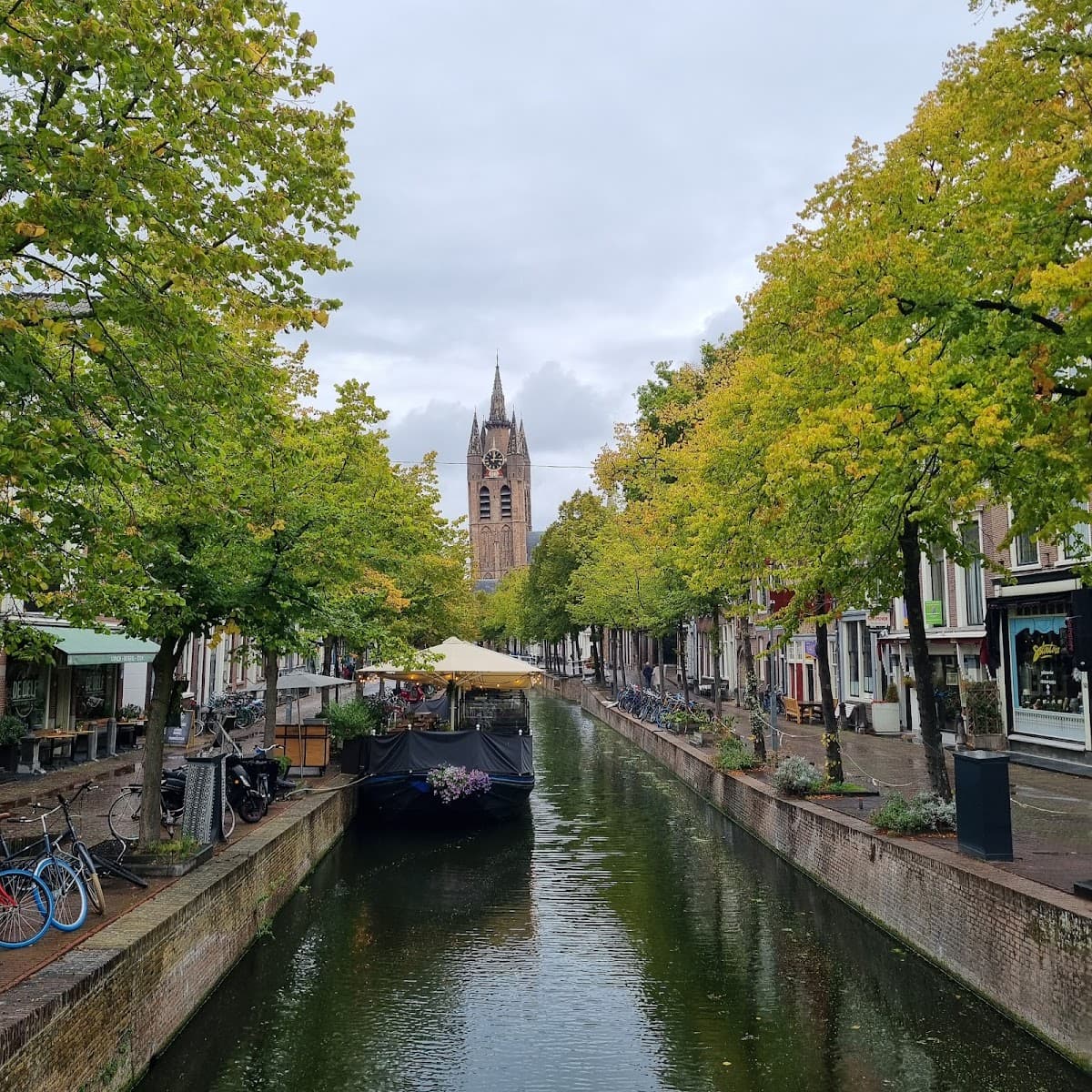
Delft feels like Amsterdam's quieter, more artistic sibling. This compact Dutch city wraps you in 17th-century charm without the tourist chaos. You'll find Johannes Vermeer's old stomping grounds, the birthplace of Delft Blue pottery, and canals that actually reflect the sky instead of tour boats. The historic center spans just a few blocks, making it perfect for wandering between pottery workshops, cozy brown cafés, and the towering Nieuwe Kerk. It's the kind of place where you can see everything in a day but want to stay for a week.
Best Months
APR – SEP
~20°C · moderate crowds
Culture & Context
VERMEER & TECH TOWN
Delft sits between Rotterdam and The Hague in South Holland, roughly 15 minutes by train from either city. It's a college town at heart, home to the globally respected Delft University of Technology (TU Delft), which means you get that rare mix of 400-year-old canal houses and students cycling past on creaky bikes at midnight. The city draws over one million tourists a year, so don't expect a sleepy backwater.
But it's nowhere near as overwhelming as Amsterdam. Think of it as Amsterdam on a much calmer day. The city is famous for three things: Delft Blue pottery (only two original factories remain, the Porceleyne Fles and the Delftse Pauw — everything else in souvenir shops is mass-produced in Asia), the painter Johannes Vermeer (born and buried here), and the Dutch royal family (William of Orange was buried in the Nieuwe Kerk, starting a tradition that continues today).
The student population keeps prices honest in certain parts of town and makes the café scene genuinely lively on weekends. Here's the thing — the Dutch are famously direct, not rude. If a local gives you a blunt answer, that's just how it works.
Don't take it personally.
Local Customs
BIKES OWN ROAD
Bikes own the road. Bike lanes are sacred territory. Walk in one and expect to get yelled at — or worse, clipped.
Always look both ways before stepping off a curb, because the thing barreling toward you will almost certainly be a bicycle, not a car.. Tipping is not the norm the way it is in the US. Rounding up the bill or leaving around 5-10% for genuinely good service is appreciated.
Nobody expects 20%.. Thursday is market day on the Markt square. Fruit, vegetables, Dutch cheese, stroopwafels, herring — and the cheese is significantly cheaper than the tourist shops lining the square..
Tap water is completely safe and locals drink it without a second thought. You can refill a bottle at your hotel or accommodation without any issue.. Most Dutch people speak excellent English, but starting with 'Hallo' or 'Sorry, ik spreek geen Nederlands' (sorry, I don't speak Dutch) before switching to English goes a long way.
Locals genuinely appreciate the effort and become noticeably warmer.. Gezelligheid (roughly: cozy togetherness) is a cultural concept that explains a lot about Delft. It's why cafés fill up fast on rainy afternoons and why groups linger for hours over a single beer..
Card and contactless payment is the standard almost everywhere. But carry a small amount of cash for outdoor markets and some very local spots that haven't caught up.. Always tap your OV-chipkaart (public transport card) on AND off trams and buses.
Forgetting to tap off can trigger an automatic fine.
Safety
VERY SAFE, WATCH BIKES
Delft is genuinely safe. Around 94 out of 100 residents and visitors report feeling completely safe during the day, and 89 out of 100 feel secure at night. The most common issues are pickpocketing in crowded tourist areas (keep bags zipped and in front of you) and bicycle accidents — not because of crime, but because tourists step into bike lanes without looking.
The city centre and university campus are the safest areas. Be a bit more aware in the southern suburbs like Tanthof at night. Violent crime is rare.
Police are professional, speak English, and are easy to approach. Emergency number: 112. Non-emergency police line: 0900-8844.
Tap water is completely safe to drink. One practical annoyance: overpriced drinks and food exist specifically in the tourist zone around the Markt — that's not a safety issue, it's just a wallet issue. Walk one street over and you pay normal prices.
Getting Around
WALKABLE, BIKE SACRED
Delft has a proper train station right in the city center with direct connections to Rotterdam (10 minutes), The Hague (12 minutes), and Amsterdam (about 1 hour). Trains run frequently. The entire old town is walkable once you're there.
Seriously — it's compact. You can cross the historic center in 20 minutes on foot. Cycling is the most natural way to get around, and bike rentals are available throughout the city.
But if you're not confident riding in Dutch traffic, don't feel pressured — walking covers most of what tourists want to see. Trams and buses connect the city to the wider region. Always tap your OV-chipkaart on AND off or you'll get automatically charged the maximum fare.
Canal boat tours depart from the city center and give you a different angle on the whole place — the canals are only 1.5 meters deep on average, and Delft has 431 bridges. For day trips, Rotterdam and The Hague are both under 15 minutes by train.
Amsterdam is under an hour. There's no good reason to rent a car unless you're heading into the countryside — parking in the centre is scarce and expensive.
Useful Phrases
Money-Saving Tips
- 1.Buy the Museum Kaart for €65 – it covers Royal Delft, Vermeer Centre, and dozens of other Dutch museums
- 2.Thursday's market offers the cheapest fresh stroopwafels at €1 each versus €3 in tourist shops
- 3.Many brown cafés offer jenever tastings for €5-8 instead of buying full bottles
- 4.Rent bikes from the train station (€15/day) rather than hotel concierge services (€25/day)
- 5.Lunch specials at local eetcafés cost €12-15 versus €25+ at tourist restaurants near the Markt
- 6.Stay Sunday night instead of Saturday – hotel rates drop 30-40% for the same rooms
Travel Tips
- •Visit Royal Delft pottery factory early morning when artisans demonstrate hand-painting techniques
- •Climb Nieuwe Kerk tower for city views – it's 376 steps but worth the €5 entrance fee
- •Book dinner reservations by 3pm – most restaurants only have 20-30 seats
- •Bring a reusable water bottle – tap water tastes great and fountain locations are marked on city maps
- •Download the Delft Walking Routes app for self-guided tours of Vermeer's locations
- •Pack comfortable walking shoes – cobblestones look charming but destroy thin soles
- •Learn basic Dutch greetings – locals appreciate the effort even in this tourist-friendly city