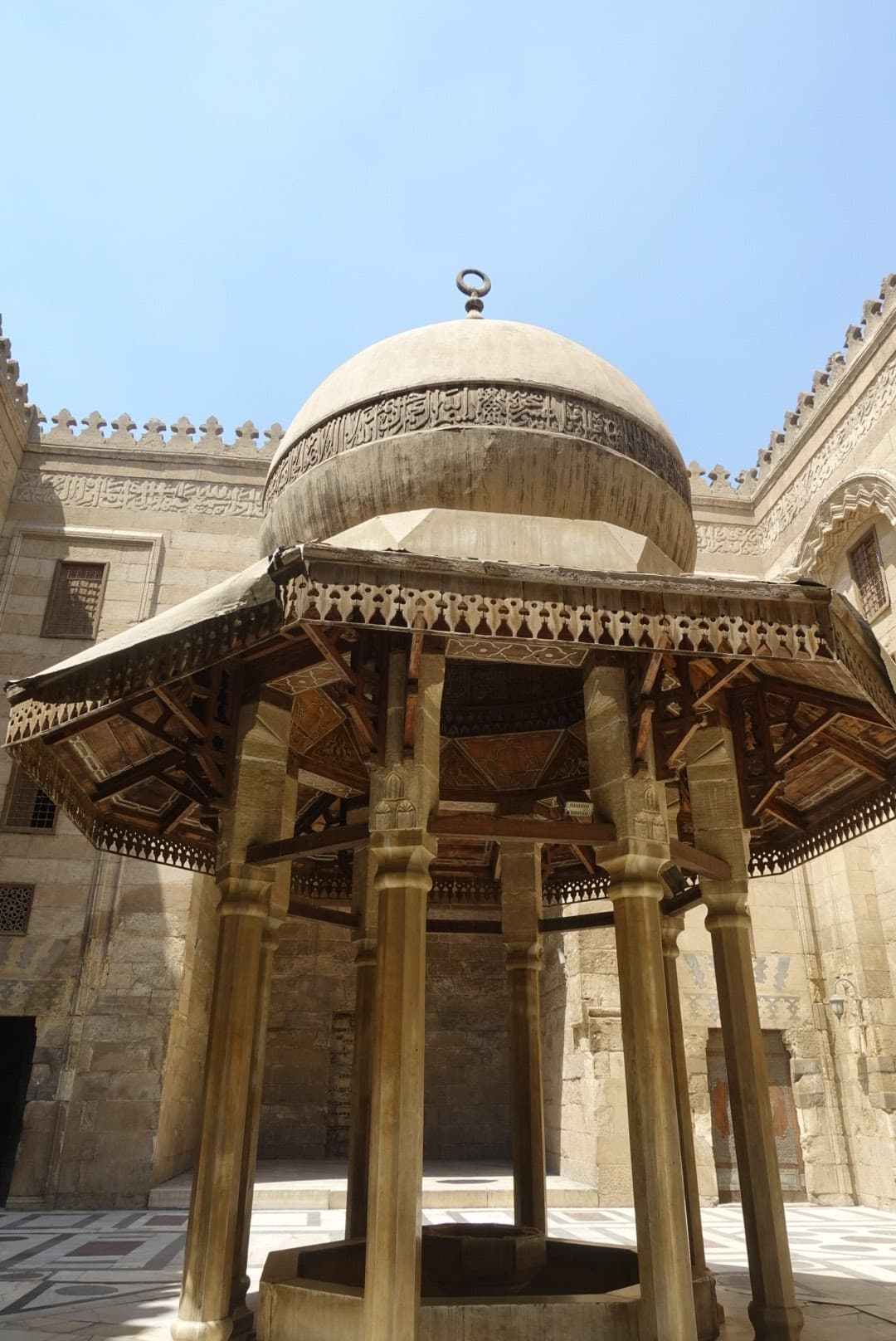
Islamic Cairo
Medieval Islamic architecture and bustling bazaars in historic Cairo
Step into Islamic Cairo and you're walking through a thousand years of history. This isn't some sanitized heritage district – it's a living, breathing neighborhood where the call to prayer echoes between medieval minarets while vendors hawk spices in narrow alleys that haven't changed much since the Fatimids ruled Egypt.
The area stretches from the Citadel in the south to Bab al-Futuh gate in the north, packed with more Islamic monuments per square kilometer than anywhere else on earth. But here's what makes it special: people actually live here. Kids play football between 14th-century mosques. Women hang laundry from windows overlooking Mamluk courtyards. And yes, tourists come for Khan el-Khalili bazaar, but venture just two blocks away and you'll find yourself completely alone with some of the world's greatest Islamic architecture.
Best Months
JAN · FEB · MAR · OCT · NOV · DEC
Culture & Context
HAGGLE, TIP, OBSERVE
Cairo moves on its own clock, and if you fight it, you lose. Egyptians are famously warm and genuinely curious about visitors, but hospitality here can shade into persistence quickly, especially around Khan el-Khalili and the Pyramid entrance. Learn to distinguish between someone being genuinely friendly and someone opening a sales pitch.
Most of the time it's both. Egypt is a predominantly Muslim country, so dress modestly outside resort areas. Women should cover shoulders and knees; men should skip the tank tops in the city.
Friday is the main prayer day — some sites and restaurants have altered hours. During Ramadan (February 28–March 29, 2026), restaurants close during daylight and the city transforms at night. Book hotels 60 days ahead for Ramadan and Eid periods.
Rooms sell out fast. Baksheesh (small tips) is genuinely part of daily life, not a tourist trap. Round up taxi fares, tip restroom attendants, and have small E£5–20 notes on hand constantly.
Haggling is standard at souks. Starting prices in tourist markets are often 2–3x the actual value, so don't feel bad negotiating hard.
Local Customs
BAKSHEESH IS CURRENCY
Baksheesh is real. Small tips of E£20–50 are expected from restroom attendants, guards who let you take photos in restricted spots, and anyone who carries your bags. Keep a constant supply of small notes..
Always greet before you transact. Walking up to a vendor or taxi driver and immediately saying a price without 'As-salamu alaykum' or at minimum 'hello' reads as rude.. Bargaining is the norm at souks and markets.
Starting prices at Khan el-Khalili are often 2–3x what sellers will actually accept. Don't feel bad negotiating. Smiling while you do it helps..
Photography of police stations, military barracks, and certain government buildings is illegal. Don't do it. Photographing people — especially women — without permission is also a fast way to cause offense..
Friday midday prayer affects operating hours across the city. Many businesses close for an hour or two. Plan museum visits and lunch accordingly..
Remove shoes before entering mosque prayer areas. Cover shoulders, knees, and (for women) hair when visiting mosques — scarves are often available at the entrance.. Street food stands are almost always cash-only.
ATMs are widely available but break small bills at a hotel or Carrefour before heading to a market.. Tap water is not safe to drink. Bottled water only.
This applies everywhere, including ice in cheaper venues.. Solo female travelers should expect persistent attention, including cat-calling, especially outside Zamalek, Garden City, and Maadi. Walking with purpose and ignoring comments without engaging is the standard local advice..
The metro has women-only cars (first two cars of each train). Use them or don't — it's your choice. During rush hour they're significantly less crowded.
Safety
WATCH PICKPOCKETS CLOSELY
Cairo is generally safe for tourists in 2026, particularly in well-trafficked areas like Downtown, Zamalek, Giza, and Islamic Cairo. Violent crime against visitors is rare. The main concerns are petty stuff: pickpocketing at Khan el-Khalili, scams around Pyramids entrance (fake guides, 'closed museum' stories, unofficial camel operators), and persistent taxi overcharging.
Keep bags zipped in crowded markets. Stash small bills separately from your main wallet so you're not pulling out cash in front of crowds. The US State Department lists Egypt at 'Level 3: Reconsider Travel,' but this specifically targets North Sinai and border regions — not Cairo or the main tourist corridor.
Cairo itself is not near any active conflict zones; Luxor is over 500km from the Gaza border. At night, use Uber or Careem for longer distances rather than walking in unfamiliar areas. Streets outside tourist zones are often poorly lit.
The bazaar area of Old Cairo is well-lit and busy at night and is perfectly fine on foot. Solo women should expect cat-calling and persistent attention, including on public transport. The metro's women-only cars (first two cars) are less crowded and a practical option.
Report any crime to Tourist Police before leaving Egypt: dial 126. Carry a photo of your passport separately from the original. It is illegal to photograph police stations, military installations, or government buildings — take this seriously.
Getting Around
METRO BEATS TAXIS
The Cairo Metro is your best friend for long cross-city trips. Three operational lines connect all the major tourist zones. Fares run E£8–20 ($0.
15–0.40) depending on how many stops. Line 1 hits Tahrir Square (Egyptian Museum) and Giza Station.
Line 3 goes toward the airport. Credit card machines are now installed at Line 1 and Line 2 stations, so you don't always need exact cash. January 2026 saw the official launch of the Cairo Monorail: two lines totaling 100km linking the New Administrative Capital to East Cairo and 6th of October City to Giza.
Uber and Careem are the standard recommendation for door-to-door movement. Uber averages $2–3 for a 30-minute trip. Download both before you arrive — Careem accepts cash if your card setup is complicated.
For first-time arrivals at Cairo International Airport, go straight to the app rather than the taxi queue. Airport taxi touts are persistent and prices fluctuate. Official airport taxis to Giza or Downtown run 200–300 E£ ($7–10).
The white taxi fleet: metered, widely available, but drivers frequently claim the meter is broken or round up dramatically on tourist-looking passengers. If you use one, agree on a price before you get in, and hoard small bills — 'mafeesh fakkah' (no change) is a documented national sport. Public buses and microbuses are cheap but complicated to navigate without Arabic.
The river bus runs around $0.31 (E£17) and offers a genuinely different perspective on the city. Don't drive yourself.
Cairo traffic is legitimately dangerous, lane markings are decorative, and navigation apps lag behind ongoing construction projects.
Useful Phrases
Itineraries coming soon
We're working on adding amazing itineraries for Islamic Cairo. In the meantime, try the app to create your own!
Money-Saving Tips
- 1.Entrance fees to major mosques range from 30-60 Egyptian pounds, but many smaller ones are free if you're respectfully dressed
- 2.Haggle hard in Khan el-Khalili – start at 30% of the asking price and work up slowly
- 3.Street food costs 10-25 pounds per meal, while tourist restaurants charge 200-400 pounds for the same dishes
- 4.Metro tickets cost just 5 pounds and connect Islamic Cairo to the rest of the city efficiently
- 5.Hire local guides directly at mosque entrances for 150-250 pounds rather than through hotels at 500+ pounds
- 6.Many historic sites offer student discounts with valid ID – bring your card even if you graduated years ago
Travel Tips
- •Dress conservatively – long pants and covered shoulders are required for mosque visits, and it shows respect to the community
- •Learn basic Arabic greetings like 'As-salamu alaikum' – locals appreciate the effort and it opens doors
- •Carry small bills (5 and 10 pound notes) for street vendors and bathroom attendants at mosques
- •Download offline maps before exploring – GPS signals get weak between the thick stone walls
- •Remove shoes before entering mosque prayer areas, and avoid visiting during prayer times unless invited
- •Keep your camera discrete – many locals don't want to be photographed, especially women
- •Bring a small flashlight for exploring darker areas of historic buildings
- •Stay hydrated but know that public bathrooms are scarce – use mosque facilities when available
Frequently Asked Questions
Explore Islamic Cairo
BUILD YOUR ISLAMIC CAIRO PLAN
Insider picks, smart timing, and a plan ready when you are.