Rotorua
Geothermal wonderland where Maori culture meets bubbling earth
Rotorua hits you with sulfur before you even get off the plane. That's the smell of the earth literally cooking beneath your feet. This geothermal wonderland on New Zealand's North Island serves up bubbling mud pools, steaming lakes, and spouting geysers alongside some of the country's most authentic Maori cultural experiences. But here's what the postcards don't tell you: Rotorua is also an adrenaline junkie's playground and a wellness retreat rolled into one strange, spectacular package.
Best Months
JAN · FEB · MAR · APR · DEC
~23°C · high crowds
Culture & Context
MĀORI SOUL, GEOTHERMAL CITY
Rotorua sits on the traditional lands of the Te Arawa iwi, and that's not just a historical footnote. The name itself tells you everything: roto (lake) + rua (second), because this was the second lake the explorer Ihenga discovered. Māori culture isn't a backdrop here.
It's woven into daily life, place names, signage, and how people greet each other. Rotorua was the first city in New Zealand to put both English and Māori on all its street signs. The sulfur smell hits you the moment you step outside.
Locals call it "the Rotorua air freshener" with a wink. You get used to it after about an hour. The city lives literally on top of one of the most active geothermal systems on the planet, which means some houses have their own natural hot water from the ground, and the earth sometimes just...
vents. It's simultaneously weird and completely normal to residents. About 58,500 people call Rotorua home, making it a proper city with real neighborhoods and a genuine community pulse.
Tourism is the engine, but the city's Māori cultural identity is what gives it actual soul.
Local Customs
HONGI & HĀNGI, NO SHOES
Remove your shoes before entering a marae (traditional meeting house). This is not optional, and no one will remind you more than once.. Don't touch carvings, statues, or items marked as tapu (sacred).
Tapu means something is off-limits for spiritual reasons, not just aesthetics.. Hāngi is the traditional Māori cooking method using heated stones underground. If someone invites you to one, go.
Don't call it a 'BBQ' to locals.. Hongi (the traditional Māori nose-to-nose greeting) may be offered at cultural experiences. Follow the host's lead and lean in gently.
It's a genuine gesture of welcome, not a tourist trick.. Kia ora functions as hello, thank you, and a general expression of goodwill. Start conversations with it and locals will warm up immediately..
The Rotary Market at Kuirau Park runs every Saturday 7am to 12:30pm. Shopping there over a tourist strip keeps money in the local community and the produce is significantly fresher.. Tipping is not expected in New Zealand.
Doing it isn't rude, but no one will be offended if you don't.
Safety
DAYTIME SAFE, NIGHT CAUTIOUS
Rotorua is generally safe for tourists during the day. Daytime safety scores around 82/100 based on visitor and resident surveys. But nights are more of a mixed picture, with roughly 55/100 reporting feeling fully secure after dark.
The biggest specific concern is Fenton Street, where a number of motels have been used for emergency social housing, creating unpredictable surroundings at night. If you're booking accommodation, it's worth emailing ahead to ask whether the property provides emergency housing or if neighboring properties do. The Rotorua Lakes Council operates an Inner City Community Safety Hub with Safe City Guardians and active CCTV monitoring, which helps in the CBD.
Petty theft and car break-ins are the most common issues, particularly in tourist areas around the Polynesian Spa and Government Gardens. Don't leave anything visible in a parked car. Geothermal attractions carry their own physical risks: stay on marked paths, respect fencing around boiling pools, and do not swim in any thermal area unless it's an approved bathing site.
Some lakes and rivers have strong currents or unexpected thermal activity. And be aware that some vendors near popular sites sell overpriced or inauthentic Māori crafts as 'genuine.' Stick to established cultural centres like Te Puia or reputable markets for the real thing.
Emergency number in New Zealand is 111 for police, fire, or ambulance.
Getting Around
CAR ESSENTIAL, BUSES AVAILABLE
Getting around Rotorua is straightforward, but a car gives you the most freedom once you want to explore beyond the city center. The city itself is fairly walkable. For public transit, the lime-green CityRide buses (operated by Bay Bus) cover 11 routes including the airport.
A Day Saver pass costs NZD $7 and gets you unlimited rides all day. The Bee Card (like a tap-on/tap-off transit card) is cheaper than paying cash on board. Route 10 connects the airport to the city center in about 20 minutes, running hourly.
Route 1 hits tourist spots including Rainbow Springs, Skyline Rotorua, Zorb, and Mitai Māori Village. Weekday buses run every 30 minutes from 6:45am, with hourly service on weekends and public holidays. InterCity coaches connect Rotorua to Auckland, Hamilton, Tauranga, Wellington, and other North Island cities.
The main stop is at the i-SITE on the corner of Fenton and Arawa Streets. Air New Zealand flies direct from Auckland, Wellington, and Christchurch to Rotorua Airport, which is 10 minutes from the city center. Taxis and rideshares are available but agree on a fare before getting in, as overcharging is a documented issue with some drivers.
For the surrounding lakes, forests, and day trips to places like Waimangu Volcanic Valley or Wai-O-Tapu, renting a car is the practical choice.
Useful Phrases
Where to Stay in Rotorua
2 recommended properties
Money-Saving Tips
- 1.Buy the Rotorua Super Pass for $199 NZD – it covers 8 major attractions and saves about $150 if you hit 4+ spots
- 2.Pack a picnic for Kuirau Park's free geothermal pools instead of paying $25+ at commercial hot springs
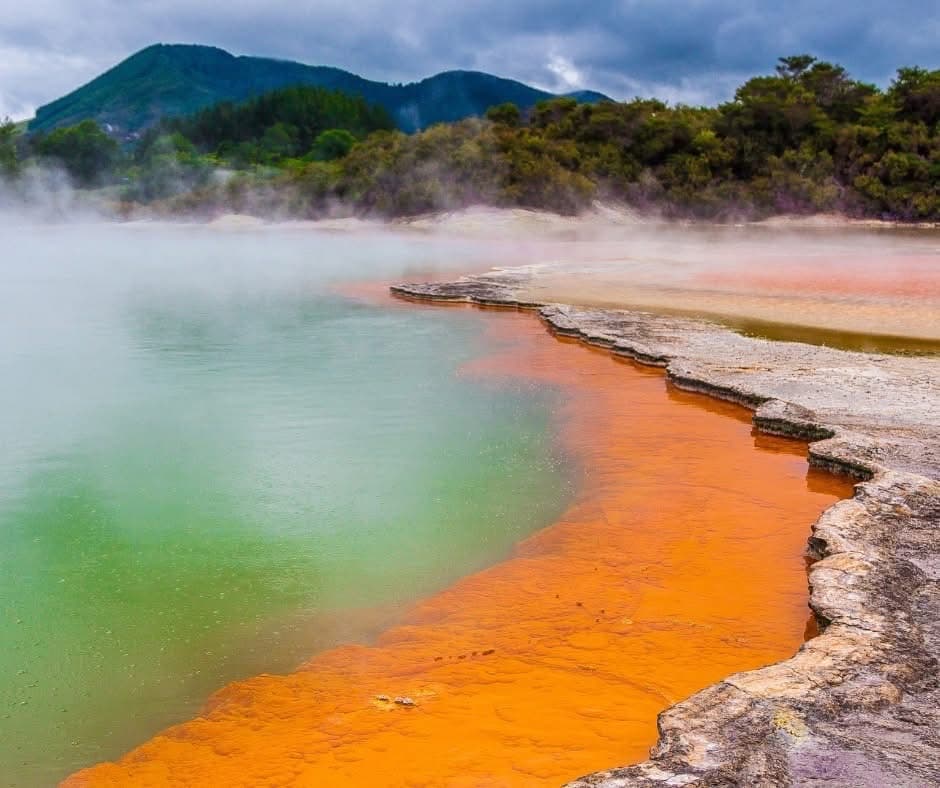
- 3.Visit Wai-O-Tapu early (8 AM opening) to avoid tour groups and get better photos at the Champagne Pool
- 4.Book accommodation outside school holidays – prices drop 30-40% in February and March
- 5.Many hotels include free geothermal pool access – ask when booking to avoid $15-20 day spa fees
- 6.The i-SITE visitor center offers discount vouchers for activities – stop by before booking anything online
Travel Tips
- •The sulfur smell is strongest in the morning – it's not a gas leak, just the earth doing its thing
- •Bring old clothes for geothermal areas – the sulfur can discolor jewelry and fabrics permanently
- •Book Maori cultural experiences directly with iwi (tribes) for more authentic interactions than hotel packages
- •Download the Rotorua Trails app for mountain biking – it includes GPS maps and difficulty ratings
- •Geysers at Te Puia erupt every 65 minutes on average, but can be unpredictable – allow extra time
- •The Government Gardens are free and beautiful for photos, especially the Tudor-style Bath House building
- •Lake Rotorua can get choppy in afternoons – morning is better for kayaking or paddleboarding