Ortisei
Culture & Context
LADIN TRIPLE-LANGUAGE SOUL
**LADIN HEART OF THE DOLOMITES**
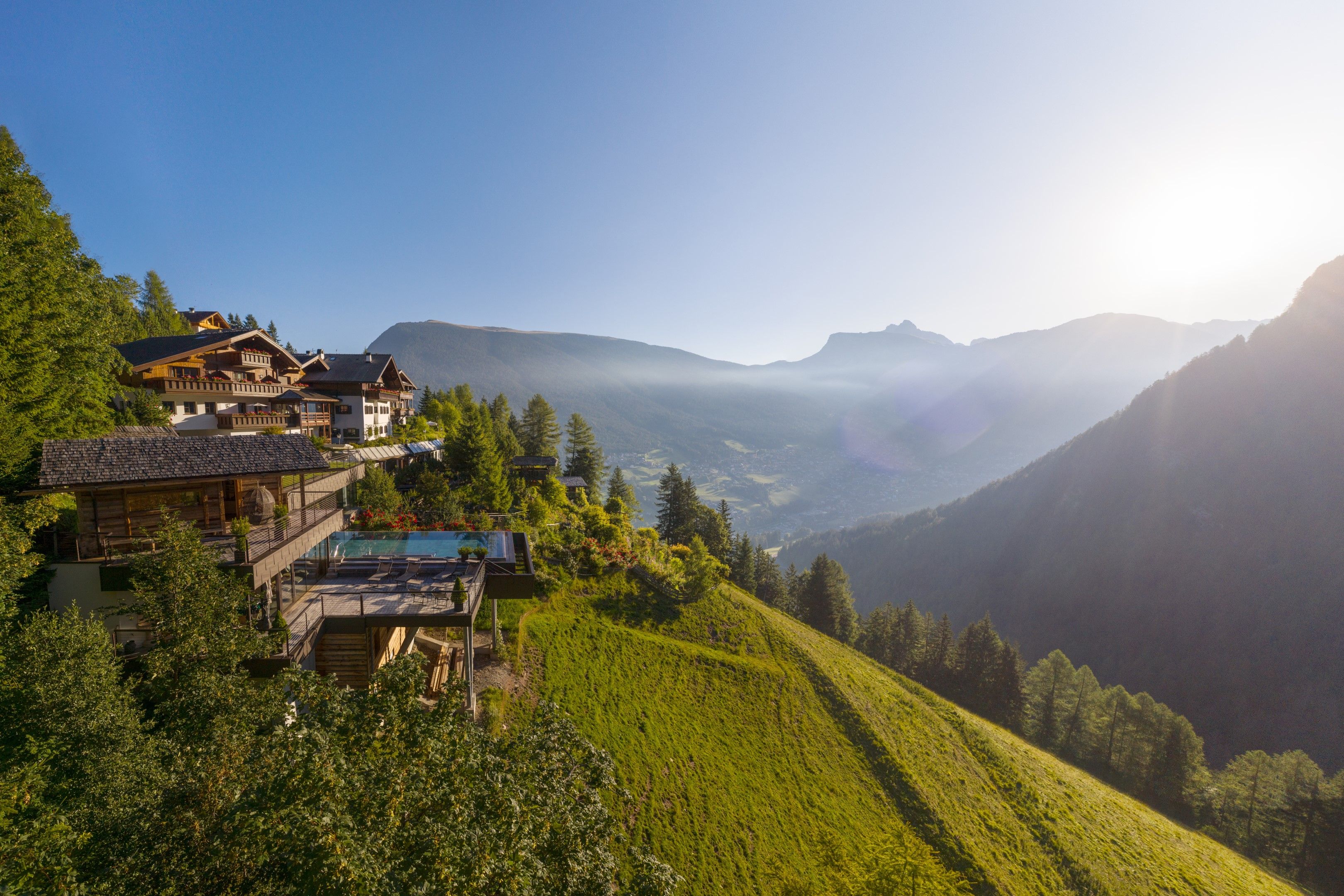
Ortisei (Urtijëi in Ladin, St. Ulrich in German) is the main village of Val Gardena in South Tyrol, sitting at 1,236m in a UNESCO World Heritage landscape. Here's the thing: this isn't just an Italian mountain town or an Austrian-style ski resort. It's something rarer. Around 84% of its roughly 4,830 residents speak Ladin as their first language, an ancient Rhaeto-Romance tongue that predates both German and Italian dominance in the Alps. German comes second at around 9%, Italian third at 6.5%. Signs, menus, and conversations routinely shift between all three, plus English.
Woodcarving has been the cultural backbone here since the 17th century, when families developed the craft during long Alpine winters. What started as a winter hobby turned into a globally traded art form. By the mid-19th century, Val Gardena had over 300 commercial branches across Europe selling sculptures and wooden toys. Today you can still walk into active workshops on Str. Rezia and watch carvers at work. The Professional Institute for Artistic Crafts Val Gardena continues training new sculptors each year.
The Museum Gherdëina on Piazza Sant'Antonio is the place to actually understand the culture — wooden toys, nativity scenes, archaeological finds, the Lein Ladin veil, and a full room dedicated to local mountaineer-filmmaker Luis Trenker. But the living version of this culture plays out in folk festivals, in the Trachten (traditional clothing) worn at church processions, and in the simple fact that kids here grow up learning four languages in school.
Local Customs
GREET ON THE TRAIL
Greet people on the trail — a 'Bun di' (Ladin) or 'Grüß Gott' (German) to fellow hikers is expected and genuinely appreciated. Staying silent is considered rude.. Woodcarving workshops are open to visitors and locals take pride in them.
Don't just glance and move on — ask a question, acknowledge the craft. Short courses are available for adults and kids.. Traditional Trachten (folk costumes) are worn proudly at church processions, patron saint festivals, and village fairs.
Don't mistake them for tourist performances — this is everyday cultural identity for many residents.. Tipping is not mandatory or expected the way it is in North America. Rounding up the bill or leaving €1-2 on the table is perfectly generous and well-received..
Fat Thursday (before Carnival) comes with a local tradition of 'stealing lunch from the stove' — barley soup with smoked pork loin. Lean into the seasonal food customs; locals do.. On the Monday after the kermesse of San Giacomo, boys traditionally give a pear with a bow tied to its stalk to girls as a sign of affection — a quirky old Ladin custom still practiced in the valley..
Mountain weather respect is cultural here, not just practical. Locals check forecasts before departing and always know their descent routes. Winging it on the mountain is frowned upon.
Safety
VERY SAFE
**EXCEPTIONALLY SAFE**
Ortisei is about as safe as mountain towns get. Crime is essentially nonexistent — the biggest hazard here is a thunderstorm catching you halfway up Seceda, or the parking nightmare on a peak August weekend. The real risk is mountain-related: weather changes fast at altitude, and afternoon storms in summer are common. Always check forecasts before heading up and note last lift times so you're not descending in the dark.
If you're driving in, parking fills up fast in July and August (the town's own visitors have complained about it repeatedly). Use public buses instead or sort out hotel parking in advance. Zero pickpocket culture, no aggressive vendors, no scams to speak of.
Getting Around
WALKABLE & CABLE CARS
**WALKABLE + FREE BUSES + CABLE CARS**
The pedestrian center (Zona Pedonale, Str. Rezia) is fully walkable and actually compact — the whole zone runs from the Chapel of St. Ulrich to the Church of Sant'Antonio, maybe 10-15 minutes end to end. Here's the real perk: most hotels and guesthouses include free bus passes for guests, covering the entire Val Gardena bus network and regional lines toward Bolzano and Bressanone. That means no car needed whatsoever once you're here.
From town, three cable car systems give you direct access to the mountains: the Funivia to Alpe di Siusi (Europe's largest high-alpine meadow), the Funicolare to Resciasa plateau, and the two-stage cable car up to Seceda at 2,500m. The Alpe di Siusi cable car station is a 2-minute walk across the river from the center.
Getting here: take a train to Bressanone/Brixen or Bolzano, then catch bus line 350 (Bolzano) or 351 (Chiusa/Bressanone) to Piazza Sant'Antonio. Bolzano airport is about 45 minutes by car; Innsbruck airport (Austria) is around 50 miles. By car, exit the A22 Brenner motorway at Chiusa/Klausen, then follow signs for Val Gardena — about 20km from the motorway exit. In peak summer and ski season, driving in is possible but parking is a known stress point. Leave the car at home if you can.
Useful Phrases
Where to Stay in Ortisei
5 recommended properties